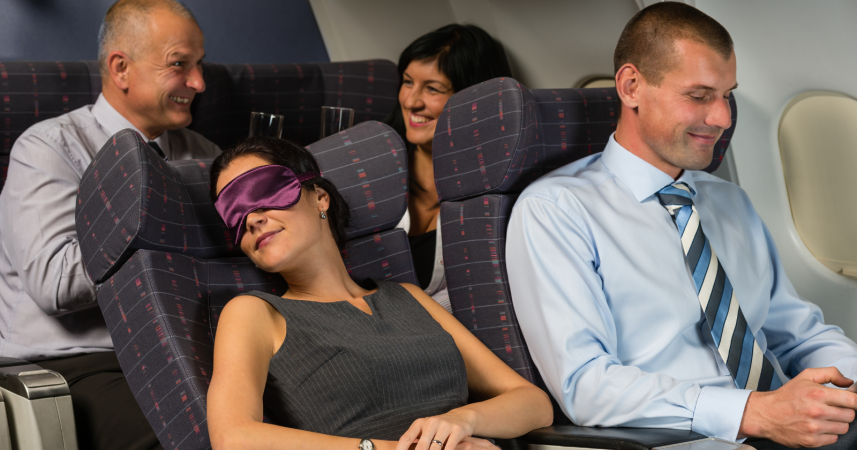
That moment when you realize the flight attendant's professional smile is actually masking complete horror at what passengers are doing in row 23

Add VegOut to your Google News feed. 
I was on a flight to Portland last month when I watched someone clip their toenails in row 23. The flight attendant's face went through about five stages of disbelief before settling on a professional smile that didn't reach her eyes.
Look, I get it. Flying economy is uncomfortable, expensive, and often feels like you're being herded like cattle. But there's a specific set of behaviors that tend to cluster around folks who don't fly often, and flight attendants notice every single one.
These aren't about being poor or rich. They're about familiarity with the unspoken rules of a metal tube hurtling through the sky at 35,000 feet.
1) Boarding with way too much stuff
The gate agent says "one personal item and one carry-on" but somehow people show up with a roller bag, a backpack, a purse, a shopping bag from the airport, and a neck pillow the size of a small child.
Flight attendants can spot this from a mile away. They know they'll be the ones playing Tetris with the overhead bins while 150 passengers wait impatiently in the aisle.
Here's the thing: people who fly regularly have this down to a science. They know exactly what fits where. They've measured their bag. They board efficiently.
The rest of us? We're jamming our overstuffed roller bag sideways into a bin that clearly wasn't designed for it, then acting shocked when the door won't close.
2) Treating the seat-back pocket like a trash can
Used tissues. Empty snack bags. Banana peels. Half-finished cups of coffee.
I've watched flight attendants pull truly horrifying things out of seat-back pockets during turnaround. One told me she once found a dirty diaper wedged in there. A diaper.
The seat-back pocket isn't your personal garbage disposal. It's for the safety card you're supposed to review and maybe a magazine if you're feeling nostalgic for 2008.
Frequent flyers know this. They keep their trash minimal and hand it to the flight attendant during service. They definitely don't leave biological waste behind.
3) Standing up the second the seatbelt sign turns off
The plane is still moving. We haven't even reached the gate yet. But suddenly half the cabin is on their feet, yanking bags from overhead bins like the aircraft is on fire.
Flight attendants hate this for two reasons. First, it's dangerous. The plane can still brake suddenly. Second, it creates this domino effect of chaos that makes deplaning take twice as long.
People who fly often stay seated until their row is actually moving. They know that jumping up early gets you exactly nowhere except standing in a cramped aisle for an extra five minutes.
There's this frantic energy that comes from treating the plane like a subway car where you have to rush for the doors. But you're not going anywhere until the people in front of you move. Physics hasn't changed.
4) Reclining during meal service
Look, the recline debate is eternal and I'm not here to solve it. But there's one time when reclining is universally considered a problem: when the person behind you is trying to eat.
Flight attendants see this constantly. Someone reclines just as the meal cart comes by, and suddenly the person behind them is wearing their coffee or trying to eat with their face six inches from their tray table.
I've mentioned this before, but the general rule among people who fly regularly is simple: you can recline, but check behind you first and maybe put your seat up during meals. It's just basic spatial awareness.
The lack of awareness about how your actions affect the person behind you is what drives flight attendants crazy. It's like people forget there are other humans in this shared space.
5) Getting drunk and loud
Airport bars are designed to separate you from your money while you wait, and airplane alcohol hits different at altitude. This is a known fact.
What separates occasional flyers from regulars is knowing your limits in this environment. Two drinks on the ground might be fine. Two drinks at 35,000 feet while you're dehydrated and stressed? That's a different story.
Flight attendants are trained to spot passengers who are getting too intoxicated, and they have the authority to cut you off. But they'd really prefer not to have that conversation in the first place.
The loud, uninhibited behavior that comes from not understanding how alcohol works in the air is a dead giveaway. Regular flyers pace themselves or skip it entirely because they know tomorrow's meeting isn't worth today's hangover.
6) Using the call button for non-emergencies
The call button is not for ordering another ginger ale. It's not for asking when you'll land. It's definitely not for getting the flight attendant's attention because you're bored.
Flight attendants respond to every call button like it might be an emergency. So when they rush over and find out you just wanted an extra bag of pretzels, there's a moment of recalibration happening behind their professional smile.
People who fly often just wait for the flight attendant to pass by naturally or catch them between services. They understand the crew is managing a hundred other passengers and probably hasn't sat down in three hours.
The call button should be reserved for actual needs, not wants. And certainly not for treating the flight crew like a personal butler service.
7) Taking your shoes and socks off
Your feet smell. I'm sorry, but they do. Everyone's feet smell after being trapped in shoes for hours. This is why we keep them covered in public spaces.
Flight attendants have to walk up and down that aisle constantly, and the last thing they want is navigating a minefield of bare feet. Some have told me stories about stepping on toes in the dark during overnight flights because passengers had their feet sticking out into the aisle.
There's also the hygiene factor. Airplane floors are not clean. The bathroom floor is definitely not clean. And yet people walk barefoot to the lavatory and then put those feet back up on the armrest or the seat in front of them.
Keep your shoes on. If they're uncomfortable, maybe invest in better travel shoes. Your fellow passengers and the crew will silently thank you.
8) Ignoring instructions during boarding and deplaning
The flight attendant just explained that we're boarding by zones for a reason. And yet there's always someone from Zone 5 trying to board with Zone 1 because they "just want to get settled."
Or during deplaning, when the crew asks people to remain seated so passengers with tight connections can get off first, half the plane still stands up and blocks the aisle.
Flight attendants give these instructions for efficiency and safety. When passengers ignore them, it creates bottlenecks, delays, and frustration for everyone involved.
I learned this the hard way on a flight back from visiting my grandmother in Sacramento. I tried to board early because I was anxious about overhead bin space, and the gate agent shut me down immediately. Now I wait my turn like everyone else.
9) Complaining about things the crew can't control
The flight is delayed because of weather. The Wi-Fi isn't working. The plane is old. There's no meal service on this route. The ticket was expensive.
Flight attendants hear complaints about all of these things constantly, and precisely zero of them are within their control. They don't set prices, choose aircraft, decide routes, or control the weather.
What they do control is your safety and whatever level of service they can provide within the constraints they're given. Complaining to them about corporate decisions or acts of nature just makes their already difficult job harder.
Regular flyers understand the flight crew is doing their best with what they have. They save their complaints for customer service surveys or social media like civilized people.
The bottom line
None of these behaviors are about class in the economic sense. They're about experience and awareness in a specific environment.
Flight attendants aren't judging you for being new to flying. They're human beings doing a exhausting job that requires them to be pleasant to hundreds of strangers while ensuring everyone's safety.
The secret they won't tell you? Most of this comes down to one simple thing: treating the plane like a shared public space where your actions affect others. Once you internalize that, most of these issues solve themselves.
And for the love of everything, do not clip your toenails on an airplane.
If You Were a Healing Herb, Which Would You Be?
Each herb holds a unique kind of magic — soothing, awakening, grounding, or clarifying.
This 9-question quiz reveals the healing plant that mirrors your energy right now and what it says about your natural rhythm.
✨ Instant results. Deeply insightful.

Jordan Cooper
Jordan Cooper is a pop-culture writer and vegan-snack reviewer with roots in music blogging. Known for approachable, insightful prose, Jordan connects modern trends—from K-pop choreography to kombucha fermentation—with thoughtful food commentary. In his downtime, he enjoys photography, experimenting with fermentation recipes, and discovering new indie music playlists.
More Articles by Jordan