Lower-middle-class homes have a universal truth: somewhere in a butter tub from 1995, your mom is storing buttons from clothes nobody has worn since the Clinton administration
I was helping my grandmother clean out her closet last month when I found it. A Country Crock butter tub, worn smooth from years of handling, filled with buttons she'd been saving since the 1980s.
Not just any buttons. Every button that had ever fallen off a shirt, every spare button from a jacket pocket, every decorative button from a craft store clearance bin. Sorted by color, size, and material, like a tiny museum of fasteners.
"I might need one someday," she told me, which is the official motto of lower-middle-class households everywhere.
Open any cabinet in my parents' Sacramento house and you'll find the same thing. Plastic containers holding items that haven't been touched in decades but can't be thrown away. It's not hoarding in the clinical sense. It's something else entirely.
It's a specific kind of preparedness, a insurance policy against future need that manifests as old Cool Whip containers filled with things that might be useful someday.
Let's look at what gets stored and why it never leaves.
1) Buttons from clothes that no longer exist
Every lower-middle-class home has the button collection. Usually in a margarine tub or small yogurt container, stored in a sewing kit or junk drawer.
My grandmother's button collection spans forty years. Buttons from my grandfather's work shirts. Buttons from dresses my aunts wore in the 70s. Buttons from my childhood clothes that I haven't fit into for thirty years.
She knows she'll never use most of them. The clothes they came from are long gone. But throwing away a perfectly good button feels wasteful in a way that's hard to articulate.
It's the same reason she keeps every spare button that comes attached to new clothes. You never know. The original might fall off. You might need to replace it. Better to have it than to spend money buying a single button later.
The collection grows but never shrinks, a museum of garments past.
2) Rubber bands accumulated from produce and newspapers
There's always a container somewhere holding hundreds of rubber bands. They come from broccoli bundles, asparagus stalks, rolled newspapers, even from the mail carrier bundling envelopes.
My dad has a Cool Whip container in his garage holding what must be five hundred rubber bands. All different sizes and colors. Most of them are dried out and will snap if you try to use them.
"I use them all the time," he insists.
I've watched him rummage through that container looking for a specific size, give up, and go buy a new pack at the hardware store. But the collection remains, growing with every grocery trip, never being culled.
The rubber band collection represents a worldview where free things must be kept. You paid for that broccoli. The rubber band came with it. Throwing it away is like throwing away money.
3) Twist ties from every loaf of bread
These live in a small container near the kitchen, usually a cream cheese tub or margarine container. Sometimes they're sorted by color, sometimes just thrown in together.
My mom has been collecting these for as long as I can remember. Hundreds of them, those little plastic-coated wire ties that come on bread bags.
"They're useful for organizing cords," she says, which is true in theory. In practice, they sit in that container while actual cords remain tangled messes.
But every time someone finishes a loaf of bread, the twist tie gets added to the collection. It's automatic, unconscious, a ritual that's been repeated thousands of times.
I do this now too, even though I'm vegan and buy bread that comes with those plastic clips instead. I save those too. In a yogurt container. The habit runs deep.
4) Hotel soaps and shampoos from vacations long forgotten
These live in a bathroom cabinet, usually in a large yogurt container or small ice cream tub. Tiny bottles and wrapped soaps from hotels, some of them from vacations that happened decades ago.
My grandmother has hotel soaps from places that don't exist anymore. The plastic wrappers have yellowed. The soap inside has probably changed composition. But they're still usable, theoretically, and therefore must be kept.
"For guests," she explains, though guests always use the nice soap she puts out, not the ancient hotel collection.
My parents have the same stash. Little bottles from that trip to San Diego in 1997. Soap from a Vegas hotel in 2003. Each one a tiny time capsule of a trip that was special enough to warrant keeping the free toiletries.
These collections represent something beyond frugality. They're souvenirs of abundance, proof that there were times when money wasn't quite so tight, when vacations were possible.
5) Plastic bags stored inside other plastic bags
This is perhaps the most meta of all collections. A grocery bag stuffed with other grocery bags, usually stored in a cabinet or pantry, often transferred into a more permanent container like an ice cream tub.
My mom has three separate containers dedicated to this. One for small bags. One for medium. One for large. All carefully folded or wadded up, ready for their next use as lunch bags, wet clothes carriers, or trash can liners.
The collection grows faster than it can be used. Every grocery trip adds more. Every purchase adds another bag. The ratio of incoming to outgoing is unsustainable, but the collection must be maintained.
When I moved into my Venice Beach apartment with my partner, I started my own collection. They found it baffling. "Why not just buy actual trash bags?"
Because these are free. Because throwing them away feels wasteful. Because my mom did it, and her mom did it, and it's part of who we are.
6) Screws, nails, and mystery hardware
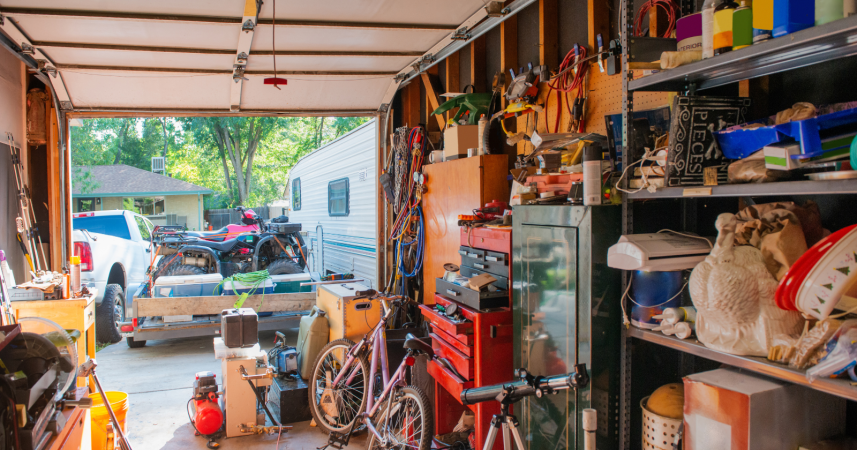
These live in the garage or basement, sorted into multiple containers. Cottage cheese tubs, yogurt containers, takeout soup containers, all lined up like a hardware store organized by dairy products.
My dad's workbench has at least twenty containers, each one holding different sizes of screws, nails, washers, bolts, and unidentifiable metal pieces that came from something at some point.
Half of them are rusty. A quarter of them are bent. None of them are labeled properly. But they're all kept because you never know when you'll need that exact size screw.
I've watched him spend an hour looking through these containers for the right fastener, then give up and go to Home Depot to buy a whole new box. The old containers remain untouched, their contents slowly oxidizing.
7) Cords and cables for electronics that no longer exist
There's always a container full of tangled cords. Phone chargers for flip phones. Cables for printers that died years ago. Power adapters for devices no one can identify.
My parents have a shoebox-sized container in their closet, but it's really just a butter tub that outgrew itself and got upgraded. The cords inside are knotted together like a nest, completely unusable without an hour of untangling.
"One of these might work for something," my dad says whenever I suggest throwing them out.
He's not wrong. In theory, one of them might. But in the eight years I've been watching this collection, I've never seen a single cord get pulled out and actually used.
I have my own version now. A takeout container full of charging cables for phones I haven't owned since 2015. I can't throw them away. They work. They're perfectly good. The fact that nothing I own can use them feels irrelevant.
8) Birthday candles from every celebration
These live in a small container in the kitchen, usually a cream cheese tub or margarine container. Half-melted candles, used once and extinguished. Pristine candles from packs where only a few were needed.
My grandmother's collection includes candles from my childhood birthdays. She pulls them out every year, counts how many she has, then buys exactly enough to make up the difference.
"Why buy a whole new pack when I only need three more?" she asks, which is logically sound but results in a container holding thirty years of waxy remnants.
These candles represent every birthday, every small celebration. Throwing them away would be like throwing away those memories, those moments when there was cake and singing and everything felt possible.
9) Instruction manuals for appliances nobody owns anymore
These get stored in larger containers, usually ice cream tubs or big takeout containers. Manuals for microwaves that died in 2008. Warranty cards for toasters that stopped working years ago.
My mom has a whole drawer dedicated to these, organized by type of appliance. The microwave section has manuals for four different models, none of which currently exist in the house.
"What if we need to reference something?" she asks when I suggest a purge.
But here's the thing. We live in an age where every manual is online. You can Google any appliance and find a PDF in seconds. The paper manuals are obsolete relics, yet they persist.
They represent a time when information wasn't free and instant. When you bought something, you kept the manual because losing it meant losing access to important information. That mindset doesn't update just because the world changed.
Conclusion
These containers and their contents represent more than simple frugality. They're a physical manifestation of economic anxiety, a hedge against uncertainty that's been passed down through generations.
My grandmother raised four kids on a teacher's salary. She remembers times when not having the right button or the right screw meant going without. That anxiety doesn't disappear just because circumstances improve.
I've carried these habits into my own life, despite having more resources than my parents did. I have my own collection of plastic bags, my own tangle of old cables, my own buttons from clothes I'll never wear again.
The difference is I'm starting to see them for what they are. Not practical preparedness, but emotional security blankets. Not useful resources, but monuments to scarcity thinking.
Maybe it's time to let some of it go. Or maybe that's easy for me to say, in a moment when I feel secure enough to throw things away.
The containers will outlast all of us anyway, washing up on beaches in 2124, still holding buttons from the 1980s.