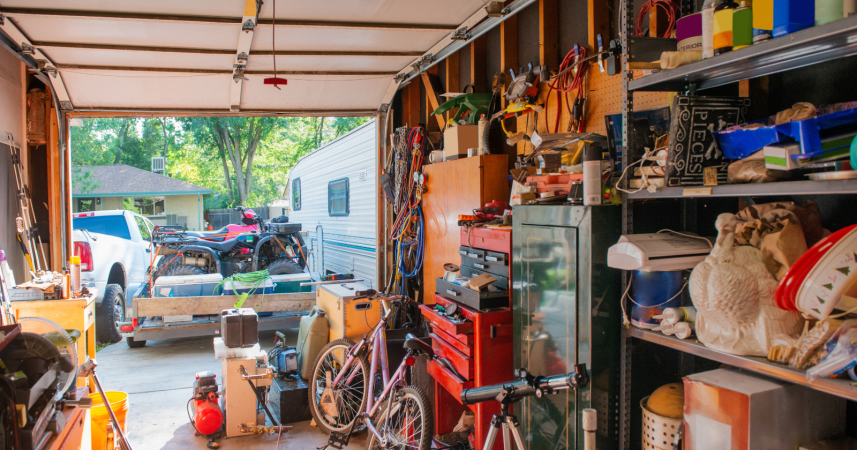
Our garage isn't a storage unit - it's a museum of guilt, housing all the things we can't use but feel too wasteful to throw away
I was helping my parents clean out their garage in Sacramento last month when I realized something. The same beat-up filing cabinet that held my childhood artwork was still there, pushed against the wall. Next to it? Three different vacuum cleaners, only one of which actually worked.
It got me thinking about how garages become these strange repositories for our lives. Not just storage spaces, but psychological holding zones for things we can't quite commit to keeping or throwing away.
The lower-middle-class garage is especially fascinating. It's not cluttered with expensive toys or luxury overflow. It's filled with something more revealing: the physical evidence of our aspirations, our anxieties about waste, and our hope that someday we'll need these things again.
Here are ten items that probably live in your garage right now, quietly accumulating dust while you convince yourself they're still useful.
1) Cardboard boxes from electronics you bought years ago
You know the ones. The box your TV came in. The packaging from that laptop you replaced two models ago. The container that held your coffee maker.
Why do we keep these? The logic goes something like this: if I ever need to return it, move, or resell it, the original box will be essential.
Except you've moved twice since then and never used them. The warranty expired three years ago. And let's be honest, you're not selling that eight-year-old television.
These boxes take up serious real estate. They're also a fire hazard and attract pests. But they represent something deeper: our fear of making the wrong decision, of needing something the moment we get rid of it.
I've lived in my Venice Beach apartment for five years now. You know how many original boxes I've needed in that time? Zero.
2) A tangle of mystery cables and old chargers
This one gets everyone. There's always a bin or drawer filled with cables you can't identify. USB cords that fit nothing you currently own. Chargers for phones you haven't used since 2015. Adapters for devices that don't exist anymore.
The psychology here is fascinating. These cables cost money originally. They were essential once. Throwing them away feels wasteful, especially when you grew up being taught to save everything.
But technology moves fast. That proprietary cable for your 2012 camera is worthless now. The phone charger with the weird square connector? It's serving no purpose except making you feel responsible.
Here's the thing: if you haven't needed to dig through that cable pile in six months, you won't need it in the next six either.
3) Broken things waiting for repair
The lawnmower that needs a new spark plug. The leaf blower with a cracked housing. The bike with flat tires and a rusty chain.
We tell ourselves we'll fix these items. We even mean it when we say it. But six months turn into six years, and that broken item becomes permanent garage furniture.
This hoarding habit comes from a good place. Fixing things is economical and environmentally sound. But there's a difference between planning to repair something and storing broken things indefinitely.
Ask yourself: if this item broke a year ago and you haven't fixed it yet, what's changed? Usually, nothing except your guilt about it.
4) Exercise equipment from abandoned fitness goals
The dusty treadmill. The weight bench with one leg slightly wobbly. The resistance bands still in their packaging. The yoga mat you used exactly twice.
I'm not judging. I've been there. We all have.
These items represent hope. They're physical manifestations of the person we intended to become. Getting rid of them feels like admitting defeat, like acknowledging that we'll never actually use them.
But keeping them doesn't make you more likely to exercise. It just makes your garage more crowded while adding a side of guilt every time you see them.
5) Paint cans from every room you've ever painted
You saved them for touch-ups. That made sense at the time.
But paint has a shelf life. After a few years, it separates, dries out, or develops that weird skin on top that makes it unusable. Plus, you've probably repainted those rooms by now anyway.
My grandmother raised four kids on a teacher's salary, and she never threw anything away that might be useful later. I inherited some of that mindset. But even she eventually admitted that ten-year-old paint cans weren't coming back from the dead.
If your paint is more than three years old, it's probably garbage. If you can't remember which room it belongs to, it's definitely garbage.
6) Duplicate tools you bought because you couldn't find the original
Three hammers. Four screwdrivers with the same head. Two tape measures. Multiple sets of Allen wrenches.
This happens because garage organization is hard. You need a hammer, can't find it in the chaos, and buy another one. Repeat until you have a small hardware store's worth of duplicates.
The solution isn't just getting rid of extras. It's acknowledging that disorganization costs money. Every duplicate tool represents dollars spent because you couldn't locate what you already owned.
7) Furniture you're saving for someday
The desk that doesn't fit your current space. The bookshelf you'll use when you move to a bigger place. The chair that would be perfect if only you reupholstered it.
This stuff takes up massive amounts of room. It also operates on the assumption that your future self will have different needs than your current self.
But here's what usually happens: you move, and the old furniture doesn't fit the new space either. You finally get around to that DIY project and realize you hate the furniture anyway. You keep waiting for someday, and someday never comes.
I've mentioned this before, but understanding the psychology behind our decisions helps us make better ones. And the decision to store furniture indefinitely is often driven by sunk cost fallacy, not actual utility.
8) Toys and sports gear your kids have outgrown
The plastic playhouse. The tricycle. The T-ball set. The collection of action figures missing most of their accessories.
Parents struggle with this one. These items represent memories, stages of life that flew by too fast. Letting them go feels like erasing those moments.
My nephew just turned seven, and my brother's garage looks like a toy store exploded in it. But those toys aren't preserving memories. Photos do that. Stories do that. The physical objects are just taking up space.
Plus, holding onto them "for future grandkids" means storing items for potentially decades. That's a long commitment to clutter.
9) Seasonal decorations you never actually use
Halloween decorations from three years ago. Christmas lights with half the strand burned out. Easter baskets. Fourth of July flags. Thanksgiving centerpieces.
You bought these with good intentions. You were going to decorate. You were going to be that house.
But if you haven't used them in the past two seasons, you're probably not going to use them next year either. Your decorating style has changed, or you've realized you don't actually enjoy putting up elaborate seasonal displays, or life just got too busy.
That's okay. But keeping them doesn't change anything except adding another box to navigate around.
10) Free promotional items and random freebies
Company t-shirts from events. Tote bags from conferences. Water bottles with logos. Stress balls. Pens by the hundred. Keychains you'll never use.
We take these because they're free, and free stuff feels valuable even when it's not. We keep them because throwing away perfectly good items seems wrong.
But these promotional products are designed to be low-cost giveaways. They're not quality items you'll actually use. They're marketing materials that served their purpose the moment you took them.
Having three dozen promotional tote bags doesn't make you resourceful. It makes you someone with three dozen tote bags taking up space.
Conclusion
Your garage probably contains at least half of these items right now. Maybe all of them.
The question isn't really about the stuff itself. It's about why we hold onto things we don't use, don't need, and often don't even want anymore.
For many of us who grew up lower-middle-class, waste feels almost sinful. Our parents taught us to save everything, to fix instead of replace, to never throw away something that might have value someday.
Those instincts served a purpose. But they can also trap us in a cycle where we're storing items out of guilt rather than utility.
The garage isn't just a storage space. It's a mirror reflecting our relationship with money, waste, and possibility. And maybe it's time to take a hard look at what's actually in there.
If You Were a Healing Herb, Which Would You Be?
Each herb holds a unique kind of magic — soothing, awakening, grounding, or clarifying.
This 9-question quiz reveals the healing plant that mirrors your energy right now and what it says about your natural rhythm.
✨ Instant results. Deeply insightful.