Real wealth whispers while fake wealth shouts - and the expensive status symbols that impress broke people are usually invisible to those who actually have money in the bank
I was at a coffee shop in Venice Beach last week when I overheard two guys in their twenties comparing their sneaker collections.
One had just dropped $400 on limited edition Jordans. The other was flexing about his designer wallet.
Meanwhile, the guy sitting next to them, wearing a plain t-shirt and quietly working on his laptop, was probably worth more than both of them combined. I know because I've seen him around. He owns three properties in the area.
Real wealth whispers. Fake wealth shouts.
After spending years observing both truly wealthy people and those desperately trying to appear wealthy, I've noticed a pattern. The things that impress people with empty bank accounts rarely register with people who actually have money.
Let's talk about what only impresses the broke.
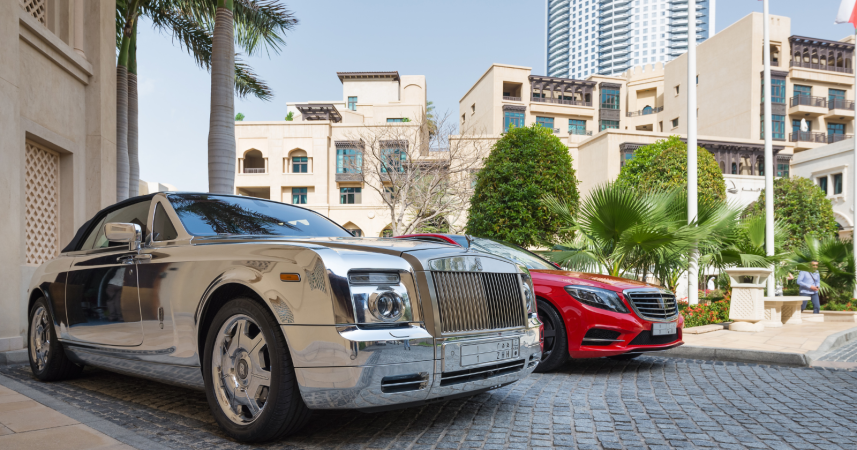
1) Luxury cars with hefty monthly payments
That gleaming Mercedes parked outside the overpriced apartment? It's probably eating up 30% of someone's take-home pay.
The truly wealthy understand that a car is a depreciating asset. It loses value the second you drive it off the lot. They'd rather put that money into investments that actually grow.
I've watched this play out repeatedly in Los Angeles. Someone making $60,000 a year driving a $80,000 BMW while living with three roommates. Meanwhile, the multimillionaire in my building drives a ten-year-old Honda.
Research from Columbia Business School shows that wealthy people are increasingly distancing themselves from conspicuous consumption like flashy vehicles. Status representation is no longer limited to conventional avenues like purchasing a new Balenciaga bag or acquiring the latest pair of Louboutins.
When you have real money, you don't need four wheels to prove it.
2) Designer clothes covered in logos
Walk through any mall and you'll see it. People wearing head-to-toe designer gear with logos so big you could spot them from space.
Here's what I learned from photographing various social circles in LA: the wealthier someone is, the more likely their clothes have zero visible branding.
Studies show that individuals with lower financial self-esteem are significantly more likely to purchase items with visible logos. It's not about appreciating quality. It's about broadcasting a message. The irony? The message is being received loud and clear by people who can't afford the real thing, while actually wealthy people couldn't care less.
My partner still laughs about my music blogging days when I thought wearing band t-shirts from obscure shows made me cool. Now I realize the same principle applies to designer logos. If you need to tell people, you're telling the wrong story.
3) Instagram-perfect lifestyles that exist only online
The brunch photos. The luxury hotel lobbies. The designer shopping bags artfully arranged for the camera.
Social media has created a new kind of poverty: being broke but looking rich online. Research indicates that when people feel unsure about their financial standing, they might overcompensate with curated images on platforms like Instagram and Facebook.
I spent years in the music blogging world where image was everything. We'd photograph ourselves at exclusive shows while eating ramen the rest of the week. The performance of wealth has only gotten more sophisticated since then.
The truly wealthy? Many are barely online at all. As more people are trapped in a chronic feedback loop scrolling their days away, it's a flex to unplug. Privacy is becoming the ultimate status symbol.
4) Massive houses that are barely furnished
There's a phenomenon I've noticed in Los Angeles. Someone rents or buys a massive apartment or house in a trendy neighborhood, then can't afford to furnish it properly.
The living room has one couch. The bedroom has a mattress on the floor. But hey, the address sounds impressive.
Studies reveal that some people spend an unsustainable portion of their income on housing purely for its wow factor, sometimes leaving them too financially strapped to furnish the place.
Meanwhile, people with actual wealth often live in surprisingly modest homes. Warren Buffett has lived in the same house since 1958. Because when you're truly wealthy, you understand that a house is shelter, not a statement.
The memories and connections inside matter more than the square footage.
5) Business or first-class flights for short trips
I get it. Flying first class feels good. The free drinks, the legroom, the ability to tell people you "don't do economy."
But here's the thing about truly wealthy people: many of them see flights purely as transportation. Getting from point A to point B is the goal, not the champagne at 30,000 feet.
I've traveled enough to notice this pattern. The person in the expensive seat posting about it on social media? Probably stretched their budget to be there. The actual millionaire? Often in economy, reading a book, not caring what anyone thinks.
Unless you're flying transoceanic distances where comfort genuinely matters, expensive flight upgrades are often just ego expenses.
6) Bottle service at clubs and expensive restaurants every weekend
Nothing says "I'm trying too hard" quite like bottle service.
When I was younger and newly vegan, I'd sometimes meet friends at expensive restaurants just to be seen there. I'd order the most expensive vegan option, not because I wanted it, but because I wanted the receipt. Looking back, it was painfully transparent.
The truly wealthy don't need to prove they can afford bottle service. They've already proven it to themselves, which is the only audience that matters.
What impresses them? Genuine experiences, great conversation, and quality time with people they actually like. The price tag is irrelevant.
7) Expensive gym memberships they barely use
Signing up for the $200/month boutique gym membership feels like a wealth move. Telling people you go to that exclusive Pilates studio sounds impressive.
But the people who actually have money? They understand that fitness results come from consistency, not exclusivity. Many work out at home or use basic gyms.
Investing in $40 Pilates classes became a way celebrities and the 1% touted all the ways they were reversing the biological clock. But as these services became more accessible, the truly wealthy moved on to other status markers.
I've seen this in my own life. My grandmother is in better shape than most people half her age, and she's never set foot in a fancy gym. She walks, does bodyweight exercises at home, and bikes everywhere. Zero membership fees. Maximum results.
8) The latest tech gadgets on release day
Standing in line for the newest iPhone. Upgrading every year. Having the latest smartwatch, tablet, laptop, and whatever else Silicon Valley releases.
This impresses exactly one type of person: other people who also camp out for product launches.
Wealthy people upgrade their tech when they need to, not to signal that they can afford it. The phone in their pocket might be two generations old, and they couldn't care less.
When I photographed tech events in LA, I noticed something interesting. The people genuinely building wealth in tech often had the oldest devices. Meanwhile, people working entry-level jobs had every new gadget on day one.
Technology should serve your life, not validate it.
9) Name-dropping and exclusive network flexing
Do you know how many people I've met who constantly mention their "connections"? Who drop names of executives or celebrities they've supposedly met?
It's exhausting. And it's transparent.
Truly wealthy and well-connected people don't need to advertise their networks. Their networks speak for themselves through opportunities, collaborations, and results.
I learned this lesson hard during my transition from music blogging to lifestyle writing. I'd mention every artist I'd interviewed, every industry person I'd met. It wasn't impressive. It was insecure.
Real networks are about depth, not breadth. Quality relationships with genuine mutual value, not hundreds of superficial contacts you can name-drop.
10) Overly complex coffee orders and food trends
The $15 matcha with oat milk, adaptogens, and three other ingredients you can't pronounce. The newest superfood everyone's suddenly obsessed with. The restaurant nobody can get into.
These things become status symbols for people seeking belonging in consumer culture.
Don't get me wrong. As someone who drinks oat milk lattes daily and takes food seriously, I'm not judging the choices themselves. I'm talking about using these choices as identity markers.
The truly wealthy eat what they want, when they want, without needing it to mean something about them. They might love an expensive restaurant or hate it. Either way, they're not there to be seen.
Conclusion
Here's what I've learned after years of observing both real wealth and performed wealth: the things that impress people with no money are usually the things that drain money.
Real wealth is quiet. It's freedom. It's options. It's not worrying about impressing strangers.
The truly wealthy care about their time, their health, their relationships, and their peace of mind. They're not spending energy on status symbols that depreciate faster than their value.
So next time you're tempted to drop money on something just to impress people, ask yourself: who exactly am I trying to impress? And why do I need their approval?
Because I promise you, the people worth impressing aren't counting your logos.
What’s Your Plant-Powered Archetype?
Ever wonder what your everyday habits say about your deeper purpose—and how they ripple out to impact the planet?
This 90-second quiz reveals the plant-powered role you’re here to play, and the tiny shift that makes it even more powerful.
12 fun questions. Instant results. Surprisingly accurate.