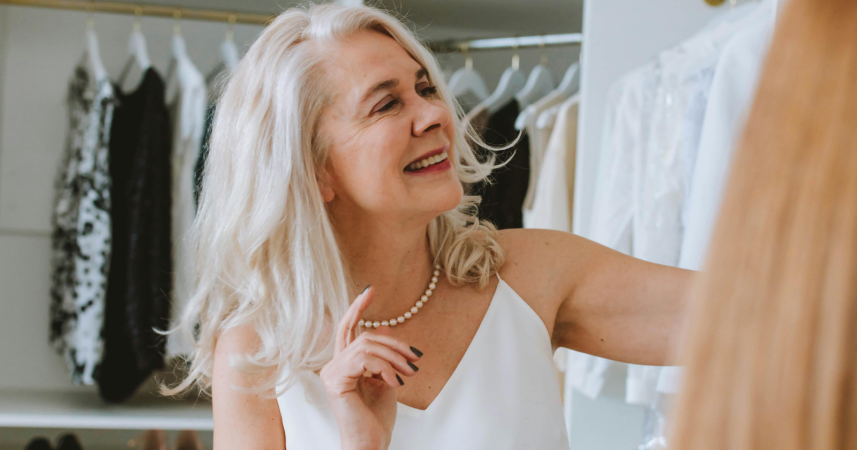
Aging beautifully has nothing to do with your face and everything to do with finally becoming comfortable enough to stop performing for people who don't matter
What if aging beautifully has nothing to do with what you see in the mirror?
We've been sold this idea that graceful aging means looking younger than you are, having flawless skin, or maintaining the same body you had at twenty-five. But that's not it. That's just marketing disguised as wisdom.
The people who age beautifully aren't the ones desperately trying to reverse time. They're the ones who've figured out how to move through it with intention. And most of them don't even realize they're doing it.
Here are the signs you're aging more beautifully than you think.
1) You've stopped trying to impress people who don't matter
Remember when you used to carefully curate everything? Your opinions, your outfit, your stories, all calibrated to land well with whoever happened to be in the room?
At some point, that exhausting performance just stops. You realize you don't have the energy to be everyone's version of acceptable, and more importantly, you don't want to waste your limited time on earth pretending.
This isn't about becoming rude or inconsiderate. It's about developing a clearer sense of where your energy should actually go. You're kinder to the people who matter and less concerned about winning over the people who don't.
When you stop performing for an imaginary audience, something loosens in your face, your posture, your entire presence. People can sense authenticity, and it reads as confidence. That's aging beautifully.
2) Your friendships have gotten smaller but deeper
You used to have dozens of friends. Now you have a handful. And somehow, that feels like an upgrade rather than a loss.
The friendships you've kept are the ones that survived honesty. These are people who've seen you at your worst and didn't leave. People you can call when things fall apart, not just when you have good news to share.
There's something about aging that clarifies who your people really are. You stop maintaining friendships out of obligation or nostalgia. You let relationships end when they've run their course. It's not cruel—it's just honest resource management.
Quality over quantity isn't just a cliché. It's what happens when you finally understand that your time and emotional energy are finite. Investing deeply in a few real connections beats spreading yourself thin across dozens of shallow ones.
3) You can sit with discomfort without immediately trying to fix it
Younger you would have spiraled. Something uncomfortable would happen—a difficult conversation, an uncertain situation, an uncomfortable emotion—and you'd scramble to resolve it immediately.
Now you've learned that not everything needs to be fixed right away. Some things need to be felt. Some problems solve themselves if you give them time. Some discomfort is just part of being alive.
This ability to tolerate uncertainty without panicking is a hard-won skill. It comes from living through enough difficult situations to realize that you're more resilient than you thought. That most things that feel catastrophic in the moment become manageable in retrospect.
People who can sit with discomfort have a certain steadiness about them. They don't seem as reactive or frantic. They've developed emotional ballast, and it shows in how they move through the world.
4) You've stopped explaining yourself to people who've already made up their minds
There used to be this compulsion to make everyone understand your choices. Why you left that job. Why you ended that relationship. Why you do things the way you do them.
At some point, you realize some people aren't actually curious—they're just judging. And no explanation will satisfy someone who's decided you're wrong.
So you stop. You make your choices and you let them speak for themselves. You understand that your life doesn't require a defense, just a direction.
This shift creates enormous freedom. All that energy you spent justifying yourself? Now you're spending it actually living. Making decisions based on what's right for you, not what will be easiest to defend to critics.
5) Your body has become more functional than decorative
I spent my twenties thinking about how my body looked. My thirties were a transition. Now I mostly think about what my body can do.
Can I hike for a few hours without pain? Can I carry groceries and equipment without struggling? Can I keep up with my nephew when he wants to play? That's what matters now.
This isn't giving up on appearance. It's redefining what makes a body valuable. Strong matters more than skinny. Capable matters more than conventionally attractive. Feeling good matters more than looking perfect.
When you shift from seeing your body as an object to be perfected to experiencing it as a vehicle for living, aging becomes less terrifying. You're not trying to preserve something that was never meant to stay the same. You're maintaining something that needs to keep working.
6) You've developed actual taste instead of following trends
You know what you like now. Not what's popular, not what influencers are pushing, not what everyone else is buying. You've figured out your aesthetic, your preferences, your style, and you stick to it.
This shows up everywhere. In how you dress. What you eat. How you decorate your space. What you do with your free time. You've stopped asking "what's cool?" and started asking "what do I actually enjoy?"
I see this in how I approach food now. I'm not trying every new restaurant or trendy ingredient. I've found what I love—good farmers market produce, simple preparations, flavors I know work. It's not boring. It's refined.
Having developed taste means you're no longer susceptible to every marketing message telling you what you should want. You've done the work of figuring out what you actually want, and that clarity is beautiful.
7) You can admit when you're wrong without it destroying you
Being wrong used to feel like the end of the world. It meant you were stupid or incompetent or fundamentally flawed. So you'd defend bad positions, double down on mistakes, do anything to avoid admitting error.
Now you can say "I was wrong about that" without experiencing an identity crisis. Because you've learned that being wrong about something doesn't mean you're worthless. It means you're human and you learned something.
This makes you infinitely easier to be around. People trust you more because they know you're not going to twist yourself into knots avoiding accountability. You'll own your mistakes and move forward.
It also makes you smarter. When you're not defensive about being wrong, you can actually learn from your errors. You can course-correct. You can improve. That's growth, and growth at any age is beautiful.
8) You've stopped waiting for permission to live your life
There's this thing younger people do where they wait for the right time, the right circumstances, the right credentials before they do what they actually want to do.
Aging teaches you that the right time doesn't come. You just decide to start, and the rest figures itself out. You stop asking "am I ready?" and start asking "why not now?"
This doesn't mean being reckless. It means understanding that readiness is often an excuse for fear, and if you wait until you feel fully prepared, you'll wait forever.
People who've embraced this have a momentum about them. They're taking the photography class, starting the side project, booking the trip, making the career change. They've realized that life is happening right now, not in some imagined future when everything aligns perfectly.
9) Your definition of success has gotten personal and specific
Success used to be this external thing. The job title, the salary, the house, the markers everyone could see and agree on. Now it's different. Smaller. More specific to what you actually value.
Maybe success is having Tuesday mornings free to sit with coffee and read. Maybe it's maintaining relationships that matter. Maybe it's doing work that feels meaningful even if it doesn't make you wealthy. Maybe it's just feeling relatively calm most days.
This recalibration happens when you've lived long enough to see that conventional markers of success don't guarantee happiness. You've met people who have everything on paper and nothing in practice. You've learned that impressive and fulfilling aren't the same thing.
When your definition of success becomes personal, you stop competing with everyone else. You're playing a different game entirely, one where you get to define the rules and the win conditions.
10) You can hold space for other people's pain without trying to fix it
When someone you care about is struggling, your instinct used to be to offer solutions. Tell them what to do. Fix the problem. Make it better.
Now you understand that sometimes people don't need advice. They need presence. They need someone to sit with them in the difficulty without minimizing it or rushing them through it.
This is a profound shift. It requires you to be comfortable with someone else's discomfort. To trust that they're capable of figuring out their own path. To offer support without taking over.
I've learned this through watching friends go through divorces, career crises, health scares. The ones who helped most weren't the ones with the best advice. They were the ones who could just be there without needing to make it about them or their solutions.
Being able to hold space for pain without fixing it means you've developed real compassion. Not pity, not the need to be helpful, but actual compassion. That's beautiful at any age, but it's especially beautiful when it comes from experience.
Conclusion
Aging beautifully has almost nothing to do with what's happening to your face or your body. It's about who you're becoming as you accumulate years and experience.
The signs are subtle because they're internal. They're about how you relate to yourself, to others, to the world. They're about the wisdom you've gained, the peace you've made with reality, the clarity you've developed about what matters.
If you recognized yourself in most of these signs, you're doing better than you think. You're aging in the way that actually counts—becoming more yourself, more grounded, more capable of being present for your own life.
That's not average. That's beautiful.
What’s Your Plant-Powered Archetype?
Ever wonder what your everyday habits say about your deeper purpose—and how they ripple out to impact the planet?
This 90-second quiz reveals the plant-powered role you’re here to play, and the tiny shift that makes it even more powerful.
12 fun questions. Instant results. Surprisingly accurate.