Some homes shout “money” with logos and lacquer.
The ones that feel truly high-end don’t shout at all—they whisper with care, restraint, and little systems that make the space feel calm.
The good news? Most of that isn’t about budget. It’s about habits.
Here are ten subtle habits that make your home look quietly expensive—without you needing to refinance a thing.
1. Edit first, then style
The most luxurious rooms have negative space: empty stretches of wall, a clear table, a shelf with breathing room. That “gallery calm” is free—it’s subtraction.
Make a quarterly ritual: pick one room, remove 20–30% of what’s on exposed surfaces, and put it in a bin for a week. Live without it.
Only bring back what you genuinely miss. Clutter hides quality; space spotlights it. If you do buy, buy fewer, better—one stoneware bowl on a console beats seven knickknacks fighting for attention.
Low-cost upgrade:
-
One elegant tray per surface (coffee table, dresser, nightstand). Corral items so even the mess looks intentional.
2. Be ruthless about sightlines
Stand at your entry, your sofa, your bed. What do you see first? In expensive interiors, your eye lands on something calm and textural—linen drapes, a plant with sculptural leaves, a framed piece with breathing room—never cords, laundry, or a pile of mail.
Create a “first glance” checklist for each major sightline:
-
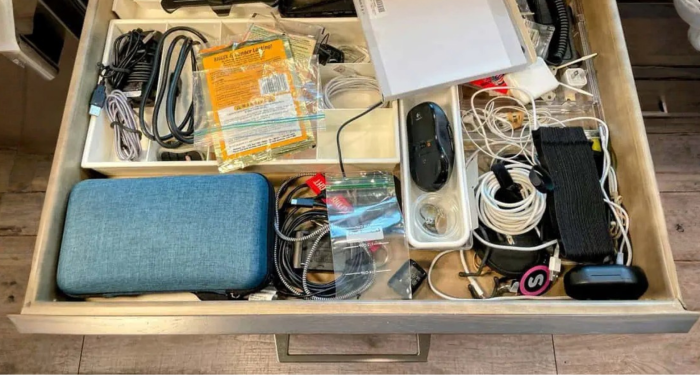
Hide wires: adhesive cord channels, floor cord covers, Command hooks on the back of furniture.
-
Demote plastic: decant dish soap, laundry detergent, and hand soap into glass or matte pump bottles.
-
Tidy the paper: one in-box tray by the door; process weekly. Paper piles read chaotic faster than anything else.
This is a habit, not a shopping spree. You’re curating what your eye gets as a first impression.
3. Maintain like a hotel (15 minutes, once a week)
Nothing makes a space feel “cheap” faster than small disrepairs: flickering bulbs, squeaky hinges, scuffed baseboards, loose knobs. Quiet luxury equals quiet functioning.
Make a recurring maintenance block (I do Sundays at 5 p.m.). Your list:
-
Replace any warm bulbs that burned out with the same color temperature (2700K is cozy, 3000K is crisp).
-
Wipe door frames, light switches, and baseboards with a damp microfiber cloth.
-
Tighten handles, knobs, and wobbly chair legs.
-
Touch-up pen for nicks on wood; Mr. Clean Magic Eraser for scuffs.
Fifteen minutes weekly outperforms one frantic deep clean. Money buys new; care looks just as rich.
I once stayed in a tiny boutique hotel with plain IKEA-style furniture. What made it feel expensive wasn’t the furniture—it was the condition. Every hinge moved silently, every surface was fingerprint-free, the bulbs matched, and the bedding was crisp. I brought that maintenance mindset home, and my place started reading “boutique” instead of “afterthought.”
4. Warm layers, quiet palette
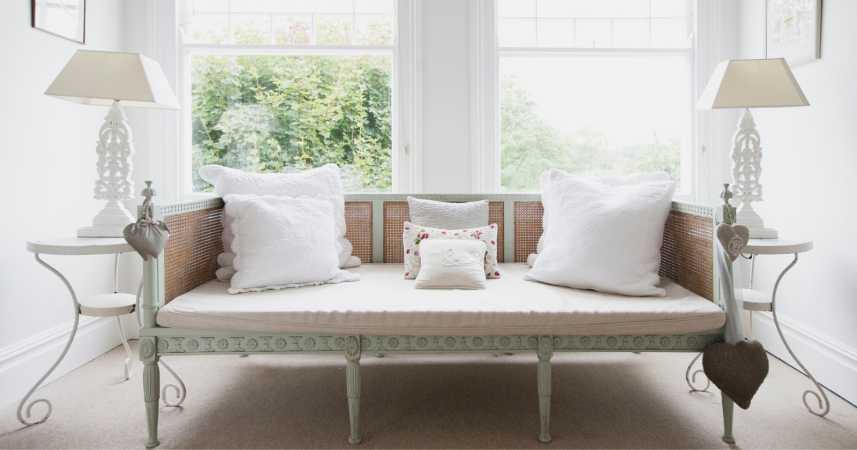
You don’t need designer pieces—just restraint with color and intention with texture. Expensive-looking rooms often sit in a limited palette (two neutrals + one accent), then stack natural textures: linen, wool, stone, wood.
Try the 60/30/10 rule:
-
60% foundational neutral (walls, large rug, major sofa).
-
30% secondary neutral (wood tones, smaller textiles).
-
10% accent color (art, pillows, one throw, or a single chair).
Budget-friendly texture swaps:
-
Linen-look curtains (unlined can still drape beautifully if they skim the floor).
-
A jute or flatweave base rug layered with a smaller plush rug on top at the seating area.
-
Swapping shiny polyester cushions for cotton, linen, or a boucle-style knit.
5. Oversize art (or one big mirror) beats many smalls
Tiny frames sprinkled like confetti make a room look busy fast. One larger piece reads calm and intentional.
Options on a budget:
-
Engineer prints (black-and-white, large format) mounted on foam board for big impact under $30.
-
DIY canvas: paint a quiet abstract with three tones from your palette; float-frame later if you want.
-
A thrifted big mirror leaned or hung low—mirrors double light and space.
Pro habit:
-
Hang art lower than you think (center at ~57–60 inches) so it connects to the furniture below. High art floats; anchored art looks designed.
6. Upgrade touch points you use daily
The brain notices what hands touch: cabinet pulls, door handles, faucets, light switches. You can keep stock furniture and still feel upgraded if the touch points are considered.
Low-cost, high-impact swaps:
-
Switch plates: replace cracked plastic with clean, matching plates throughout (consistency reads luxe).
-
Knobs and pulls: choose simple solid metal (brushed nickel, matte black, unlacquered brass) and repeat across a whole zone for cohesion.
-
Shower curtain: upgrade to a weighted fabric curtain with a separate liner and metal hooks. Crisp and hotel-like.
Do it room by room so the spend stays sane. A $60 handle refresh can transform a kitchen more than another counter trinket ever will.
7. Style with “real” materials
Plastic and high-gloss finishes can read juvenile unless used sparingly. Quietly expensive spaces lean into materials that patina: wood, stone, ceramic, linen, glass.
Simple swaps:
-
Wooden or marble tray instead of plastic countertop organizers.
-
Ceramic crock for utensils; a wooden board stayed out for texture.
-
Cloth napkins in a small stack by the table (they launder easily and look grown).
-
Real books and a plant beat stacks of novelty decor.
Thrifting is your friend. Heavy old glass vases, solid wood bowls, stoneware mugs—you’ll find them for a few dollars and they outclass most brand-new decor.
8. Light in layers (and say no to overheads alone)
Overhead-only lighting flattens a room and highlights every flaw. Layer light: overhead on a dimmer + task lights + ambient lamps + candles.
Budget lighting habits:
-
Add two lamps to every living space (table or floor), ideally at different heights.
-
Use warm bulbs (2700K) and keep the color temperature consistent across the room.
-
Put a plug-in sconce by the bed or reading chair (no hardwiring needed).
-
Light candles or an oil diffuser in the evening for scent + glow; choose subtle, non-cloying notes.
Master the dimmer culture: bright for cleaning, medium for daily life, low for evenings. Dimmed lamps make even basic furniture feel dear.
9. Edit your textiles like a wardrobe
Cheap-looking homes often have too many competing patterns or tired, saggy textiles. Quietly expensive reads come from fewer, better, cared-for pieces.
Habit stack:
-
Fluff and chop pillows (or better: swap to down/alternative inserts one size larger than the cover).
-
Steam curtains and duvets occasionally; wrinkles signal neglect.
-
Fold throws neatly with a consistent drape (thirds, then drape over an arm). One per seat is plenty.
-
Keep a neutral, high-quality bed base: crisp white or warm oatmeal sheets + one textured throw at the foot. Add a single, interesting lumbar pillow instead of a pile of smalls.
Laundry note: wash on cool, line-dry or low heat for longer life; fabric shaver for pilling knits. Condition, again.
I used to rotate six colorful throw blankets because I thought “cozy” meant “more.” A friend came over and quietly folded four into a basket. The room looked twice as calm. Now I keep one textured wool throw out and swap seasonally. The space feels curated, not chaotic.
10. Scent, sound, and silence
The most “expensive” homes aren’t loud—in color, clutter, or noise. They have an atmosphere that feels intentional: subtle scent, soft background sound, and the absence of appliance hum.
Three tiny habits:
-
Scent: pick a house note (citrus, cedar, or linen) and keep it consistent—cleaning spray, hand soap, and a candle that agree. Rotate seasonally if you want, but avoid mixing a bakery candle with a floral diffuser and a citrus spray. Cohesion smells rich.
-
Sound: a small Bluetooth speaker with a “house playlist” (instrumental, low-tempo) instantly shifts a room. Morning jazz, evening lo-fi, weekend classical—cheap trick, huge payoff.
-
Silence: eliminate mechanical noise. Clean the dust from fan blades and vents; place felt pads under chair legs; replace loud door stoppers; put sliders under furniture. Quiet is a luxury.
Five-minute habits that compound fast
-
Daily reset zone: choose one surface (kitchen island, coffee table) and return it to zero every night. Waking to a clear plane feels rich.
-
Plant care Mondays: water, rotate, wipe leaves with a damp cloth. One healthy plant beats three dying ones.
-
Entry ritual: bowl for keys, tray for mail, hook for bag, shoe mat. Chaos dies at the door.
-
Towel discipline: white or oatmeal towels washed together, dried fully, folded the same way. Hotel core.
-
Glass + greenery: keep an empty vase under the sink. $6 grocery eucalyptus or seasonal branches = effortless “arrangement.”
Where to spend a little, where to save a lot
Spend a little (big returns):
-
Pillow inserts; lamp shades (linen drum over plastic tapered); shower curtain; cabinet hardware; one large rug to anchor a space.
Save a lot (thrift or DIY):
-
Side tables, trays, vases, mirrors, wood bowls, frames (buy the frame; print your own art).
Skip entirely (they read cheap fast):
-
Filler decor bought in sets, shiny faux florals (use branches or dried instead), “quirky” signage with text, over-scented plug-ins.
A simple room recipe (copy-paste)
Living room on a budget that reads quietly expensive:
-
Remove 30% of objects.
-
Large neutral rug (jute or flatweave).
-
Sofa with two matching larger-down inserts + one lumbar.
-
Linen-look curtains hung high and wide, skimming floor.
-
One big art piece or mirror over sofa, hung low.
-
Two lamps (table/floor), warm bulbs, no harsh overhead at night.
-
Tray on coffee table with 3 items: book stack, candle, bowl.
-
One healthy plant in a simple planter.
-
Cords hidden, remotes in drawer or box.
-
Subtle scent + soft playlist at dusk.
Total transformation: mostly habit, barely spend.
Final thoughts
Quiet luxury at home isn’t a shopping list; it’s a way of treating your space like it matters. Edit before you add. Maintain before you replace. Choose texture over noise, function over flex, and cohesion over novelty.
If the room feels calm, clean, and cared for, it will read expensive even if everything in it was thrifted, sanded, and decanted.
The secret isn’t money; it’s attention—paid in small, repeatable doses. And if you stick with these habits, your home won’t just look better; it’ll work better. Which, if we’re honest, is the most luxurious feeling of all.