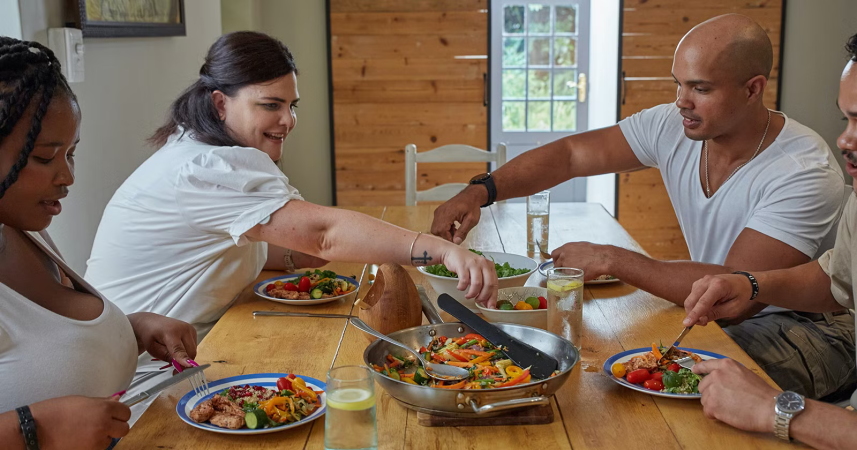
Encouraging others to eat more plants works best when it comes from inspiration, not pressure. Avoid these 8 common mistakes that make people tune out.
Crafting a plant forward life is one thing. Inspiring others to come along for the ride is something else entirely.
If you have ever tried to nudge a friend toward ordering the veggie burrito or swapping dairy for oat milk, you already know the fine line between helpful and preachy.
And that line is thin. Very thin.
I have learned, sometimes the hard way, that the quickest way to shut someone down is to make them feel judged. The quickest way to open them up is to make them feel understood.
Here are eight mistakes worth avoiding if you actually want to inspire people to eat more plants instead of pushing them away.
Let’s get into it.
1) Making every conversation about food
Have you ever been at a party with that one person who steers every topic back to their favorite hobby?
It gets old fast.
When people go plant based or even just enthusiastic about eating more plants, there is a temptation to over identify with it.
Suddenly every conversation becomes about protein, tofu textures, or the ethics of cheese.
I know because I used to do this. I caught myself turning casual chats into nutrition mini lectures and wondered why people seemed to avoid asking me anything food related.
Most people do not want to be educated every time they pick up a fork.
If the goal is to inspire and not exhaust, let people see you as a whole person who happens to eat plants, not a walking dietary doctrine. Nobody likes being cornered by a food missionary.
When people are curious, they will ask. Let the conversation breathe until then.
2) Judging others for small imperfect choices
A friend once ordered a veggie burger while we were out. It came with cheese, and without thinking, I made a comment like, “You know it is not really plant based if it has dairy.”
Cringe. I still regret it.
Not only did it kill the vibe, but she later admitted it made her feel like trying plant based meals around me was risky.
People do not experiment with new habits when they feel they are being evaluated.
If someone is making any plant leaning choice, celebrate the direction, not the purity level.
Maybe they still use honey. Maybe they are obsessed with ranch. Maybe they will never give up sushi. That is not your problem.
Behavioral science shows that people change when they feel supported, not scrutinized.
Encourage the momentum instead of nitpicking the details.
3) Using guilt or shock tactics
I have mentioned this before but guilt does not motivate long term change. It triggers defensiveness.
There is a reason anti smoking campaigns shifted from terrifying images to empowerment based messaging. Fear shuts people down. Autonomy lifts people up.
When someone feels manipulated, they resist, even if the cause is noble.
And honestly, most people already know factory farming is awful and that vegetables are good for them. They do not need to be traumatized into caring.
If your goal is to inspire, lead with possibility, not horror. Show what is delicious, energizing, convenient, or genuinely fun about eating more plants.
Let curiosity be the pull instead of guilt being the push.
4) Acting like eating plant based is effortless

Here is a strange thing that happens in activism. Sometimes we make changes sound easier than they really are because we are afraid of turning people off.
But acting like everything is simple creates distance. People know when they are being sold a fantasy.
For most adults, changing eating habits is emotional and practical. Food is culture, childhood, comfort, routine, and family.
When we pretend it is not challenging, we invalidate real barriers.
A friend once told me she felt more comfortable talking to me about going plant based once I acknowledged that I also struggled at the beginning.
She said it made the shift feel more human, less all or nothing.
If someone expects perfection, they recognize they will fail before they start.
Honesty gives people permission to try.
5) Bombarding people with statistics instead of stories
We live in a time when data is everywhere. But here is the twist. Data rarely moves anyone.
Stories do.
You can tell someone about carbon footprints or cholesterol levels for hours, but most people will not shift their habits because a pie chart told them to.
They shift when they hear something they connect with. Maybe it is about your energy improving. Maybe it is about feeling lighter after meals.
Maybe it is about discovering a dish that you now cannot stop making.
I still remember eating a bowl of mushroom ramen in Tokyo years ago. It was so mind blowing that it quietly rewired my idea of what plant based food could be.
That story has inspired more people to try plant based ramen than any statistic I could ever quote.
Stories spark imagination.
Data just fills space.
6) Forgetting how it felt when you were not plant based
One of the easiest ways to sound preachy is to forget your own starting line.
Most people are not born loving tempeh and nutritional yeast. We all had a before.
I grew up eating fast food cheeseburgers like everyone else. The shift did not happen overnight, and it definitely did not happen because someone lectured me.
It happened because someone made me a plant based dish that tasted insanely good.
That is it. No moralizing. Just good food and a good moment.
When we forget our own journey, we lose our empathy. And without empathy, everything we say starts to sound like pressure.
If you want people to feel open, show them you get it. You have been there. You understand the inertia.
People do not need you to be perfect. They need you to be relatable.
7) Making plant based food sound like a moral superiority badge
Anytime you attach your moral identity to a lifestyle choice, you risk alienating everyone who does not share it.
Eating plant based does not make someone smarter, kinder, or more enlightened. It makes them someone who made a specific choice and nothing more.
If you treat your diet like a personal elevation badge, people will avoid the entire subject just to escape the comparison.
You know that feeling when someone buys a Tesla and suddenly becomes the self appointed ambassador for all sustainability on earth. It is the same vibe.
Plant based eating is not a personality.
It is a preference that can align with values, yes, but it does not define your worth.
Humility makes people curious. Ego makes them roll their eyes.
8) Pushing instead of inviting
When I traveled through Southeast Asia, something interesting happened. I found myself eating more plants not because anyone told me to, but because the food was irresistible.
The flavors, the textures, the creativity. All of it pulled me in naturally.
That is the key word. Pulled.
No one tried to convert me. The food simply spoke for itself.
The most inspiring people in any arena, not just food, lead by attraction and not pressure.
If you constantly push, people brace themselves.
If you invite, people lean in.
Make dishes that smell incredible. Share meals that look colorful and alive. Bring snacks people actually want to try. Let your enthusiasm be quiet and real, not performative or strategic.
People do not change because they are shoved. They change because something sparks their curiosity, then their enjoyment, then their momentum.
You are not trying to win an argument. You are trying to open a door.
The bottom line
Inspiring people to eat more plants is not about convincing them they are doing something wrong.
It is about making the plant forward option feel exciting, possible, and pressure free.
When you drop the preachiness, people stop bracing themselves. They get curious. They experiment. They lean in.
Small changes happen from a place of enthusiasm, not guilt.
And you never know. Your quiet encouragement might be the reason someone tries a dish that changes everything for them.
One meal at a time. One conversation at a time. That is how it spreads.
What’s Your Plant-Powered Archetype?
Ever wonder what your everyday habits say about your deeper purpose—and how they ripple out to impact the planet?
This 90-second quiz reveals the plant-powered role you’re here to play, and the tiny shift that makes it even more powerful.
12 fun questions. Instant results. Surprisingly accurate.