You don’t need to become an old-school person to use old-school tools.

Add VegOut to your Google News feed. 
You’ve probably heard some version of, “Okay boomer,” thrown around like a meme grenade.
Sure, a lot of boomer advice deserves to stay in the past, like the idea that you can walk into a company, shake the manager’s hand, and leave with a job and a pension.
Here’s the thing I’ve noticed as a thirty-something who grew up online and then spent a decade in luxury food and hospitality: Some “old-school” behaviors are weirdly effective right now.
We’re drowning in noise, shortcuts, and dopamine snacks.
So, when someone brings back a habit that’s slow, deliberate, and slightly inconvenient, it can feel almost rebellious.
Let’s talk about seven old-school behaviors that boomers get right, and how they can make your life smoother today, especially if you care about food, health, and living better:
1) Write things down on paper
My phone has three calendar apps, two note apps, and a reminders system that still manages to betray me weekly.
Meanwhile, the most productive people I’ve worked with in hospitality always had one low-tech weapon: A pen and a notebook.
There’s something about writing things down that changes how your brain treats the information.
When it comes to eating well, “winging it” is how you end up ordering takeout at 9:30 PM, wondering why you feel like a gremlin the next morning.
Try this: Keep a small notebook where you write three things each day.
- One thing you’re doing for your body (workout, walk, meal prep)
- One thing you’re doing for your mind (reading, journaling, learning)
- One thing you’re doing for your future (money, career, relationships)
It’s simple, old-school, and it works because it forces clarity.
2) Call people instead of hiding behind texts
I love texting because it’s efficient, low pressure, and lets me think before I respond.
It also lets me avoid things I should probably deal with like an adult.
Boomers get roasted for phone calls, but they understood something we’re re-learning: Nuance matters.
A two-minute call can solve what would take 47 messages and a passive-aggressive thumbs-up reaction.
This is especially true in relationships.
If something feels “off” with a friend, a partner, even a colleague, and texting can turn into a weird courtroom drama where everyone’s overanalyzing punctuation.
A call cuts through it.
In hospitality, if a guest complaint came in, you picked up the phone, listened, acknowledged, and fixed it.
If you want a practical rule: When the conversation involves emotion, money, or plans, consider calling.
This might feel awkward for 15 seconds, but it saves you hours of mental clutter.
3) Show up early and be ready
Punctuality is leverage.
I learned this the hard way in fine dining, where showing up “on time” basically meant you were late.
The kitchen runs on sequencing, the floor runs on timing; if you’re rushed, you’re sloppy and the service suffers.
Life works the same way as, when you show up early, you buy yourself composure and you can make better decisions.
If you’re trying to eat better, this habit matters more than people think.
Being unprepared is the number one reason we default to convenience food.
No groceries, no plan, no time; you’re eating whatever is closest and saltiest.
Showing up early is really just a form of respect.
Respect for other people’s time, sure, but also respect for your own standards.
4) Cook more meals at home, even if you keep it basic
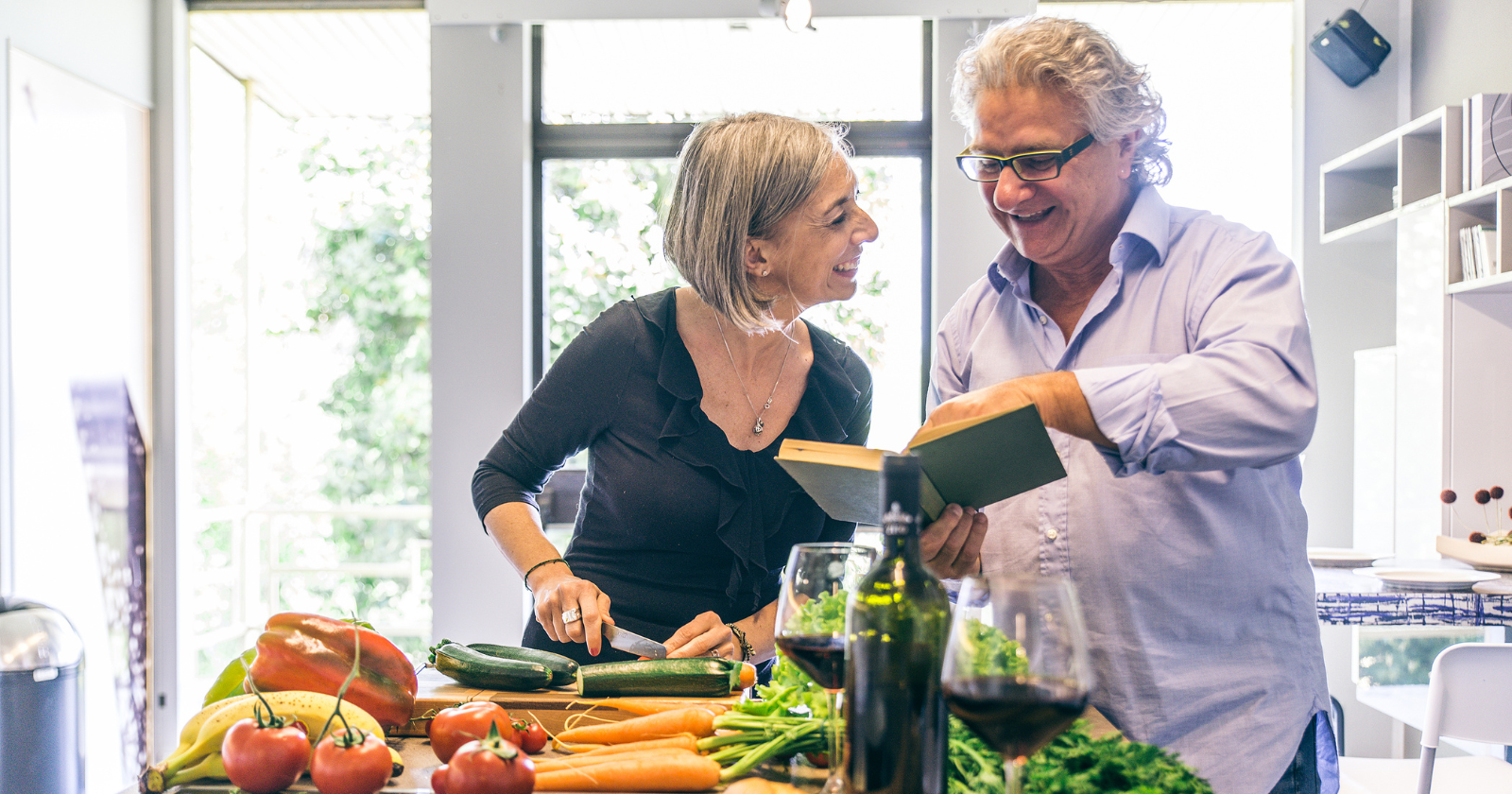
Boomers love telling us we’d be homeowners if we stopped buying lattes, but the point is that cooking at home is one of the highest-return behaviors you can adopt if you care about energy, health, and money.
It doesn’t need to be a whole Pinterest production, too!
Some of the “old-school” cooking habits I grew up seeing were boring in the best way: Simple proteins, vegetables, soups, rice dishes, and sandwiches that weren’t trying to be viral.
When I was working in luxury F&B, I got to experience what “high end” really means: Quality and care.
At home, that translates to a small rotation of dependable meals:
- A big salad with roasted vegetables and something hearty on top
- A simple pasta with a legit sauce and good olive oil
- Stir-fry with whatever you have plus tofu, tempeh, eggs, or seafood
- Soup you can reheat for two days straight
If you want to make it easier, borrow the kitchen concept of mise en place: Set yourself up before you start.
Wash your greens, chop your onions, cook a grain, make a dressing; suddenly, eating well stops being a daily negotiation.
5) Don’t waste. Repurpose.
Boomers can be almost spiritual about leftovers.
As a kid, I thought it was annoying.
As an adult who has thrown away sad produce more times than I want to admit, I get it now.
Waste is usually a sign of disconnection.
You bought food without a plan, you cooked without thinking ahead, and you let “later” become “never.”
Beyond money, there’s a mindset here that matters: The ability to work with what you have, and that’s a life skill!
Leftover roasted vegetables become tacos, extra rice becomes fried rice, a can of beans becomes salad, soup, or a quick mash for toast, stale bread becomes croutons, and overripe bananas become pancakes.
This is also one of the most underrated ways to eat healthier without feeling deprived.
When you learn to repurpose, you’re less dependent on delivery, and you’re more likely to keep nourishing food in the rotation.
6) Read longer stuff and stop outsourcing your thinking
Boomers weren’t perfect, but many of them had a habit we’re losing: They sat with information for longer than 12 seconds.
These days, we “learn” by collecting hot takes as we screenshot threads, save posts, and watch summaries of books we never read.
Then, we wonder why we feel scattered.
One of the best things I ever did for my mental health was returning to long-form reading because it trains your attention, and attention is basically the steering wheel of your life.
If you’ve read Cal Newport’s Deep Work, you know the argument: Your ability to focus is becoming rare, and rare skills become valuable.
That applies to everything, such as career growth, fitness consistency, and relationships.
If you can pay attention, you can improve, so start small: Ten pages a day, a physical book on your nightstand, with no pressure to be a genius.
7) Practice directness, even when it’s uncomfortable
Finally, this is the one I wish more of us adopted earlier: Say what you mean.
Boomers can be blunt—too blunt, sometimes—but there’s a strength in being direct that our “soft launch” generation sometimes avoids.
We hint, speak vaguely, and drop signals and hope someone picks them up.
Directness saves time and it also builds trust.
In hospitality, the best teams were the ones where everyone was clear:
- “Behind you.”
- “Corner.”
- “Table 12 needs refires.”
In real life, directness looks like:
- “I can’t make it tonight, but I’d love to reschedule.”
- “That comment bothered me. Can we talk about it?”
- “I’m not available after 7 PM, but I can do tomorrow morning.”
If you’re worried about sounding harsh, here’s the trick: Be direct about the message and warm about the delivery.
Clarity plus kindness is basically a superpower.
Closing thoughts
It’s easy to dunk on boomer habits because some of them are outdated, tone-deaf, or just plain annoying.
If you strip away the stereotypes, a lot of their best behaviors come down to the same core ideas: Be prepared, be intentional, and take responsibility for your own life.
Paper beats mental clutter, calls beat confusion, cooking beats chaos, reading beats noise, and directness beats resentment.
Pick one behavior from this list and run it for a week, then ask yourself a simple question: Do I feel more in control of my time, my food, and my energy?
If the answer is yes, keep it; if it’s no, ditch it and try the next one.
That’s the whole game anyway: Experiment, adjust, and keep what actually makes your life better.