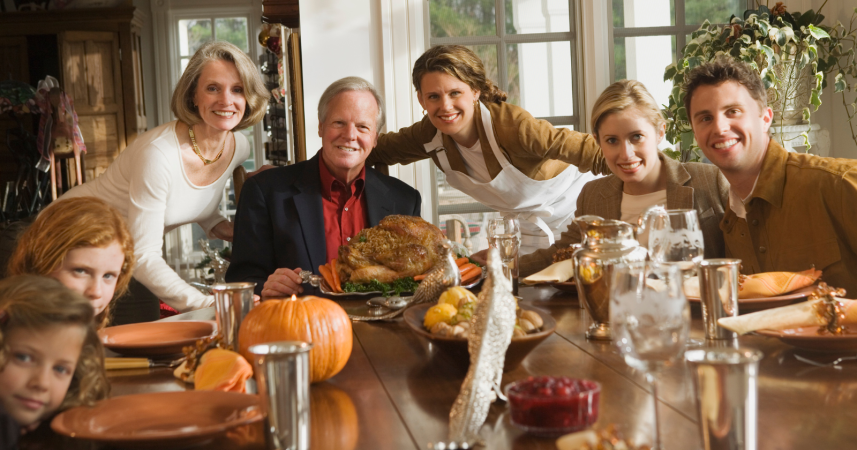
None of these traditions require a perfect menu, a giant budget, or a Pinterest-worthy table.
Thanksgiving is one of those days where everything seems to orbit the table.
I say that as someone who spent my twenties in luxury restaurants, obsessing over sauces and plating while guests ordered the “special holiday menu.”
Food can absolutely be a love language but, somewhere between the third round of sides and the collective food coma, it is easy to forget that the point of the day is not the mashed potatoes.
It is connection, reflection, and choosing to remember what is good in our lives instead of scrolling the next outrage headline.
What I want to share are a few simple traditions you can layer on that are not about what is on your plate:
1) Start a gratitude circle that actually feels real
You have probably done the awkward “everyone say what they are grateful for” thing.
Half the table says “family and friends,” someone cracks a joke, and it is over in 90 seconds.
Nice idea, weak execution.
The version that actually works is slower and more intentional.
Here is how I like to do it.
After everyone has settled, grab an object that can act as a “talking piece”: A candle, a small pumpkin, or even someone’s favorite mug.
Only the person holding it speaks.
Instead of a generic “what are you grateful for,” ask a more specific question: “What is one thing that happened this year that you are grateful for, that nobody at this table knows about?”
You can swap the question each year, but keep it specific and personal.
When I tried this with friends for the first time, I learned that one of them had finally gone to therapy after putting it off for years.
Another had quietly paid off a debt that had been haunting him since college.
These are not things people casually announce over cranberry sauce.
A simple rule helps: no interruptions, no “topping” someone’s story, no advice unless they ask for it.
You pass the object, you listen, you let the moment breathe.
It turns a cheesy tradition into one that people remember.
2) Run a “year in review” hot seat
One of my favorite questions from the book “Designing Your Life” is, “Where did your energy go this year?”
Thanksgiving happens close enough to the end of the year that it is a perfect moment to reflect.
Instead of everyone talking at once, try a “hot seat” tradition.
Here is how it works: Each person gets five minutes in the spotlight.
During their turn, they answer three questions:
- What is one thing you are proud of from this year?
- What is one thing you struggled with?
- What is one thing you want to do differently by next Thanksgiving?
Everyone else just listens.
If you want, you can add one follow up question per person, but keep it curious, not judgmental.
The first time I did a version of this, it was with a bunch of hospitality coworkers who were used to spending holidays in service mode.
We were all burnt out and a bit jaded.
But when one of the chefs admitted he felt completely stuck in his career and wanted to go back to school, the whole energy in the room shifted.
Suddenly it was not just another staff meal.
It was a group of humans being honest about where they were and where they wanted to go.
Do this every year and you get a living record of growth, change, and sometimes chaos.
It becomes a ritual check-in with yourself and the people you care about.
3) Create an annual kindness project
Most of us like the idea of “giving back,” but it stays vague.
We say we want to volunteer, then life happens and it gets pushed to “someday.”
Thanksgiving is a perfect anchor for turning that vague intention into a simple, repeatable practice.
Think of it as your annual kindness project: Pick one small, concrete thing your group will do each year that benefits someone outside your table.
You could write handwritten letters or cards to people who might feel forgotten: Elderly relatives, teachers, neighbors, someone going through a hard time.
You could put together care packages with basic essentials for a local shelter; you could choose a cause each person cares about and set up a “giving circle” where everyone contributes what they can, even if it is just a few dollars.
The key is to make it simple enough that you will actually do it.
When we repeat acts of generosity, they shape our identity.
“I am someone who gives” is a powerful story to live inside.
When you involve kids or teens, you are quietly teaching them that this day is not only about getting more, it is about sharing what you already have.
Over time, this tradition becomes part of the family story.
That is a legacy that outlasts any pie.
4) Build a movement ritual everyone can enjoy
Here is the thing about holiday meals: They usually involve a lot of sitting.
We sit to prep, we sit to eat, we sit to scroll while the dishes soak.
Afterwards, we complain about feeling heavy and sluggish.
What if part of your tradition was moving your body together, not as punishment for eating, but as a way to feel more alive in your own skin?
This could be as simple as a “gratitude walk” before or after the meal.
Phones on silent.
Everyone names things they notice as you walk: Changing leaves, the cold air, the neighbor’s ridiculous inflatable turkey.
If your crew is more playful, set up a super low-stakes backyard game: a made-up obstacle course, a frisbee toss, a family yoga follow-along on TV.
The point is presence.
When I worked in restaurants, some of my favorite moments were not in the dining room.
They were the five-minute “fresh air breaks” out back, when we would step outside, stretch, breathe, and reset.
On a busy service, those tiny movement rituals kept us sane.
You can steal that same idea for your holiday.
Make movement a non-negotiable part of the day, not a guilty afterthought.
It sends a quiet message to yourself: My body is a place I live.
5) Start a yearly time capsule ritual
Lastly, one of the most meaningful non-food traditions I know is some version of a time capsule.
Humans are terrible at remembering what life actually felt like a year ago.
We remember the big headlines, not the small details that make up our real lives.
A time capsule tradition fixes that.
Here is a simple version: Give everyone a small piece of paper and a pen.
Ask them to write three things:
- One thing they are proud of from this year
- One thing they are worried about
- One hope or intention for the next year
Fold the papers, put them in a box, jar, or envelope.
Label it with the year, and promise not to open it until next Thanksgiving.
At next year’s gathering, you open last year’s notes and read them.
Some things will make you laugh, some will sting a little, and some will make you realize just how far you have come without noticing.
I remember doing something similar on a New Year’s Eve with friends, and pulling out a note a year later where I had written, “I want to feel less exhausted all the time.”
I had totally forgotten that sentence, but seeing it on paper made me realize I actually had made changes.
I was sleeping more, moving more, saying no more.
Without the ritual, I might have missed that progress.
You can add to this time capsule however you want.
Photos, ticket stubs, a playlist you all loved, a quick voice recording if you are a tech person.
The format does not matter; what matters is that once a year, you pause to capture who you are right now, so future you can remember.
A new kind of holiday memory
None of these traditions require a perfect menu, a giant budget, or a Pinterest-worthy table.
They ask for something harder and more valuable: Your attention, your willingness to be a little vulnerable, your choice to make this day about more than topping last year’s recipes.
You do not need to overhaul your whole holiday to start.
Pick one tradition from this list that feels doable, even if it is just a five-minute gratitude circle or a walk around the block.
Try it once and, if it feels good, repeat it next year.
In a decade, that “little experiment” might be the thing everyone in your life associates with this day.
If You Were a Healing Herb, Which Would You Be?
Each herb holds a unique kind of magic — soothing, awakening, grounding, or clarifying.
This 9-question quiz reveals the healing plant that mirrors your energy right now and what it says about your natural rhythm.
✨ Instant results. Deeply insightful.