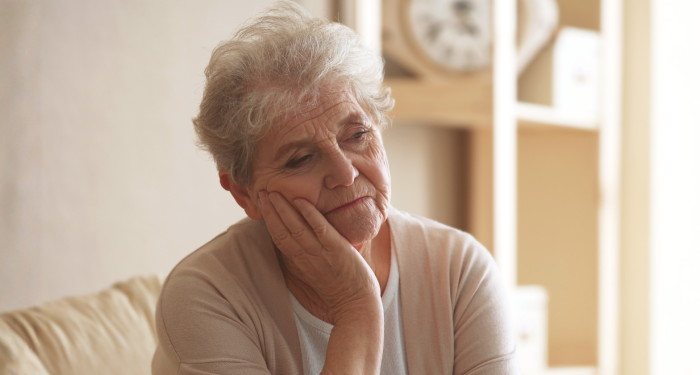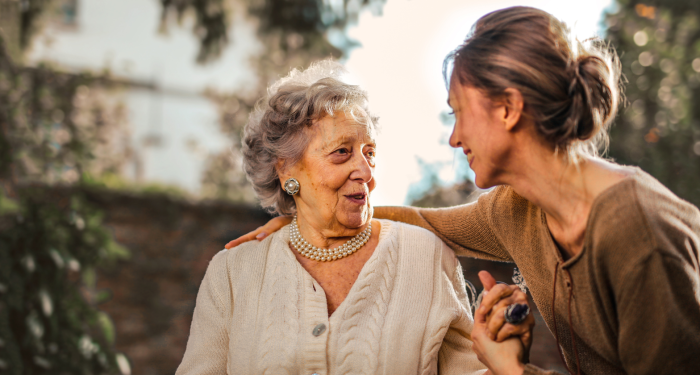
You can sit at a full table, surrounded by people you love, and still feel completely alone.

Add VegOut to your Google News feed. 
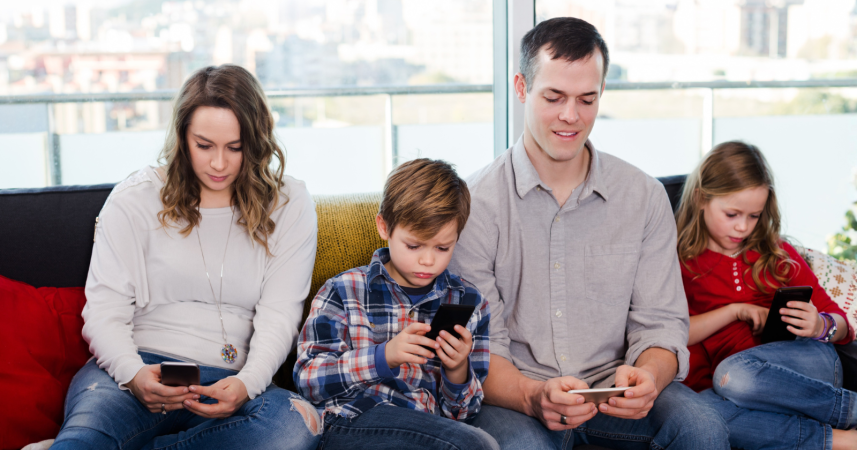
Picture a family dinner. The table is set. The food is hot. Everyone's there.
And yet nobody is really there.
Dad's scrolling through headlines. The kids are deep in TikTok rabbit holes. Mum's half-watching a reel and half-eating. Someone at the table is technically present, but mentally they're somewhere between Instagram and a group chat.
Sound familiar?
Here's the thing that gets me about modern loneliness: we've completely rewritten what it looks like. The old image of a lonely person was someone eating alone in a studio apartment. Today, you can be surrounded by the people you love most and still feel utterly invisible.
I've been thinking about this a lot lately. When I lived in Bangkok for three years, I noticed something about the communities I was embedded in. People ate together without their phones on the table. Conversations lingered. There was this Thai concept I kept encountering called sabai, a kind of ease and contentment that comes not from doing more, but from simply being present. It was the opposite of everything I'd grown up with.
Then I came back to the US, and the contrast was jarring.
We have more ways to connect than ever before, and somehow, we've never felt further apart. The loneliness epidemic isn't about isolation in the physical sense. It's about the slow death of genuine presence.
These nine behavioral shifts explain how we got here, and what you can actually do about it.
1) We replaced conversations with broadcasts
Think about the last "conversation" you had on social media. Was it actually a conversation?
Most of what happens on these platforms isn't dialogue. It's performance. People post updates, not to connect, but to be seen. The comment section becomes a place for quick reactions, not real exchange. We broadcast our highlight reels to hundreds of people and call it staying in touch.
Real conversation requires something that broadcasting doesn't: mutual vulnerability. It requires you to not know how it's going to land. It requires you to listen as much as you speak.
Growing up, family dinners at our house weren't elaborate affairs. My parents were teachers. It wasn't about the food. But my grandmother's Sunday roasts were something else entirely. Those meals were loud and long and nobody was checking a phone because phones weren't a thing. They were present. And I didn't fully understand until adulthood how rare that actually was.
We've traded those kinds of moments for a notification badge. And we wonder why we feel disconnected.
2) Eye contact became uncomfortable
When was the last time you held someone's gaze for more than a few seconds without it feeling weird?
We've been conditioned by screens to look down. The average person checks their phone around 96 times a day. That's once every ten minutes. We've essentially trained our nervous systems to seek stimulation from a device rather than from the person sitting across from us.
In the restaurant world, I learned early that eye contact is everything. It signals attention. It signals respect. A great host doesn't just take your order, they make you feel genuinely seen. I've watched a single moment of real eye contact transform the mood of an entire table.
But that skill is becoming rarer, and it's not just a social nicety we're losing. Eye contact triggers oxytocin, the bonding hormone. It's a biological mechanism for human connection. And we're slowly turning it off.
3) We outsourced boredom
Boredom used to be the gateway to connection. You'd be sitting somewhere with nothing to do, so you'd talk to the person next to you. You'd notice the world around you. You'd have a thought that wasn't prompted by an algorithm.
Now, the moment boredom arrives, we reach for the phone. Every waiting room, every elevator, every quiet Sunday morning has been colonized by a screen.
The problem isn't just that we've lost the art of doing nothing. It's that boredom is where intimacy lives. It's in those unstructured, unstimulated moments that real conversations happen. When you stop filling every silence, you create space for something genuine to emerge.
I still go for walks without my phone sometimes. I started doing it in Bangkok, out of necessity more than anything else, and I've kept the habit going in Austin. Those walks are often where my best thinking happens. More than that, when I pass someone and actually make eye contact and say hello, it feels almost radical. Like I've broken some unspoken social contract.
That's how far we've drifted.
4) Proximity got mistaken for intimacy
Here's one people don't like to hear: being around someone is not the same as being with them.
You can share a home with someone for years and still not really know them. You can sit next to your partner on the couch every single night and be completely absent from the relationship. Physical closeness creates the illusion of connection without requiring any of the actual work.
In Susan Cain's book Quiet, she talks about how introverts often experience social exhaustion precisely because so much social interaction today is surface-level. The volume of interaction has gone up. The depth has gone way down. And that's exhausting for everyone, not just introverts.
Proximity is easy. Presence takes effort.
5) We stopped hosting and started consuming
I host dinner parties at my place fairly regularly. Nothing over the top. Good food, a small group, no agenda. And what strikes me every single time is how quickly people decompress when they're in a space that isn't designed to pull their attention in seventeen directions.
There's no feed to scroll. There's something on the stove. There's wine in the glass. And people actually talk.
We've replaced that kind of hosting with consumption. Instead of gathering people around a table, we gather in front of content. Netflix nights have replaced dinner parties. Group chats have replaced group hangs. The passive, screen-mediated version of togetherness has quietly replaced the active, embodied version.
And it's not that watching a film together is inherently bad. It's that when that becomes the only mode of spending time with people, you're consuming in parallel, not connecting.
6) Vulnerability got edited out
Here's something I noticed working in luxury hospitality for over a decade: the wealthiest clients were often the loneliest people in the room.
They had access to everything. And yet the guard was always up. Everything was managed, curated, controlled. The meals I cooked for them were perfect. The service was immaculate. But real warmth? That was rare.
Because real connection requires imperfection. It requires saying something you're not sure will land. It requires being seen without the filter.
Social media has given everyone the tools to perform a version of themselves that never has a bad day, never says the wrong thing, never looks tired. And we've all become so accustomed to consuming these curated versions of people that we've forgotten what unedited humans actually look and sound like.
Brené Brown has built a career on this insight. Vulnerability isn't weakness. It's the price of admission to real connection. But the digital environment actively selects against it.
7) We multitask during moments that deserve full attention
There's a particular kind of loneliness that comes from talking to someone while they're half-looking at their phone. You're technically in conversation. But you can feel that you don't have their full attention. That you're competing with whatever's on that screen.
And here's the uncomfortable truth: we've all been that person too.
I used to pride myself on being efficient. Multi-tasking was a badge of honor in the kitchen. You have six things going at once, and you're across all of it. But what works for managing a pass during service doesn't work for relationships. Divided attention is a slow form of disrespect.
Cal Newport makes this point well in Deep Work. Our capacity for sustained attention has atrophied because we keep fracturing it. And the cost isn't just professional. It's deeply personal. You cannot make someone feel truly heard while simultaneously doing something else.
8) We confused digital check-ins for actual care
Sending someone a meme. Liking their post. Reacting to their story. We've built an entire vocabulary of low-effort gestures that create the feeling of staying connected without requiring any real investment.
And I'm not saying those things are meaningless. A well-timed meme from a friend can genuinely make your day. But when digital check-ins become the primary or only way we maintain relationships, something important starts to erode.
Real care is inconvenient. It's showing up when it's not convenient. It's calling someone when you know they're struggling, not just dropping a heart on their post. It's remembering the small things, what they said last month, what they've been anxious about, what they ordered the last time you ate together.
That kind of attention is what makes people feel genuinely less alone. And it can't be replicated with a notification.
9) Finally, we forgot that presence is something you practice
Presence isn't a passive state. It's an active choice, and like any skill, it deteriorates when you don't use it.
I picked up meditation while living in Bangkok, mostly because the people around me were doing it and it seemed like the right thing to do in the context. I was skeptical at first. But what I noticed over time wasn't some dramatic spiritual shift. It was simpler than that. I got better at noticing when my mind had wandered. And then I could bring it back.
That's it. That's the whole skill. Noticing you've drifted. Returning.
It applies just as much at the dinner table as it does on a meditation cushion. When you're talking to someone and you catch your thoughts drifting to your to-do list, you can notice that and return. When you reach for your phone out of habit in the middle of a conversation, you can notice that and put it down.
Presence, real presence, is what separates proximity from connection. It's what makes someone feel like the most important person in the room. And it's what's quietly slipping away from most of our relationships right now.
The good news is it's a skill. You can build it back.
The bottom line
Modern loneliness is sneaky. It doesn't announce itself. It hides inside group chats and full calendars and family dinners where everyone's physically together but mentally miles away.
The nine shifts above didn't happen overnight. They crept in slowly, one scroll at a time. And reversing them won't happen overnight either.
But it doesn't take a dramatic life overhaul. It takes small, deliberate moments of choosing presence over performance. Putting the phone face down. Holding eye contact a second longer than feels comfortable. Hosting the dinner instead of watching another show. Calling instead of liking the post.
Connection is still possible. It just requires a little more intention than it used to.
Until next time.
If You Were a Healing Herb, Which Would You Be?
Each herb holds a unique kind of magic — soothing, awakening, grounding, or clarifying.
This 9-question quiz reveals the healing plant that mirrors your energy right now and what it says about your natural rhythm.
✨ Instant results. Deeply insightful.

Adam Kelton
Adam Kelton is a writer and culinary professional with deep experience in luxury food and beverage. He began his career in fine-dining restaurants and boutique hotels, training under seasoned chefs and learning classical European technique, menu development, and service precision. He later managed small kitchen teams, coordinated wine programs, and designed seasonal tasting menus that balanced creativity with consistency.
After more than a decade in hospitality, Adam transitioned into private-chef work and food consulting. His clients have included executives, wellness retreats, and lifestyle brands looking to develop flavor-forward, plant-focused menus. He has also advised on recipe testing, product launches, and brand storytelling for food and beverage startups.
At VegOut, Adam brings this experience to his writing on personal development, entrepreneurship, relationships, and food culture. He connects lessons from the kitchen with principles of growth, discipline, and self-mastery.
Outside of work, Adam enjoys strength training, exploring food scenes around the world, and reading nonfiction about psychology, leadership, and creativity. He believes that excellence in cooking and in life comes from attention to detail, curiosity, and consistent practice.
More Articles by Adam