For fifty years I perfected the art of being exactly who everyone wanted me to be — the agreeable teacher, the devoted wife, the friend without problems — until my granddaughter asked what I liked about myself and I realized the performance had become so seamless, I'd forgotten there was supposed to be someone real underneath it all.

Add VegOut to your Google News feed. 
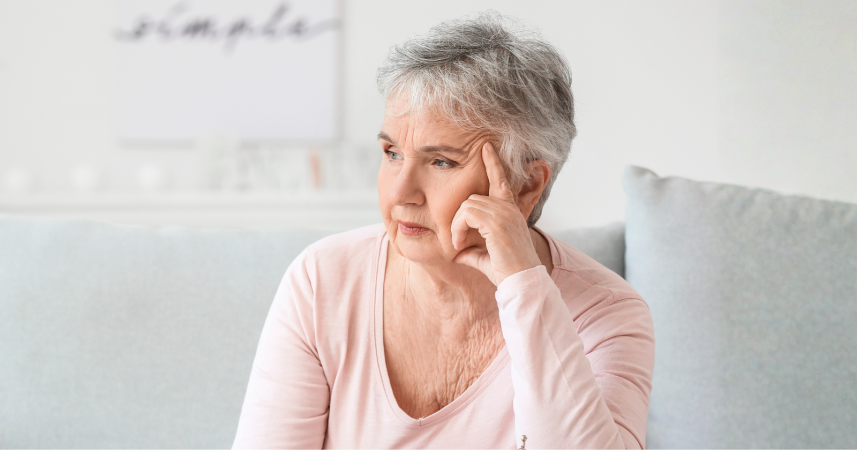
Last week, I stood in my kitchen at 5:30 AM, holding my usual cup of tea, and realized I couldn't answer a simple question my granddaughter had asked me the day before: "What's your favorite thing about yourself, Grandma?"
The silence that followed was because I genuinely didn't know.
After seven decades on this earth, I've become such an expert at being who everyone needs me to be that I've lost track of who I actually am.
The perfect performance that became my prison
I've been thinking about this a lot lately, especially during my morning journaling sessions when the house is still quiet and there's no one to perform for.
How did I become so skilled at shapeshifting? When did I start automatically adjusting my opinions, my tone, even my posture depending on who walked into the room?
It started innocently enough.
As a young teacher, I learned to be authoritative but approachable in the classroom, supportive but professional with parents.
At home, I was the devoted wife who never complained about the unequal division of household labor because that's what good wives did in the 1970s.
With friends, I was the cheerful one, the reliable one, the one who never had problems of her own.
The thing about wearing masks is that after a while, they stop feeling like masks.
They become your face and, when you've worn them for fifty years, taking them off feels like peeling away your own skin.
When everyone loves who you pretend to be
Here's what nobody tells you about being universally liked: It's exhausting and incredibly lonely.
People love the version of you that makes them comfortable, the one that never challenges them, never disappoints them, never asks for too much.
They love your reliability, your agreeableness, your ability to smooth over awkward moments and make everyone feel better about themselves.
But what happens when you need to fall apart? What happens when you disagree? What happens when the real you, whoever that is, has needs that conflict with what others expect?
I found out during my divorce.
The supportive friends who loved my accommodating nature suddenly didn't know what to do with a woman who was choosing herself over keeping the peace.
Some literally told me they "didn't recognize me anymore."
The irony was that for the first time in decades, I was trying to be authentic, and authenticity made people uncomfortable.
The archaeology of finding yourself at 70
I'm conducting an archaeological dig through layers of personas, trying to find something genuine underneath.
Some mornings, I sit with my journal and write lists of things I might actually like if I gave myself permission.
Do I really enjoy hosting elaborate dinner parties, or do I do it because I've always been "the hostess"? Do I actually want to spend every holiday surrounded by extended family, or would I sometimes prefer a quiet day with a book?
The answers aren't coming easily.
When you've spent decades automatically choosing what will please others, your own preferences atrophy like unused muscles.
I'll start to write "I love..." and then stop, wondering if I really love it or if I just learned to love it because it made me valuable to others.
The unexpected gift of invisibility
There's something oddly liberating about becoming invisible as an older woman, though it took me years to see it as anything other than a loss.
When society stops watching you so closely, when you're no longer performing femininity for the male gaze or competing in the subtle hierarchies of younger women, there's space to breathe.
I started writing at 66 because a friend noticed I had stories worth telling.
However, more importantly, I started writing because for the first time and I wasn't worried about whether my stories would make me less likeable.
The invisibility I once fought against has become a kind of freedom.
In my previous post about reclaiming your voice after 60, I mentioned how silence can be both a prison and a sanctuary.
These morning hours with my tea and journal have become my sanctuary, the one place where I don't have to perform, where I can admit that I'm angry about things I smiled through decades ago, and where I can acknowledge that some of the relationships I've maintained out of obligation have been draining me for years.
Learning to disappoint people (including myself)
The therapy I started in my fifties taught me about boundaries, but intellectual understanding and emotional practice are very different things.
Even now, at 70, saying no feels like swallowing glass.
Every disappointed face feels like a personal failure, but here's what I'm learning: Disappointing others is sometimes the only way to stop disappointing yourself, and I've been disappointing myself for so long that I'd stopped noticing the weight of it.
Last month, I told my family I wouldn't be hosting Thanksgiving this year.
The silence on the phone was deafening, but you know what? The world didn't end.
They figured it out, and I spent the day reading, taking a long walk, and eating exactly what I wanted for dinner.
It was the first holiday in forty years where I didn't feel like I was performing in a play about family togetherness.
Final thoughts
I may be 70, but I'm just beginning to understand that finding yourself isn't a destination you reach.
It's an ongoing excavation, a daily practice of paying attention to what feels true versus what feels expected.
Some days I catch glimpses of her, the real me, usually in those quiet morning moments when no one else is awake.
She's opinionated and sometimes difficult, rather read than make small talk, or tired of apologizing for taking up space.
I don't know if I'll ever fully know her, this authentic self I've buried under decades of performance, but I'm trying and maybe that's enough.
Maybe the search itself is the point, the willingness to keep digging even when you're not sure what you'll find.
The alternative, continuing the performance until the curtain finally falls, is a loneliness I can no longer bear.
What’s Your Plant-Powered Archetype?
Ever wonder what your everyday habits say about your deeper purpose—and how they ripple out to impact the planet?
This 90-second quiz reveals the plant-powered role you’re here to play, and the tiny shift that makes it even more powerful.
12 fun questions. Instant results. Surprisingly accurate.