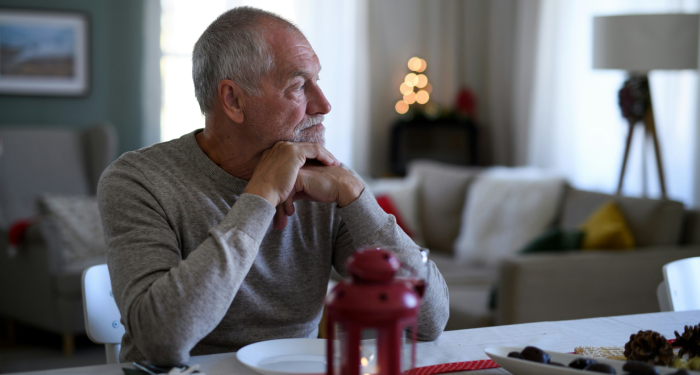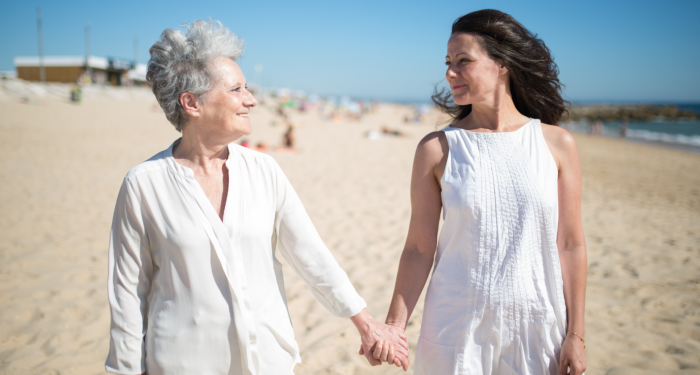
The silence at their 50th anniversary party was deafening—not from lack of guests or conversation, but from the way my parents moved through the room like ghosts haunting the same house, never quite touching, never quite seeing each other.
Some realizations arrive decades too late, like understanding a novel's foreshadowing only after you've turned the final page. When my parents announced their divorce last spring—him at 74, her at 72—I felt the ground shift beneath me in a way that had nothing to do with my own aging knees.
Fifty years of marriage, dissolved. The shock wasn't just emotional; it was archaeological, as if everything I thought I knew about love and commitment suddenly needed reexamination.
In the months since, I've been excavating memories, sifting through decades of family dinners and holiday gatherings with the painful clarity of hindsight.
What I discovered disturbed me: the warning signs had been there all along, hidden in plain sight like those optical illusions where you can't see the second image until someone points it out. And once you see it, you can never unsee it.
1) They stopped laughing at each other's stories
Remember when your partner's stories were fresh, when their well-worn anecdotes still sparked genuine delight? I can pinpoint the year my father's fishing tales stopped making my mother smile—1998, the summer we rented that cabin in Maine.
She'd heard about the one that got away so many times that her face had developed a particular stillness when he launched into it. Not eye-rolling contempt, but something worse: complete detachment, as if she'd stepped outside her body while he spoke.
The absence of shared laughter creates a specific kind of silence. It's not peaceful; it's hollow, like a house where all the furniture has been removed but the walls remain standing.
2) Their bodies told different stories
Have you ever noticed how long-married couples often move in sync, their bodies creating a private choreography refined over decades?
My parents' bodies began telling different stories sometime in their sixties. In family photos, they stood like magnets with matching poles—close but never quite touching, an invisible force maintaining that crucial inch of separation.
During my father's retirement party, I watched them navigate the crowd like two planets in separate orbits, occasionally passing close but never colliding. Their physical distance wasn't dramatic or obvious.
It was measured in millimeters: the way she'd lean slightly away when he reached for the salt, how he'd angle his newspaper to create a barrier at breakfast.
3) They became historians instead of dreamers
"Remember when we drove to California in that terrible old station wagon?" became their conversational refrain, but try asking them about next summer's plans and watch the conversation stall.
Somewhere along the line, my parents stopped building futures together and started living exclusively in their shared past.
This backward gaze isn't uncommon as we age, but there's a difference between nostalgia and using memories as life support for a dying relationship. When every conversation loops back to 1975 because that's the last time you were truly happy together, you're not reminiscing—you're grieving.
4) The kindnesses became performances
My mother would still bring my father his coffee exactly how he liked it—two sugars, splash of cream—but she'd set it down with the mechanical precision of someone completing a checklist. He'd thank her with equal automation.
These gestures, which I once saw as evidence of enduring love, I now recognize as elaborate theater performed for an audience of their children and friends.
Real kindness has warmth to it, a quality of attention that can't be faked. When kindness becomes duty, it turns cold, no matter how perfectly the coffee is prepared.
5) They developed separate worlds within the same house
By the time my father was 70, he'd transformed the basement into his domain—tools organized with military precision, a small television playing the history channel on repeat. My mother claimed the sunroom, surrounding herself with library books and knitting projects.
They'd created a duplex within their ranch house, complete with invisible property lines.
When I visited, I became a diplomat shuttling between two sovereign nations. "Tell your father dinner's ready." "Ask your mother if she's seen my reading glasses." They communicated through intermediaries even when they were three rooms apart.
6) The criticism went underground
What's more toxic: open conflict or suppressed contempt?
In their younger years, my parents would argue—sometimes loudly—about money, parenting decisions, whose turn it was to call the plumber. But somewhere around their 40th anniversary, the arguments stopped. Not because they'd found peace, but because they'd given up.
The criticism didn't disappear; it went underground, surfacing in sighs, raised eyebrows, and conversations that began with "Your father always..." or "Your mother never..." when the other wasn't present. They'd turned me and my sisters into confession booths, repositories for complaints they no longer bothered to address directly.
7) They protected their loneliness
There's a particular kind of loneliness that exists within a marriage, and it's more acute than being alone. I recognize it now in how fiercely they guarded their individual sadness, as if admitting to it would crack the last foundation holding up their union.
When I read Laughing in the Face of Chaos: A Politically Incorrect Shamanic Guide for Modern Life recently, Rudá Iandê's words stopped me cold: "Being human means inevitably disappointing and hurting others, and the sooner you accept this reality, the easier it becomes to navigate life's challenges."
His insights helped me understand that my parents' protection of their loneliness wasn't noble; it was fear dressed up as consideration.
8) They stopped choosing each other
Love isn't just a feeling; it's a daily decision.
When did my parents stop choosing each other? When did autopilot take over? They showed up for birthdays and anniversaries, fulfilled their roles at family gatherings, maintained the infrastructure of marriage.
But the actual choosing—the daily decision to turn toward rather than away—had ended years before the divorce papers were filed.
I think about my own second marriage, how we nearly lost each other in year five before counseling taught us that asking for help is its own form of love. The difference between a marriage that survives and one that slowly suffocates might be as simple as continuing to choose, even when the choosing gets hard.
Final thoughts
Watching my parents' marriage end has been like reading a mystery novel backward—all the clues make terrible sense once you know the ending.
But maybe that's the wrong lens. Maybe instead of warning signs, these were simply the accumulated effects of two people who stayed together long past the expiration date of their connection, held by habit and fear rather than love.
The real lesson isn't about spotting red flags earlier. It's about having the courage to acknowledge when a chapter has ended, even if you're 70 pages or 50 years in. Sometimes the bravest thing two people can do is admit they've been walking parallel paths that no longer converge, and finally give each other permission to find new directions.
If You Were a Healing Herb, Which Would You Be?
Each herb holds a unique kind of magic — soothing, awakening, grounding, or clarifying.
This 9-question quiz reveals the healing plant that mirrors your energy right now and what it says about your natural rhythm.
✨ Instant results. Deeply insightful.
Marlene Martin
Marlene Martin is a retired high school English teacher who spent 38 years in the classroom before discovering plant-based eating in her late sixties. When her daughter first introduced her to the idea of removing animal products from her diet, Marlene was skeptical. But curiosity won out over habit, and what started as a reluctant experiment became a genuine transformation in how she thinks about food, health, and aging.
At VegOut, Marlene writes about nutrition, wellness, and the experience of embracing new ways of eating later in life. She brings a teacher’s instinct for clarity and patience to topics that can feel overwhelming, especially for readers who are just beginning to explore plant-based living. Her writing is informed by personal experience, careful research, and a belief that it is never too late to change.
Marlene lives in Portland, Oregon, where she spends her mornings reading research papers, her afternoons tending a modest vegetable garden, and her evenings knitting while listening to audiobooks. She has three adult children and two grandchildren who keep her honest about staying current.
More Articles by Marlene