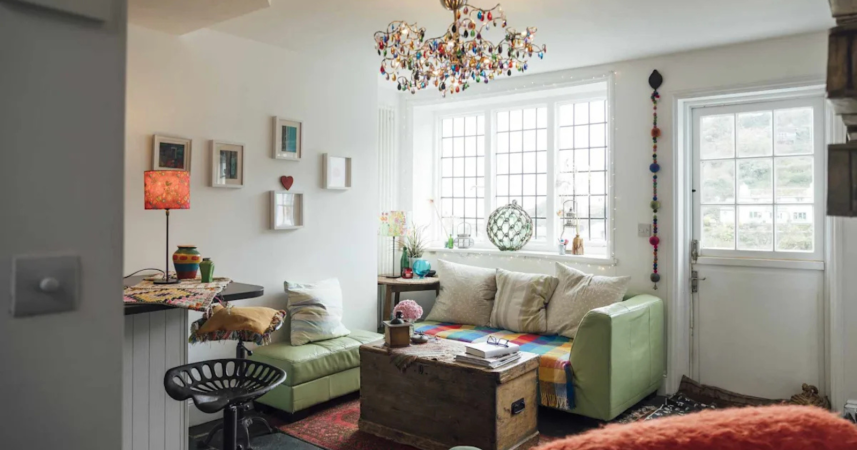
From the pristine estates of the ultra-wealthy to the cozy living rooms of middle America, there exists a silent language of class markers that speaks volumes in mere seconds—and once you learn to read it, you'll never see your own home the same way again.

Add VegOut to your Google News feed. 
Look, I'll never forget the first time I walked into a genuinely wealthy person's home.
I was twenty-three, working at a luxury resort, and had been invited to a client's estate for a private dinner service.
Walking through their living room felt like entering a different universe. Not because it was dripping in gold or stuffed with expensive things. Actually, it was the opposite. The space was almost sparse, intentional, breathing.
That night changed how I understood wealth. Real wealth whispers. It doesn't shout.
After years of serving ultra-wealthy families and visiting their homes, I've noticed something interesting. They can instantly spot the difference between their spaces and those of us trying to appear more successful than we are. It's not mean-spirited. It's just pattern recognition.
My parents were teachers. We weren't poor, but we definitely weren't rich. Our living room looked like most middle-class living rooms I knew growing up. And now, living in my restored 1920s bungalow in East Austin, I've become hyper-aware of these subtle class markers.
Here's what I've learned wealthy guests notice immediately when they walk into a lower-middle-class living room.
1) Too many visible brand logos
Ever notice how luxury hotels don't have their logo plastered on every surface? There's a reason for that.
When I started working with ultra-wealthy clients, I quickly learned they view obvious branding as tacky. Their homes feature quality without screaming about it. Meanwhile, many middle-class living rooms showcase brand names like trophies. The Michael Kors throw pillows. The IKEA furniture tags still attached. The Nike swoosh on decorative items.
One client once told me, "If I'm paying for quality, why should I also be a billboard?"
The wealthy buy things for craftsmanship and longevity, not for the logo. When they see a room full of visible branding, they immediately recognize someone trying to signal status rather than someone who simply has it.
2) Oversized televisions dominating the room
Walk into most American living rooms and what's the first thing you see? A massive TV that basically screams "look at me!"
The wealthy definitely own televisions. Sometimes multiple ones. But rarely do they make the TV the architectural centerpiece of their living space. Their TVs are often hidden in cabinets, disguised as mirrors, or placed in dedicated media rooms.
I remember helping set up for a party at a client's penthouse. I couldn't find the TV anywhere. Turns out it was behind a piece of artwork that slid aside with a remote.
The living room was designed for conversation, not for everyone to face the same direction like we're at a movie theater.
When wealthy guests see a 75-inch TV mounted above a fireplace with all furniture pointed toward it, they notice. It signals different priorities.
3) Fake plants and artificial flowers
This one surprises people, but wealthy homes almost never have fake plants.
Real plants require care, attention, and often professional maintenance. They change with seasons. They might die and need replacing. This ongoing investment and care is something the wealthy take for granted.
Artificial plants, especially the obviously fake ones from discount stores, immediately stand out. They represent an attempt to have the aesthetic of nature without the commitment or resources to maintain it.
During my resort days, we changed fresh flowers twice weekly in guest suites. The ultra-wealthy guests expected this. They notice when orchids are silk or when that fern has dust on its plastic leaves.
4) Cluttered surfaces and too much furniture
"Why is there so much stuff?" I overheard this whispered question from a wealthy acquaintance visiting another friend's home. And she had a point.
Lower-middle-class living rooms often suffer from furniture obesity. Too many pieces crammed into too little space. Every surface covered with knick-knacks, mail, remotes, magazines. It's not about being messy. It's about not having enough storage or trying to display everything at once.
Wealthy homes embrace negative space. They understand that emptiness has value. One quality sofa beats three mediocre ones. Their coffee tables might have a single art book or sculptural object, not a pile of coasters, remotes, and last week's mail.
This isn't about minimalism as a trend. It's about having enough space and storage to put things away.
5) Mismatched or worn-out furniture
We've all been there. The hand-me-down couch from college. The coffee table from a garage sale that "just needs some work." The chair that doesn't match anything but was too good a deal to pass up.
Wealthy living rooms feature cohesive design. Not because everything was bought at once, but because pieces are carefully selected to work together. They replace worn items before they look shabby. Their furniture shows patina, not damage.
What really gives it away? The apologetic explanation. "Oh, that chair is just temporary" or "We're planning to reupholster that soon." The wealthy don't apologize for their furniture because it's already exactly what they want it to be.
6) Generic mass-produced artwork
Those inspirational quotes from HomeGoods? The Eiffel Tower canvas from Target? The abstract print that's in every third apartment?
Wealthy people notice these immediately because their walls feature original art, quality prints from known artists, or family photographs in museum-quality framing. Even if they don't care about art, they hire someone who does.
I learned from clients that art isn't just decoration for the wealthy. It's investment, conversation, legacy. When they see mass-produced prints with visible price stickers or those motivational posters, it signals a fundamental difference in how art is valued.
7) Visible cables and poor lighting
You know that tangle of cables beneath the TV? The extension cords snaking across the floor? The single overhead light that makes everyone look tired?
These details scream to wealthy visitors because their homes have thoughtful, layered lighting and invisible infrastructure. They pay electricians to add outlets where needed. They invest in proper cable management. They use table lamps, floor lamps, and dimmers to create atmosphere.
Good lighting is expensive to retrofit. The wealthy either bought homes with it or paid to upgrade. When they see harsh overhead lighting and cable chaos, they recognize the constraints of a budget.
8) Window treatments from big box stores
Finally, those vinyl blinds or polyester curtains from Walmart are an instant tell.
Wealthy homes feature custom window treatments. Plantation shutters, lined silk drapes, or automated blinds that adjust with the sun. These aren't just functional. They're architectural elements that complete a room.
I once watched a client spend more on window treatments for one room than I made in three months. It seemed insane until I understood that windows are the eyes of a room. Cheap blinds are like wearing gas station sunglasses to a black-tie event.
Final thoughts
Here's what I've learned after years of observing both worlds: These differences aren't really about money. They're about priorities, possibilities, and inherited knowledge.
My teacher parents prioritized education over Egyptian cotton. They were right to do so. That education got me into those luxury spaces where I learned these distinctions.
The wealthy aren't necessarily judging these choices. They're simply noticing them the way you'd notice someone speaking with an accent. It's different from what they know.
Living in my East Austin bungalow now, I've made peace with these markers. Some I've changed because they matter to me. Others remain because they don't. My living room might never fool a wealthy visitor, but it doesn't need to.
What matters is understanding that these visual cues exist. Once you see them, you can't unsee them. And maybe that's the real difference between the classes. Not what's in the living room, but knowing what it all means.