At 68, I've discovered that most of us over 65 are exhausting ourselves performing social scripts for an audience that stopped paying attention years ago – and the teenage cashier at the grocery store couldn't care less if you have exact change.
Last week at the grocery store, I watched a woman about my age frantically apologizing to the teenage cashier because she couldn't find exact change.
Her hands shook as she dug through her purse, muttering about how she always used to have the right amount ready.
The kid couldn't have cared less - he was already scanning the next customer's items - but she kept apologizing anyway.
Walking to my car, I realized how many of us in our sixties and beyond are still performing for an audience that left the theater years ago.
We carry these invisible scripts around, don't we?
All these rules about how we're supposed to behave, what we're supposed to care about, how we're supposed to present ourselves to the world.
But here's what I've discovered since retiring from teaching: most of these social expectations we're clinging to?
Nobody actually notices whether we follow them or not.
And the energy we spend maintaining these performances could be used for something that actually brings us joy.
1) Keeping up with every new technology trend
Do you know what freedom feels like?
It's admitting you don't know how to use TikTok and you don't particularly want to learn.
For years, I felt this pressure to stay current with whatever digital platform my former students were using.
I'd spend hours trying to figure out Snapchat filters or understanding what a Discord server was, all because I thought I needed to prove I wasn't "out of touch."
But here's the truth: unless it genuinely interests you or serves a real purpose in your life, you don't need to master every new app that comes along.
When I started learning Italian at 66, I downloaded a language app that actually excited me.
That's technology serving my goals, not the other way around.
Your grandkids will still love you even if you don't understand their memes.
In fact, they might even enjoy explaining things to you - it's one of the few areas where they get to be the expert.
2) Maintaining the perfect home for guests who rarely visit
Remember when Virginia Woolf wrote about needing a room of one's own?
Well, at 65, you deserve a whole house of your own - decorated exactly how you want it.
I spent decades keeping a formal dining room that we used maybe twice a year, complete with china we never ate off and silver we constantly polished.
Why? Because that's what you were supposed to have.
These days, that dining room has become my art studio.
There's usually a half-finished watercolor drying on what used to be the good table.
When friends come over, we eat in the kitchen or outside on the patio, and you know what? The conversation is just as good, maybe better.
Nobody has ever left my house thinking, "Well, that was nice, but I really wish she'd served dinner in a formal dining room."
3) Dressing to hide your age
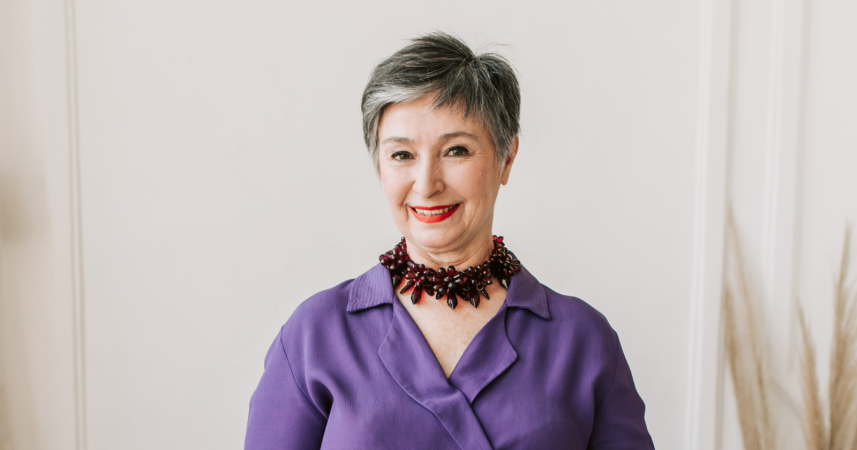
A friend recently told me she couldn't wear her favorite purple dress anymore because it was "too young" for her.
Too young? According to whom?
There's this unwritten rule that after 60, we're supposed to fade into beige and navy, to become invisible in sensible fabrics and modest cuts.
But what if you still love bright colors?
What if those fun earrings make you smile every time you catch your reflection? Wear them.
The fashion police aren't coming for you, and even if they were, you've earned the right to tell them to mind their own business.
The only person who needs to feel comfortable in your clothes is you.
That teenage cashier at the grocery store isn't judging your outfit - he's thinking about his lunch break.
4) Apologizing for taking up space and time
Have you ever noticed how often we apologize for simply existing?
"Sorry, this might be a silly question..."
"Sorry to bother you, but..."
"Sorry, I'm moving a bit slowly today..."
When did we decide that reaching a certain age meant we needed to apologize for participating in the world?
After my knee replacements, I had to move slowly for months.
At first, I apologized constantly - to people behind me on stairs, to anyone waiting while I got in or out of a car.
Then my physical therapist, who was about 30, said something that stuck with me: "You're not inconveniencing anyone. You're just living your life at your own pace."
She was right.
The world doesn't need our apologies for existing in it.
5) Pretending to have endless energy
"I can still do everything I could at 40!"
How many times have you heard someone our age say this?
How many times have you said it yourself?
But why is this the goal?
Who decided that the measure of a life well-lived is maintaining the exact same energy level for six decades?
Here's what I've learned: It's okay to be tired at 7 PM.
It's okay to say no to evening events because you prefer morning activities.
It's okay to take that afternoon nap.
The people who matter won't judge you for honoring your body's rhythms, and the ones who do judge?
Well, they're probably too busy being exhausted from trying to prove they're still 25.
6) Keeping opinions to yourself to avoid seeming "difficult"
Throughout my teaching career and well into my sixties, I was the queen of keeping quiet to keep the peace.
Therapy in my fifties started to crack that shell, but it wasn't until recently that I fully understood: having opinions and boundaries doesn't make you difficult.
It makes you human.
You've lived long enough to know what you believe, what you value, and what you won't tolerate.
Why pretend otherwise?
That relative with the offensive jokes? You don't have to laugh politely anymore.
The friend who always chooses restaurants you hate? Suggest somewhere else.
The world won't end if you express a preference or disagree with someone's opinion.
7) Acting like retirement is just an extended vacation
When I took early retirement because my knees couldn't handle teaching anymore, everyone kept asking about my "vacation plans" and telling me how nice it must be to "relax all day."
There's this expectation that retirement should look like a cruise ship commercial - all leisure, all the time, with a perpetual smile.
But retirement is a major life transition, not a permanent holiday.
It's okay to mourn the loss of your professional identity.
It's normal to feel uncertain about your purpose.
When I started learning piano at 67, it wasn't because I had nothing better to do - it was because I was actively building a new version of myself, one that had nothing to do with meeting anyone else's expectations of what a retiree should be doing.
Final thoughts
Here's what 68 years have taught me: the audience we're performing for is mostly in our heads.
That young cashier, your neighbors, even your family - they're all too busy living their own lives to scrutinize whether you're following the "rules" of being over 65.
The only person watching your every move, judging whether you're aging "correctly," is you.
So maybe it's time to fire that internal critic and write your own script.
Wear the purple dress.
Take the nap.
Learn the piano or ignore TikTok.
Say what you think.
The freedom that comes with age isn't just about senior discounts - it's about finally realizing that most of the social expectations we've been carrying around are as outdated as that china set gathering dust in the cabinet.
And just like that china, maybe it's time to let them go.