When you learn to sit with your own thoughts, you stop outsourcing your worth to everyone else’s noise.
Some people panic at the idea of a quiet weekend alone. Others—maybe you—light up at the thought.
If you’re in that second group, you’re not “anti-social.” You’re wired for solitude, and psychology has a lot to say about the strengths that come with that wiring.
Below are seven personality traits I see again and again in people who genuinely prefer time on their own—and why those traits are powerful in real life.
Let’s dive in.
1. Deep self-awareness
People who choose solitude tend to know themselves incredibly well.
When you spend time alone, you’re not performing for anyone. There’s no subtle pressure to mirror the group. That gives your mind space to notice your patterns: how you react under stress, which work puts you in flow, what actually restores you versus what just distracts you.
I’ve noticed this in my own morning walks. No podcast, no calls, just footsteps and thoughts. By the time I’m back, I’m clearer on what I’m avoiding and what I want to lean into that day. That clarity compounds.
Psychologists often frame this as reflective functioning—turning attention inward to make sense of your thoughts and feelings. Reflection can bring up discomfort at first, but give it room and you’ll find sharper self-knowledge sitting right under the noise.
2. A calm emotional baseline
Solitude lovers are often emotionally steady.
Not emotionless—steady. Because they regularly step away from social stimulation, they get better at downshifting their nervous system. Brief, intentional alone time has been shown to help people regulate emotions and reduce overstimulation, especially after a long day of social demands.
You probably know the drill: take twenty minutes alone and your frustration softens; decisions you were about to make out of impatience suddenly look less urgent. That kind of self-regulation is a quiet superpower in workplaces and relationships alike.
A personal note: I’ve mentioned this book before, and I just finished it again because it felt so timely.
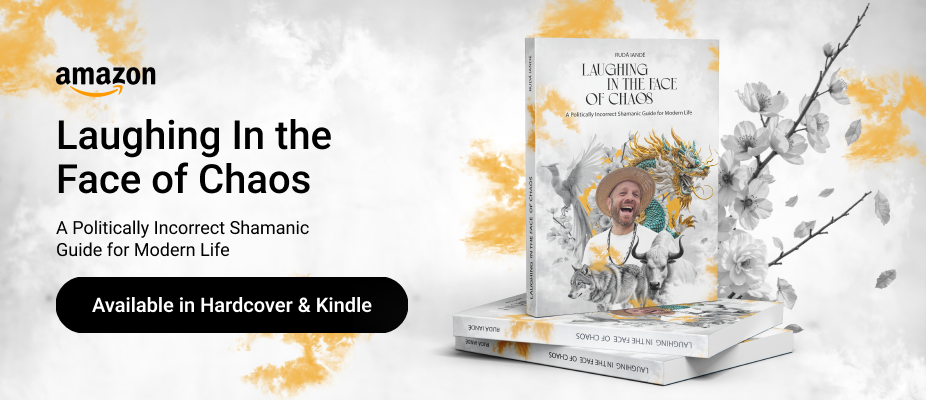
Rudá Iandê’s new book, Laughing in the Face of Chaos: A Politically Incorrect Shamanic Guide for Modern Life, sharpened this point for me.
His insights nudged me to treat my post-meeting edginess as data rather than a personal failing—the book inspired me to pause, breathe, and listen to what the emotion is trying to say. One line that stuck with me: “Until our intellect stops fighting our emotions, there can be no true integration between these two essential aspects of our being.”
That’s the inner steadiness solitude makes room for.
As theologian Paul Tillich put it, “Loneliness expresses the pain of being alone, solitude expresses the glory of being alone.” That distinction matters when we talk about emotional health.
3. Independent thinking (even when it’s unpopular)
Do you find yourself forming opinions before you check what the crowd thinks? That’s independent cognition in action—and it thrives in solitude.
Without the constant pull of other people’s preferences, you’re free to follow curiosity wherever it leads. You might read odd corners of the internet, test ideas in a notebook, or quietly learn skills no one asked you to. Over time, that produces original thinking.
This shows up practically. You might be the person who notices, “Why are we doing it this way?” while everyone else is locked into the default. You’re less likely to chase status signals and more likely to build something because it matters to you.
Susan Cain captures this beautifully: “The secret to life is to put yourself in the right lighting. For some it’s a Broadway spotlight; for others, a lamplit desk.” That “lamplit desk” mindset is where independent work—and insight—often flourishes.
4. Selective, high-quality relationships
Solitude-preferring folks are rarely anti-people. They’re anti-surface.
Because your energy is precious, you invest it where it counts. Instead of a wide circle of “sort-of” friends, you keep a small roster of trusted humans: the friend who will challenge you, the colleague who values your weirdness, the partner who understands that alone time is part of how you show up as your best self.
I keep a short list in my notes app called “Kitchen-table people.” If I’d invite you over while the sink is full of dishes, you’re on it. Everything else is friendly, not foundational.
From a psychology lens, this looks like secure selectivity—a preference for depth over breadth. It’s not about hoarding time; it’s about aligning relationships with your values.
And ironically, the people in your life usually get more of you, not less, because you’re not stretched thin.
5. Intrinsic motivation and craft focus
People who love being alone tend to be driven by intrinsic motivation: the satisfaction of doing the thing well, not just the applause that might follow.
Alone time lets you get lost in the details. You’re the musician practicing a passage until it sings, the coder refactoring because it feels right, the home cook tinkering with a sauce just to see what happens. You don’t need witnesses to care.
Psychologically, this sits close to what’s called mastery orientation—caring about improving the skill itself. It’s linked to greater persistence, less fear of failure, and deeper satisfaction. You keep going when the glitter fades because the work is its own reward.
And bonus: when external rewards do show up, you enjoy them without being controlled by them.
6. Boundaries that stick
If you prefer solitude, you’ve probably learned to defend it. That skill often generalizes.
You say “no” without giving a 14-sentence apology. You block off your calendar for focused work and actually respect it. You leave a party when your social battery hits red instead of pushing through just to be polite.
This isn’t prickliness; it’s self-respect. Healthy boundaries reduce resentment, prevent burnout, and make your “yes” more meaningful. People learn to trust you because you don’t overcommit and then flake—you commit to what you can do well.
There’s a cultural narrative that boundary-setters are selfish. Psychology tends to disagree. Boundaries protect the conditions that make your contributions possible. They’re guardrails for your best self.
7. Comfort with boredom—and the creativity it unlocks
Here’s a spicy one: people who like being alone are often better at tolerating boredom. And that tolerance is rocket fuel for creativity.
When you resist the urge to fill every quiet moment with a screen, your mind starts making unexpected connections. That “shower thought” feeling? It shows up in any undistracted stretch—on a walk, washing dishes, staring out the window with a cup of tea.
Blaise Pascal famously wrote, “All of humanity’s problems stem from man’s inability to sit quietly in a room alone.”
Hyperbole? Sure. But he was pointing at something we keep re-discovering: stillness is fertile ground.
In practice, this looks like setting your phone in another room and letting the itch to check it pass. It looks like one “empty” afternoon a week. It looks like embracing the awkward first ten minutes of quiet—then noticing how rich it becomes.
What solitude-preferring people are not
Quick clarification. Preferring solitude doesn’t mean:
-
You can’t be social.
-
You’re shy, rude, or aloof.
-
You hate collaboration.
It means you understand your energy. You know that alone time is how you concentrate, reset, and hear your own thoughts. So you design your life—with work, relationships, and routines—to honor that.
For me, that sometimes means leaving a perfectly fun hang a little earlier so I can read in bed. Other times, it’s blocking a morning for deep work even if it means declining a meeting. The payoff is a steadier mood, better output, and fewer “How did I end up here?” moments.
How to harness these traits (without becoming a hermit)
If you recognize yourself in these traits, a few quick practices:
-
Schedule solitude like a meeting. Protect it. Use it for reflection, focused work, or genuine rest—not just scrolling.
-
Practice re-entry. After alone time, re-engage with the people and projects that matter. Solitude is a means to show up better, not an escape hatch from life.
-
Give your emotions a seat at the table. If you, like me, sometimes default to “think harder” when you feel anxious or overstimulated, experiment with the opposite. Journal for five minutes about what the emotion might be trying to communicate. This is where Rudá Iandê’s Laughing in the Face of Chaos: A Politically Incorrect Shamanic Guide for Modern Life was unexpectedly helpful. His insights encouraged me to listen to my body more closely and to stop pathologizing every spike of feeling. The book inspired me to build a tiny ritual after social-heavy days: ten quiet breaths, a short walk, and one honest question—What is this feeling asking for?
If solitude sometimes shades into loneliness: it happens to all of us. The goal isn’t to live in isolation; it’s to weave solitude into a connected, meaningful life. Tools that help you integrate your inner world with your outer commitments—books like Rudá Iandê’s included—can make that integration gentler.
As Susan Cain’s “lamplit desk” suggests, your best work and your best self might need quiet more often than the culture does. That’s not a flaw. It’s your design.
The bottom line
If you prefer solitude, you’re likely carrying a toolkit most people could use more of: self-awareness, emotional steadiness, independent thinking, selective relationships, intrinsic motivation, sturdy boundaries, and boredom tolerance that blossoms into creativity.
Use those traits. Shape your days around them. They don’t make you less social or less caring—they make you more intentional.
And if anyone calls you “anti-social,” smile, take a breath, and enjoy the quiet confidence of knowing you’re exactly where you thrive.