You can build a secure life and still feel like you’re waiting for it to fall apart.

Add VegOut to your Google News feed. 
Growing up as the youngest of four sisters in a small Pennsylvania town, we weren't poor. I want to be clear about that. We had a roof, we had Sunday dinners, we had a father who knew every neighbor on his mail route by name. What we didn't have was anything left over. No cushion. No "just in case." Enough — but only just.
You'd think that would feel safe. And in some ways it did. But what I didn't understand until much, much later is that living at the edge of "just enough" does something quiet and long-lasting to the way your brain works. It trains you, slowly and without your permission, to treat every good thing as borrowed time.
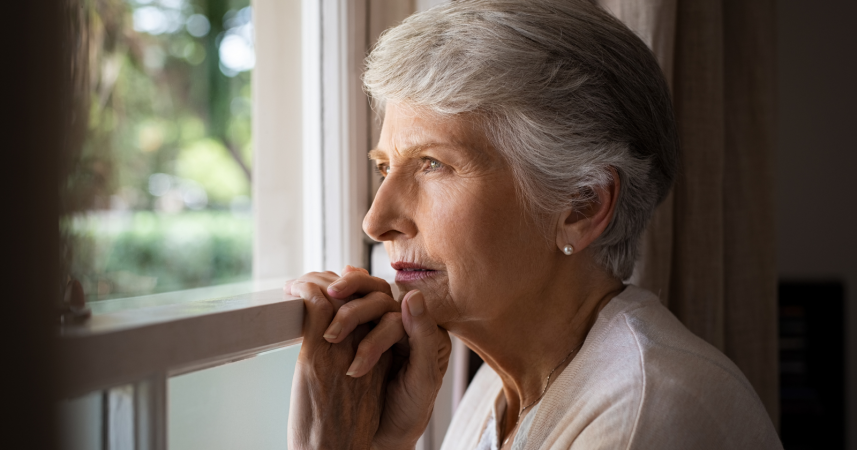
I'm 70 now. I have a paid-off home, a pension, savings I've been careful with. By any measure, I am secure. And yet some mornings I wake up and the first thing I feel — before the tea, before the journal, before anything — is a low hum of waiting. Waiting for the other shoe to drop. Waiting for whatever I have to be taken away. It's not dramatic. It doesn't look like panic. It just looks like a woman who can't quite let herself relax.
If you grew up the same way, I think you know exactly what I mean.
What "enough but never extra" actually teaches you
When there's no financial buffer in a home, children learn to read the atmosphere. You get good at sensing when money is tight without anyone saying a word. You learn that things can change — that the car breaking down isn't just an inconvenience, it's a crisis. That one bad month can unravel something that took years to build.
Those were real lessons. They weren't wrong. But the problem is that the brain doesn't always know when to stop applying them.
I became a single mother in my late twenties, raising two kids on a teacher's salary that stretched about as far as you'd imagine. There were two years when I needed food stamps to keep things running. I remember the shame of that more than I remember the hunger. But I also remember how hypervigilant I became — clipping coupons, tracking every dollar, lying awake doing math in my head. I was surviving. And survival mode, when you stay in it long enough, becomes a personality.
The thing nobody tells you is that you can leave the hard circumstances long behind and still be living inside that old emergency. The math changes. The vigilance doesn't.
Security arrived, but the anxiety had already moved in
When I remarried in my forties, my husband was steadier with money than I'd ever been. We saved together, planned together, built something that felt genuinely solid. And I noticed something strange: the more secure we became, the more anxious I sometimes felt. Like I was waiting to be caught out. Like I didn't quite believe it was real.
I've talked to enough women my age to know I'm not alone in this. There's a specific kind of unease that comes from having grown up without a safety net — even after the net arrives, part of you is still looking down.
After my husband passed, I eventually had to sell the family home. What I found in that process surprised me: there was grief, yes, but also something I hadn't expected — a kind of freedom in having less to lose. I had spent so many years guarding what we'd built that I hadn't noticed how much of my mental energy went into protecting it. Downsizing taught me, slowly, that experiences matter more than possessions. That security isn't really about the number in a bank account. It's about something much harder to measure.
The work of learning to trust good things
Therapy in my fifties helped more than I can say. I'd spent decades being a people-pleaser, keeping the peace, making myself small so others would feel comfortable — and I'd never really examined where that came from. A lot of it came from this same place. When you grow up knowing that stability is fragile, you try to control whatever you can. You manage relationships the way you manage a budget: carefully, conservatively, always saving something back in case you need it later.
Learning to set limits in my fifties was like learning a new language. Uncomfortable. Clumsy. Worth every bit of the effort.
I also started meditating around that time — found an audiobook at the library, of all places, and it stuck. And what meditation taught me, more than anything, is that the anxious bracing I do isn't actually protecting me. It's just exhausting me. The bad things that have happened in my life — my first marriage ending, my husband's Parkinson's, losing him — none of them were prevented by my vigilance. They came anyway. And I got through them anyway.
What I'm still learning at 70
I won't pretend I've fixed this. I still catch myself, sometimes, holding my breath when something good is happening. Still mentally preparing for the version of events where it falls apart. Old habits from childhood are persistent things.
But I've learned to notice it now, which is different from being ruled by it. I write in my gratitude journal every evening before bed — a practice I started after my husband died, when I needed somewhere to put the small good things so I wouldn't lose them in the grief. And what I've found is that naming the good things, deliberately and repeatedly, is the only real antidote I've found to that old scarcity reflex.
My grandmother survived the Depression and still found joy. I used to think that was just her temperament — that she was built differently. Now I think she made a choice, over and over, to look for what was good even when everything around her said otherwise. I think that's the practice. Not positive thinking in the fluffy sense, but a genuine, daily decision to let the good things be real.
A final thought
If you grew up in a home where there was enough but never extra, I want you to know that what you're carrying isn't a character flaw. It's an adaptation. A smart one, once. It kept you careful when careful was what you needed.
But you're allowed to put it down now. Not all at once — that's not how this works. But slowly. In small moments of noticing when you're bracing against something that hasn't happened. In the deliberate choice to let a good day just be a good day, without scanning the horizon for what might take it away.
I'm still practicing. Most days, that's enough.
If You Were a Healing Herb, Which Would You Be?
Each herb holds a unique kind of magic — soothing, awakening, grounding, or clarifying.
This 9-question quiz reveals the healing plant that mirrors your energy right now and what it says about your natural rhythm.
✨ Instant results. Deeply insightful.

Marlene Martin
Marlene is a retired high school English teacher and longtime writer who draws on decades of lived experience to explore personal development, relationships, resilience, and finding purpose in life’s second act. When she’s not at her laptop, she’s usually in the garden at dawn, baking Sunday bread, taking watercolor classes, playing piano, or volunteering at a local women’s shelter teaching life skills.
More Articles by Marlene