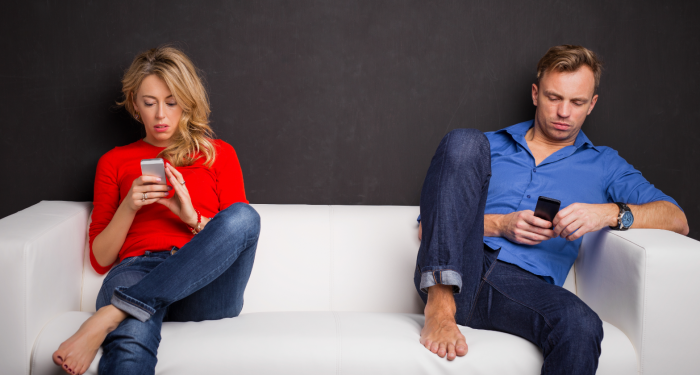
After three decades of dutifully staying informed, I discovered that the very habit I thought made me a responsible citizen was actually the thief stealing my peace, and when I finally stopped, the world didn't end — it began again.

Add VegOut to your Google News feed. 
I'll be honest with you - the habit that was stealing my joy was watching the news. Every morning, every evening, sometimes even during lunch. There, I said it.
After decades of considering myself an informed citizen, a responsible adult who needed to "stay current," I discovered that this seemingly virtuous habit was actually poisoning my days in ways I'd never imagined.
It took me until I was 63 to realize this. Three years into retirement, two years after losing my husband, and I was wondering why the lightness I'd expected to feel in this new chapter felt more like a weight.
I'd done everything right - maintained my friendships, kept up my reading habit in the sunroom, wrote in my gratitude journal each evening before bed. But something was off, and I couldn't quite name it until one morning when our power went out during a storm.
The morning everything changed
Without electricity, I couldn't turn on the television for my morning news ritual. Instead, I sat with my coffee and watched the rain streak down the windows.
For the first time in months, maybe years, I noticed how the light changed as the clouds moved. I heard birds I didn't know lived in my yard. My shoulders dropped from where they'd been living near my ears.
When the power came back on three hours later, I reached for the remote out of habit, then stopped. My hand literally froze in midair.
In those three quiet hours, I'd felt something I hadn't experienced in so long I'd forgotten its name: peace. Not happiness exactly, not excitement, but a deep, settled peace that made everything else possible.
The news anchor's voice, when I finally did turn it on, sounded different to me. Urgent. Demanding. Like someone had been shaking me by the shoulders when I was trying to rest. How had I never noticed this before?
What constant news consumption was really doing to me
Here's what I discovered when I started paying attention: I wasn't just watching news; I was marinating in it. Every story of disaster, every political outrage, every prediction of doom was seeping into my bones.
I'd watch the morning news, then carry those stories with me to the grocery store, where I'd see danger in every stranger's face. I'd watch the evening news, then lie in bed replaying the worst of humanity instead of sleeping.
Do you know what happens to your nervous system when it's constantly in fight-or-flight mode? After 32 years of teaching high school English, I thought I knew stress.
But teenagers, even at their most challenging, have an energy and hope that balances things out. The news has no such balance. It's designed to keep you watching, and fear is the most reliable way to do that.
I started noticing physical things too. My jaw was always clenched. My breathing was shallow. I'd realize I'd been holding my breath during particularly intense segments. No wonder I felt exhausted by noon - I was using all my energy just to process the endless stream of crisis.
The surprisingly hard process of letting go
You'd think stopping would be easy. Just don't turn on the TV, right? But after decades of this routine, the silence felt wrong.
My morning coffee tasted incomplete without the background noise of catastrophe. Seven o'clock would roll around, and I'd feel physically restless, like my body was expecting its evening dose of anxiety.
The first week was the hardest. I kept telling myself I was being irresponsible, that informed citizens needed to know what was happening. What if something important happened and I missed it? What if people asked my opinion about current events and I had nothing to say?
But then I remembered something from Jeanette Brown's course "Your Retirement Your Way" that I'd recently discovered. She talks about how our beliefs about what we "should" do in retirement literally shape our reality.
I'd been carrying this inherited idea that good citizens watch the news, that staying informed equals moral responsibility. But whose idea was that, really? And was it serving me?
What filled the space when news left
Nature abhors a vacuum, and so does daily life. When I stopped filling my mornings and evenings with news, other things rushed in.
I started having actual conversations with my neighbor over the fence instead of rushing inside for the evening broadcast. I began reading poetry again with my morning coffee - Mary Oliver, Billy Collins, the writers who remind you that the world contains beauty alongside its sorrows.
Remember how I mentioned that birds I never knew existed? Turns out there's a whole family of cardinals that's been living in my oak tree for who knows how long. The male sits on the same branch every morning around seven - exactly when I used to be learning about overnight tragedies on another continent.
My afternoon reading in the sunroom became richer too. Without the mental static of the day's disasters, I could actually focus on the novels I was reading.
Characters came alive in ways they hadn't in years. I'd find myself thinking about their choices while making dinner instead of replaying political arguments from TV.
The unexpected ripple effects
Here's what nobody tells you about stepping away from constant news consumption: it doesn't just change your mood; it changes how you see everything.
The grocery store became less threatening. Strangers started looking like potential friends instead of potential dangers. Even driving felt different when I wasn't carrying the weight of every traffic accident I'd heard about that morning.
My sleep improved dramatically. Instead of lying awake cataloging the world's problems, I found myself naturally reflecting on the day's small pleasures - the way the afternoon light hit my book pages, the smell of the soup I'd made for dinner, the text from an old friend.
These weren't forced gratitude exercises; they just naturally floated up when my mind wasn't full of other people's emergencies.
I even found myself laughing more. Real, surprised laughter at silly things - a squirrel's acrobatics at the bird feeder, a witty line in a novel, my own mistakes in the kitchen. When you're not constantly braced for the next disaster, there's room for lightness to creep back in.
Finding a middle path
Now, I'm not advocating for complete ignorance. I still check in with the world, but deliberately and sparingly. Once a week, I'll read through a reputable news summary. If something truly important happens - something that actually affects my life or requires my action - I trust that I'll hear about it. And you know what? I always do.
What I've learned is that there's a vast difference between being informed and being immersed. One empowers you to be a thoughtful citizen; the other paralyzes you with anxiety about things beyond your control.
After teaching teenagers for over three decades, I know the importance of understanding the world. But I also know that you can't pour from an empty cup, and constant news consumption had drained mine dry.
Final thoughts
Looking back, I'm amazed that something so simple, so ordinary, could have such a profound impact on my well-being. We often look for joy in adding things - new hobbies, new relationships, new experiences.
But sometimes the path to joy is subtraction. Sometimes it's about identifying what's quietly poisoning your days and having the courage to stop, even when that thing seems normal, responsible, even virtuous.
If you're feeling inexplicably drained, anxious, or joyless, maybe ask yourself: what ordinary habit might be stealing your peace? What "should" are you following that's no longer serving you? The answer might surprise you. It certainly surprised me.