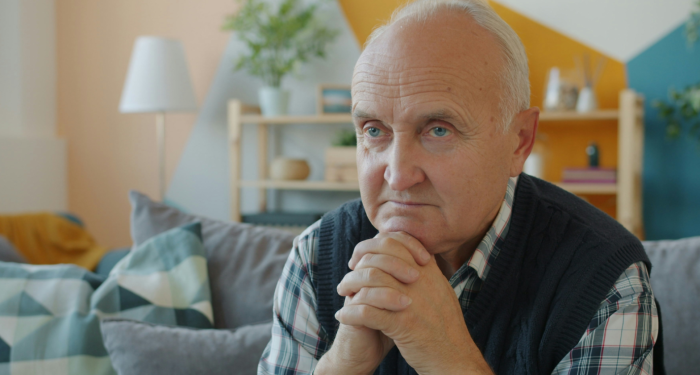
After the honeymoon phase of sleeping late and endless freedom fades, most retirees hit an unexpected wall in year two—a nameless drift through purposeless days that only ends when they discover the surprising antidote that separates the thriving retirees from the merely surviving ones.

Add VegOut to your Google News feed. 
Remember that feeling when summer vacation started as a kid? The glorious stretch of empty days ahead, the promise of sleeping late, the sweet relief of no homework? That's exactly how retirement felt to me at first. After 32 years of grading papers and managing classrooms, I woke up that first Monday morning with nowhere to be, and it felt like pure magic. I made coffee slowly. I read the entire newspaper. I called a friend for lunch on a Wednesday just because I could.
But here's what nobody tells you about retirement: that vacation feeling has an expiration date.
When the honeymoon ends
The first year flew by in a blur of all the things I'd been putting off. I reorganized closets, visited my sister in Oregon, learned to make sourdough bread (badly), and binge-watched entire series without guilt. Every day felt like a Saturday, and I loved it. Friends still working would ask how retirement was treating me, and I'd gush about the freedom, the lack of stress, the joy of grocery shopping at 10 AM when the stores were empty.
Then something shifted around month thirteen. The days started to blur together in a different way. Not the pleasant haze of vacation, but something more unsettling. I'd wake up and realize I couldn't remember what day it was. Not because I was relaxed, but because it didn't matter. Monday looked exactly like Thursday which looked exactly like Sunday.
Have you ever experienced that peculiar emptiness that comes from having too much of something you thought you wanted? It's like eating your favorite dessert for every meal. At first it's thrilling, then it becomes routine, and eventually, you start to feel a little sick.
The year without a name
Year two of retirement needs its own word, something that captures the strange mixture of restlessness, guilt, and confusion that settles in once the novelty wears off. It's not depression exactly, though it can feel close. It's more like being a ghost in your own life, watching from the outside as the world continues its urgent business while you drift through Target at 2 PM on a Monday, wondering if you really need another throw pillow.
I found myself creating false urgency. The bird feeder HAD to be filled by 8 AM. The mail HAD to be collected the moment it arrived. I'd schedule a dentist cleaning and feel relieved to have something on my calendar. One afternoon, I caught myself feeling genuinely excited about replacing the furnace filter, and that's when I knew something had to change.
The hardest part was the loss of identity. For three decades, I'd been Ms. M, the English teacher. People knew me, needed me, depended on me. Now I was just another retiree at the coffee shop, invisible in my comfortable shoes and reading glasses. When people asked what I did, I'd stumble over the answer. "I'm retired" felt like admitting I was irrelevant.
The pattern I couldn't ignore
As I struggled through this unnamed phase, I started paying attention to the retirees around me who seemed genuinely content, not just busy. There was the man at my gym who radiated purpose despite being well into his seventies. The woman from my book club who always had fascinating stories about her week. A couple from my neighborhood who seemed more energized in retirement than many working people I knew.
What did they all have in common? At first, I thought it must be grandchildren, or money, or naturally sunny dispositions. But as I got to know them better, I discovered something else entirely. Each of them, without exception, had found a way to be useful to others. Not just busy, but genuinely needed.
The gym gentleman tutored kids in math three days a week. My book club friend ran a support group for widows. The neighborhood couple delivered meals to homebound seniors and had been doing it for years. They hadn't just filled their time; they'd found ways to matter.
Making the shift that matters
Virginia Woolf once wrote, "The beauty of the world has two edges, one of laughter, one of anguish, cutting the heart asunder." Year two of retirement had shown me the anguish edge, the sharp realization that without purpose, even freedom becomes a prison. But year three? That's when I discovered the laughter edge again.
It started small. A friend mentioned that the local women's shelter needed someone to help with job interview preparation. My teacher instincts kicked in immediately. Here were women who needed practical skills, encouragement, and someone who believed they could rebuild their lives. The first workshop I led was terrifying. What if my skills were rusty? What if I couldn't connect with women whose experiences were so different from mine?
But teaching, real teaching, is like riding a bike. Within minutes, I was in my element, helping a woman practice her handshake, showing another how to frame her work gap in positive terms. When one participant landed a job two weeks later and called to thank me, I cried in my kitchen.
The shift was profound. Suddenly, Thursdays mattered because that's when I volunteered. I prepared materials on Wednesday nights with the same focus I once brought to lesson planning. I thought about the women during the week, celebrating their victories, strategizing about their challenges. My calendar had purpose beyond dentist appointments.
Why contribution changes everything
Here's what I've learned: humans aren't designed for endless leisure. We're wired for contribution, for mattering, for being part of something larger than ourselves. The retirees who thrive don't just find hobbies; they find ways to give their accumulated wisdom, skills, and time to others who need them.
This doesn't mean you have to volunteer formally, though that works for many. Some people find purpose in caring for grandchildren, others in mentoring young professionals in their former field, still others in creating art or writing that touches people's lives. The specific form matters less than the fundamental shift from consuming to contributing.
One woman I met started a neighborhood gardening program that now feeds dozens of families. A retired accountant offers free tax help to seniors. A former nurse teaches new mothers how to care for their babies. Each found their own way to transform their skills and experience into service.
Final thoughts
If you're in that unnamed second year, feeling adrift in an ocean of unstructured time, know that you're not alone and you're not broken. The transition from vacation mode to purpose mode isn't automatic, and it's okay to flounder for a while. But also know that year three can be extraordinary if you make that one crucial shift: stop asking what retirement can give you and start asking what you can give through retirement. The answer to that question might just save your life. It certainly saved mine.