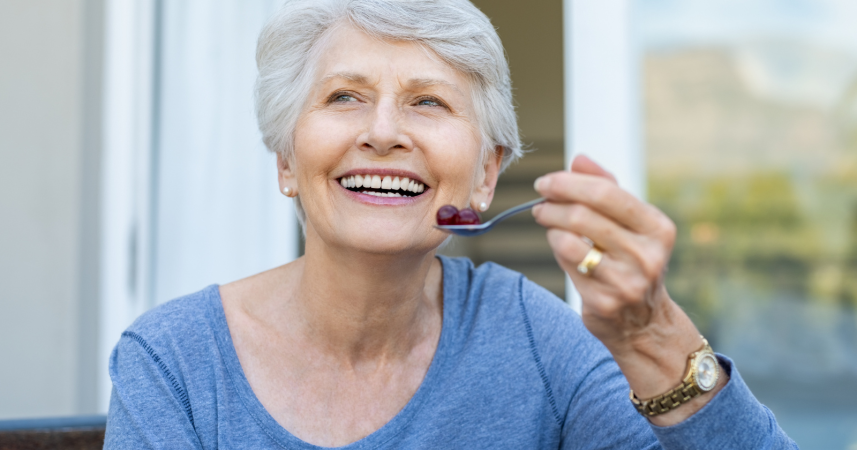
While genetics play a role in youthful appearance, researchers have discovered that people who look decades younger have unconsciously trained their facial muscles to hold less tension through specific emotional habits that physically reshape how their faces age.
Last week at my book club, a woman I'd guessed to be in her early fifties mentioned celebrating her 71st birthday. The collective gasp around the room was audible. While she graciously accepted our compliments about her youthful appearance, she said something that stuck with me: "I learned to stop wearing my worries on my face."
Her comment sent me down a fascinating research rabbit hole. It turns out that how we look as we age isn't just about genetics or expensive skincare routines. The way we process emotions, handle stress, and even the thoughts we habitually think actually change how our facial muscles hold tension over time. These patterns literally sculpt our faces as the years pass.
1. They practice conscious facial relaxation throughout the day
Have you ever caught yourself clenching your jaw while reading emails or furrowing your brow during a tense phone conversation? Most of us hold incredible amounts of tension in our faces without even realizing it. FACESTELLAR™ notes that "Stress, anxiety, and negative emotions often cause tension in the jaw, forehead, and around the eyes, leading to fine lines and wrinkles."
People who age gracefully have developed an awareness of their facial tension. They consciously check in with themselves throughout the day, releasing their jaw, softening their forehead, and letting their face return to neutral. I started doing this after my morning meditation practice, and it's remarkable how often I catch myself scrunching up my face over the smallest things. Even now, as I write this, I just realized my eyebrows were pulled together in concentration.
2. They choose curiosity over judgment
When we judge others or ourselves harshly, our faces reflect that criticism. The pursed lips, the narrowed eyes, the tightened jaw—these expressions of disapproval etch themselves into our features over time. People who look younger have cultivated a habit of approaching life with genuine curiosity instead of knee-jerk judgment.
Rather than immediately deciding something is wrong or bad, they ask themselves questions. What might be happening here that I don't understand? What could I learn from this situation? This mental shift creates a softer, more open facial expression that becomes their default setting. The difference between a face that habitually frowns in disapproval and one that remains open with curiosity becomes more pronounced with each passing year.
3. They've mastered the art of letting go
Holding onto resentment is like gripping a hot coal—it burns us more than anyone else. But here's what I've noticed: it also shows on our faces. The people I know who look remarkably young for their age have all developed effective ways to process and release negative emotions rather than storing them in their facial muscles.
This doesn't mean they're always happy or that they bypass genuine feelings. Instead, they've learned to feel their emotions fully and then let them move through, rather than setting up permanent residence in their expression. After my husband passed, I could have let grief permanently furrow my brow, but my evening gratitude journal became my release valve, helping me process the sadness while still finding moments of light.
4. They smile from genuine joy, not obligation
There's a fascinating difference between social smiles and genuine expressions of joy. People who age beautifully don't force themselves to smile when they don't feel like it, which creates tension around the mouth and eyes. Instead, they cultivate genuine sources of joy in their daily lives that naturally light up their faces.
These authentic expressions of happiness use different facial muscles than forced smiles. They engage the whole face, creating crow's feet that actually make us look more vibrant rather than aged. When I stopped postponing joy after my cancer scare at 52, I noticed my face began to reflect that internal shift toward embracing life's small pleasures.
5. They maintain emotional boundaries that protect their peace
Our Mental Health explains that "Chronic stress can trigger long-term skin inflammation. This can aggravate existing skin conditions and even cause new ones to appear." People who look younger than their years have learned to set boundaries that protect them from chronic emotional stress.
They've figured out how to say no without guilt, how to limit exposure to energy vampires, and how to create space for restoration. This isn't selfishness; it's self-preservation that shows up as a more relaxed, less inflamed appearance. The constant stress response that tightens facial muscles and accelerates aging simply isn't their default mode anymore.
6. They practice compassionate self-talk
The running commentary in our heads shapes our facial expressions more than we realize. When that inner voice is harsh and critical, our faces reflect that internal tension. People who age gracefully have consciously softened their self-talk, treating themselves with the same kindness they'd offer a good friend.
Watch someone's face when they make a mistake. Those who berate themselves internally immediately tense up, their features hardening with self-criticism. Meanwhile, those who've learned self-compassion maintain a softer expression, even when things go wrong. This gentleness with themselves translates to a more relaxed facial musculature over time.
7. They engage fully with the present moment
Worry about the future creates specific tension patterns in the face, particularly around the forehead and eyes. Ruminating about the past does the same. People who look younger have developed the ability to anchor themselves in the present moment, which naturally relaxes facial tension.
During my morning silence with tea and journal, I've noticed how my face completely softens when I'm fully present. There's no strain of trying to figure out tomorrow or untangle yesterday. This present-moment awareness, practiced consistently, trains the face to rest in a more relaxed state.
8. They've found purpose beyond their appearance
Paradoxically, those who look youngest often care least about looking young. They're engaged with life in ways that light them up from the inside—volunteering, creating, learning, connecting. This sense of purpose and engagement creates an animation in their features that no amount of cosmetic intervention can replicate.
When I started writing after retirement, something shifted in how I carried my face. The focus on sharing stories and helping others moved my attention away from scrutinizing every new line in the mirror. That external focus, that sense of contributing something meaningful, creates a vitality that transcends physical age markers.
Final thoughts
Looking younger as we age isn't about chasing youth or denying the natural aging process. It's about recognizing that our emotional and mental patterns literally shape our physical appearance over time. The good news is that it's never too late to begin cultivating these patterns. Each moment of conscious relaxation, each choice to approach life with curiosity rather than judgment, each decision to let go rather than hold on—these all contribute to how our faces tell the story of our years.
The most beautiful faces I see aren't the ones without wrinkles; they're the ones that have learned to hold life lightly, with grace and genuine engagement.