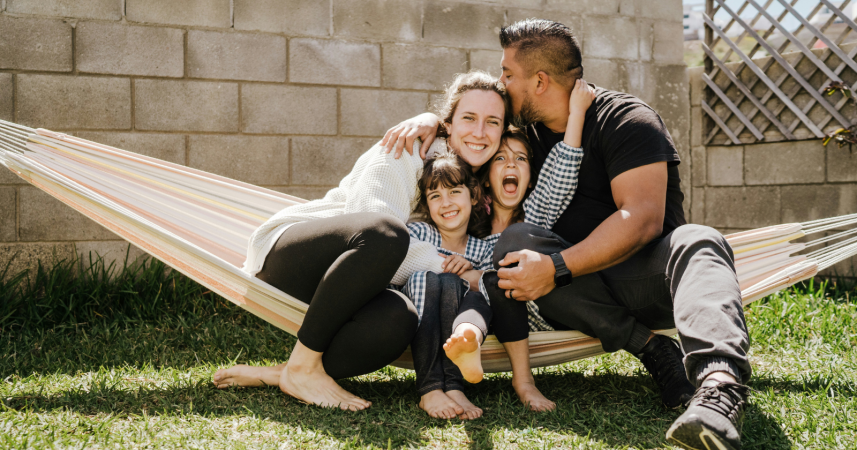
After decades of feeling like she'd sacrificed her writing career and travel dreams for single motherhood, a retired teacher discovers that the life she thought derailed her ambitions was actually her greatest creative work in disguise.

Add VegOut to your Google News feed. 
When I retired at sixty-six after thirty-two years of teaching high school English, a colleague pulled me aside at my farewell party. "It must be bittersweet," she said, touching my arm gently. "All those years you could have been writing, traveling, pursuing your real passions. But you had to raise your kids instead." I smiled and nodded, not having the heart to correct her. The truth was more complicated, more beautiful, and took me decades to fully understand.
People love neat narratives about sacrifice. The mother who gave up her art career. The father who turned down the promotion to coach Little League. We frame these stories as noble losses, as dreams deferred for duty. But what if we're telling the story wrong? What if the very thing we think replaced our dreams was actually the dream taking shape in ways we never imagined?
The dreams we think we're supposed to have
In my twenties, fresh out of college with an English degree, I had such clear visions of my future. I would write novels in coffee shops, travel through Europe with just a backpack, maybe teach at a university while publishing scholarly papers on Victorian literature. These weren't just dreams; they felt like destiny. I had notebooks full of story ideas, maps with routes traced in red pen, applications to graduate programs stacked on my desk.
Then life happened, as it tends to do. Marriage, two babies in quick succession, and suddenly I was substitute teaching to make ends meet while my husband worked nights. When the marriage ended and I found myself a single mother at thirty-two, those old dreams seemed to mock me from their storage boxes in the attic. Here I was, grading papers at the kitchen table while my kids did homework, falling asleep over student essays instead of working on my novel.
Have you ever felt that particular weight of watching other people live what you thought would be your life? Social media makes it worse now, but even before Facebook, I'd run into college friends at the grocery store and hear about their book tours, their sabbaticals in Italy, their writing retreats. I'd smile and congratulate them while mentally calculating whether I had enough in checking to cover both the electric bill and new shoes for my growing son.
When survival becomes something more
There's a moment when you're working two jobs and raising kids alone that you stop thinking about dreams entirely. You think about whether there's milk for breakfast, whether you remembered to sign the permission slip, whether that cough sounds bad enough for a doctor's visit you can't really afford. Dreams become luxury items, like organic groceries or piano lessons.
But something strange happens in those survival moments. You discover reserves you didn't know existed. You learn to make magic out of Tuesday night spaghetti dinners. You find yourself having philosophical discussions with your thirteen-year-old daughter about fairness while explaining why she can't go to the expensive summer camp. You realize that teaching your kids to be good humans while exhausted from working double shifts might be the hardest creative project you'll ever undertake.
I remember one evening, both kids were doing homework at the kitchen table while I prepared lessons for the next day. My daughter, then in middle school, was struggling with an essay about heroes. "Mom," she said, "my teacher says heroes have to do something big, like save lives or change the world. But I want to write about you." I nearly cried into my lesson plans. "Honey," I told her, "write about someone more interesting." She did, but she slipped me the first draft anyway. I still have it.
The slow recognition of what we've built
Virginia Woolf once wrote that "one cannot think well, love well, sleep well, if one has not dined well." She was talking about literal food, but I think she was also talking about nourishment of all kinds.
For years, I thought I was starving my creative self, feeding my children while my own dreams went hungry. But dreams, it turns out, can be patient creatures. They transform, adapt, find new shapes to inhabit.
Watching my daughter give birth to her first child three years ago, I finally understood something about my own mother that had eluded me for decades. She had been a nurse who wanted to be a doctor, ended up with four kids instead of a medical degree. I'd always pitied her a little for that loss. But holding my granddaughter while my daughter recovered, I saw it differently. My mother hadn't given up her dream of healing people; she'd just done it without the degree, one scraped knee and broken heart at a time.
The dreams I thought I'd abandoned were actually there all along, woven into different fabric. Those novels I never wrote? They became the stories I told my kids to help them understand divorce, disappointment, and resilience. The travel adventures? They transformed into camping trips where we counted stars instead of monuments. The scholarly papers became the countless essays I helped my students craft, watching them find their own voices.
What family really means when you look back
Now, at seventy-one, with grown children who call me for advice and grandchildren who beg for stories, I see what I couldn't see in those exhausted years. Family wasn't the consolation prize for not achieving my dreams. Family was the dream taking a form I hadn't been wise enough to imagine.
When my son calls to tell me about a ethical dilemma at work, working through it with the critical thinking skills we developed during those kitchen table homework sessions, that's the dream. When my daughter sends me a photo of her daughter's first piano recital, the one she could afford because she learned from me how to budget and save, that's the dream. When former students write to tell me they're teaching now, using techniques I taught them, that's the dream multiplied beyond what any novel could have achieved.
Final thoughts
Last week, I finally started writing again, something I touched on in a previous post about finding creativity in retirement. But the stories that flow now are richer, deeper, more honest than anything I could have written at twenty-five. They're seasoned with the complexity that comes from raising humans, from learning that love isn't always pretty, that sacrifice isn't always sacrifice, and that the best dreams are often the ones we don't recognize until they've already come true. My family wasn't a detour from my dreams. They were the dream itself, disguised as ordinary life, revealing their true nature only when I finally had time to look back and see the masterpiece we'd created together.
What’s Your Plant-Powered Archetype?
Ever wonder what your everyday habits say about your deeper purpose—and how they ripple out to impact the planet?
This 90-second quiz reveals the plant-powered role you’re here to play, and the tiny shift that makes it even more powerful.
12 fun questions. Instant results. Surprisingly accurate.