You perfect the art of enthusiastic nodding while internally screaming, discovering that the price of admission to your adult children's lives is often your honest opinion.

Add VegOut to your Google News feed. 
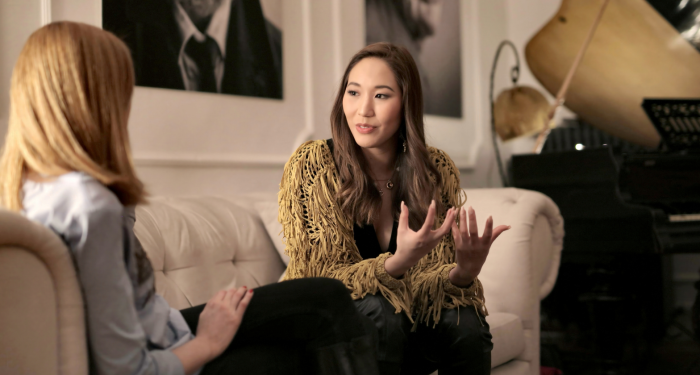
Last week, I sat across from my daughter at our favorite coffee shop, watching her describe her latest career pivot with animated gestures and bright eyes. Inside, my stomach churned with worry. The stable job she'd left behind had good benefits, a pension plan, everything I'd been taught to value. But I smiled, nodded, and told her how exciting it all sounded. Because I've learned that sometimes love means swallowing your words along with your coffee.
When they hand you that squirming newborn in the hospital, nobody warns you about this particular challenge of parenthood. They tell you about sleepless nights, teenage rebellion, and the empty nest syndrome. But they don't mention that once your children become adults, you'll find yourself performing an exhausting dance of selective silence and manufactured enthusiasm.
The myth of letting go
Everyone talks about letting go as if it's the pinnacle of parenting achievement. Release them into the world! Set them free! But here's what I've discovered: letting go was actually the easy part. My children left home, built their lives, made their choices. I adjusted to the quiet house, found new routines, even embraced the freedom.
The hard part? It's sitting on your hands when every fiber of your being wants to reach out and fix things. It's watching them walk toward what looks like a cliff edge while you stand there, smiling encouragingly, because any hint of disapproval might mean they stop sharing their journey with you altogether.
I remember when my son first started dating the woman who would become his wife. Everything about her seemed wrong to me. Too different from our family, too outspoken, too everything my quiet, gentle son wasn't. I wanted to pull him aside, to share my concerns, to protect him from what I was certain would be heartbreak. Instead, I invited them both to dinner and asked about her interests. Seven years later, she's brought out a confidence in him I never knew existed. Thank God I kept my mouth shut.
When honesty becomes a luxury you can't afford
There's a cruel irony in raising children to be independent thinkers. You spend eighteen years teaching them to make good choices, to think critically, to stand up for themselves. Then they become adults and use all those skills to make decisions that make your eye twitch. And suddenly, the honesty you once valued becomes a luxury you can't afford.
My daughter went through a phase in her thirties that felt like watching a rerun of my own worst decisions. The emotionally unavailable partners, the tendency to give too much too quickly, the persistent belief that she could change someone with enough love. I wanted to shake her, to show her the journal entries I'd written at her age, to spare her the pain I knew was coming.
But how do you tell your adult child that you see them heading toward familiar heartbreak without sounding condescending? How do you share wisdom without implying they lack it? You don't. You listen. You offer support without judgment. You keep your prophecies of doom to yourself and hope they prove you wrong.
The price of staying close
What nobody tells you is that maintaining a relationship with your adult children sometimes feels like walking through a minefield while pretending you're strolling through a garden. Every conversation becomes a careful navigation around trigger topics. Politics, parenting choices, career decisions, lifestyle choices, even their choice of neighborhood can become conversational quicksand.
I've watched friends lose touch with their children over political arguments, disagreements about grandchildren's education, or criticism of a spouse. The stakes feel impossibly high because they are. Say the wrong thing, push too hard, and that weekly phone call becomes monthly, then quarterly, then just holidays and birthdays.
The calculation becomes automatic: Is sharing my opinion worth risking our relationship? The answer, I've learned through painful trial and error, is almost always no. My son needs space to make his own mistakes, to find his own way. When I learned to step back, to trust the foundation we'd built during his childhood, our relationship actually deepened. My daughter, on the other hand, needs to feel supported even when I disagree with her choices. Learning to provide that support without endorsement has been one of my greatest challenges.
Finding peace in the pretense
Here's what I've come to understand: this isn't really about dishonesty. It's about choosing connection over correctness. It's about recognizing that my adult children need me to be their safe harbor, not their navigation system.
In my previous post about setting boundaries later in life, I mentioned how therapy in my fifties helped me stop being a people pleaser. But this isn't people pleasing, not really. It's a conscious choice to prioritize relationship over righteousness. There's a difference between sacrificing yourself to keep everyone happy and choosing your battles wisely to preserve something precious.
I've started to see my selective silence as a form of respect. My children are adults with their own values, experiences, and perspectives. Who am I to assume my way is always right? The marriage I doubted has lasted longer than many I championed. The career pivot I questioned has brought my daughter joy I haven't seen in years.
Sometimes I wonder if my own parents bit their tongues as much as I do now. Did they watch me fumble through my thirties, making choices that worried them, all while maintaining that supportive smile? If they did, I'm grateful. Their restraint allowed me to learn my own lessons, to build my own wisdom through experience rather than inherit theirs through lecture.
Final thoughts
The truth is, pretending to approve of everything isn't really about deception. It's about faith. Faith that you raised capable humans. Faith that they'll figure it out. Faith that your relationship can evolve from teacher-student to something more equal, more beautiful, even if it requires you to hold your tongue until it goes numb.
Some days I miss the simplicity of bandaging skinned knees and checking homework. At least then, my role was clear. Now, I'm learning that the greatest gift I can give my adult children isn't my wisdom or my approval, but my presence. Silent, supportive, steady presence. Even when it nearly kills me to keep quiet.