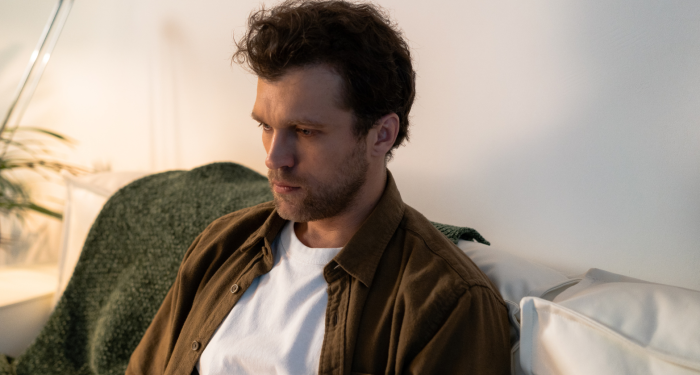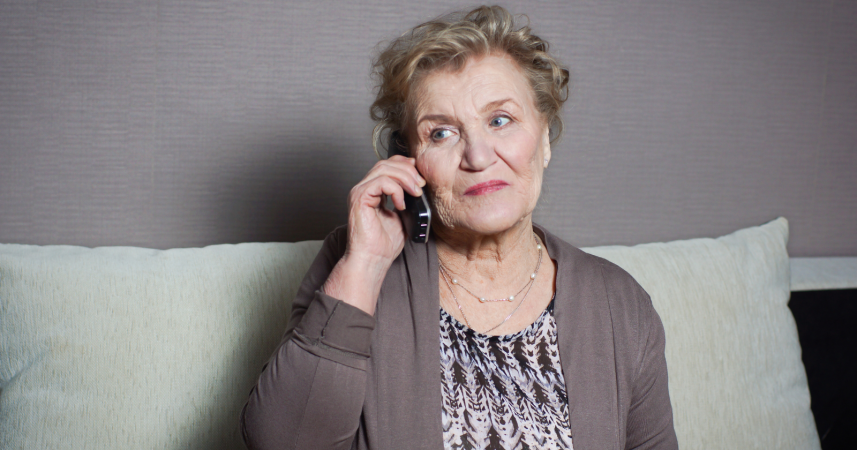
When she looked at me across the kitchen table where she once did homework and said those five words, I suddenly saw myself through her eyes: a faded photograph in someone else's story, forgetting that I wake up every morning to a life more vibrant than she could possibly imagine.
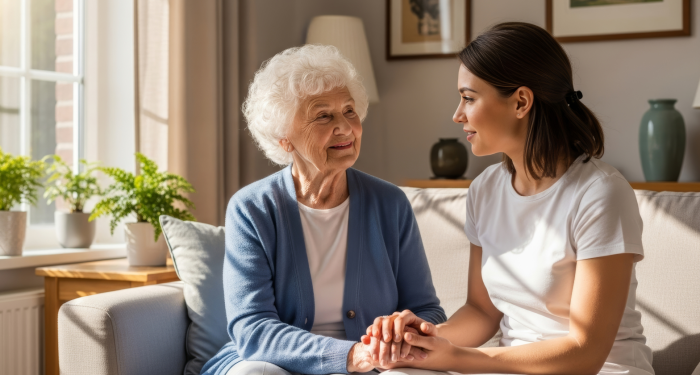
The words hung in the air between us like a glass wall I hadn't known was there. "Mom, I have my own life now." My daughter said it gently, almost apologetically, but the truth of it landed with the weight of recognition. She was sitting across from me at my kitchen table, the same one where she'd done homework for years, and suddenly I saw myself the way she must see me: a supporting character who'd wandered too far into the main plot.
I'd asked if she could visit more often. Not every week, not even every other week. Just more than the current rhythm of holidays and birthdays and the occasional Sunday when the stars aligned. But watching her shift uncomfortably in her chair, I realized I'd crossed some invisible boundary between her real life and whatever category I now occupied.
When did I become the past tense?
There's this peculiar moment that happens to parents, though nobody warns you about it when you're up at 3 AM with a crying baby or teaching them to tie their shoes. One day, without any formal announcement, you transition from being essential to being optional. From being their whole world to being someone they need to schedule.
After thirty-two years of teaching high school English, I thought I understood transitions. I taught students about character development, about how protagonists evolve and change. What I didn't fully grasp until that moment in my kitchen was that in my daughter's story, I'd shifted from main character to subplot sometime when I wasn't paying attention.
The strange part is, I remember doing this to my own mother. I remember the slight irritation when she'd call during a busy workday, the mental calculations of how many weeks had passed since my last visit, the guilt that felt more like an obligation than genuine longing to see her. I remember thinking her days must be endless and empty, forgetting that she had friends, interests, a book club that met religiously every month. To me, her life had become theoretical, something that existed mainly in relation to mine.
The invisible lives of mothers
Have you ever noticed how we ask young mothers about their children but rarely about themselves? Then those children grow up, and we stop asking the mothers anything at all. It's as if our relevance expires once our primary job is complete, like we're supposed to cheerfully fade into the background, content with photo updates and brief phone calls.
But here's what my daughter doesn't see: I wake up every morning to a life that's entirely mine for the first time in decades. I have coffee with my neighbor who's teaching me to knit (badly). I've joined a writing group where we critique each other's work with the honesty that only comes from having nothing left to prove. I'm reading all the books I put aside while helping with science projects and driving to soccer practice.
Last month, I went to Paris. By myself. I sat in a café and wrote in my journal, and not once did I think about anyone's schedule but my own. The woman at the next table, also alone, raised her wine glass to me in silent recognition. We didn't need words; we both knew what it meant to be invisible and free at the same time.
The weight of needing to be needed
Virginia Woolf wrote, "Life is not a series of gig lamps symmetrically arranged; life is a luminous halo." But when your children are young, life feels very much like those gig lamps, each one requiring you to show up, to illuminate their path. You get so used to being needed that you forget what it's like to simply be.
The hardest part about my daughter's response wasn't the rejection. It was recognizing my own hunger to still matter in that essential way. After years of being the person who knew where everything was, who remembered dentist appointments and permission slip deadlines, who could tell by the sound of a cough whether it needed attention or would pass, suddenly nobody needs you to know anything.
I think about my own mother, who died eight years ago. In her final months, she told me she felt like a ghost attending her own life. I thought she was being dramatic. Now I understand she was trying to explain what it's like when the world stops seeing you as a full person with continuing stories, ongoing dreams, and Monday mornings that matter just as much as anyone else's.
Learning to be the main character again
Something shifted after my daughter left that day. I stopped waiting for her to validate my existence. I stopped organizing my weeks around potential visits that rarely materialized. Instead, I started saying yes to things. Yes to the pottery class that meets on Saturdays. Yes to the book club that sometimes runs late. Yes to dinner with the widower down the street who makes me laugh until my sides hurt.
I'm learning that being seventy doesn't mean my story is over; it means I'm in a different chapter. One where I'm not defined by who needs me but by what I choose to do with my mornings. One where I can eat cereal for dinner without explaining myself to anyone. One where my life is real and immediate and mine.
Our standing Sunday evening phone calls continue, but they feel different now. I no longer wait by the phone. Sometimes I'm out when she calls, and she has to leave a message. "Hi Mom, just calling for our usual chat. Hope you're having fun wherever you are." That shift in tone, that acknowledgment that I might be somewhere having fun, feels like a small victory.
Final thoughts
My daughter was right. She does have her own life now. What she doesn't understand yet is that I do too. Mine didn't stop when hers began; it transformed. I'm no longer the mother waiting by the window. I'm the woman who lived a whole life before she was born and is living a whole life still. One day, if she's lucky, she'll sit at her own kitchen table and understand that invisible women everywhere are living rich, complex, continuing stories. We just stopped needing anyone else to read them aloud.