At 62, I discovered the secret to connecting with my adult children wasn't sharing my decades of hard-won business wisdom—it was finally accepting they'd rather have my presence than my advice, and that shift transformed our entire relationship.

Add VegOut to your Google News feed. 
Last month, my stepdaughter Sophie called me at 10 PM, sobbing about a work crisis. Her biggest client had just dropped her, and she was spiraling about rent, about failure, about whether she should give up freelancing altogether. Twenty minutes into the call, after I'd offered exactly zero advice, she said something that stopped me cold: "Thanks for just listening. That's exactly what I needed."
Just listening. That's all she wanted. Not my decades of business experience, not my hard-won wisdom about client relationships, not even my story about losing my biggest supplier in the early days of my restaurant. She just needed me to shut up and be there. And somehow, at 62, I'm finally learning to do exactly that.
The Sunday dinner revelation
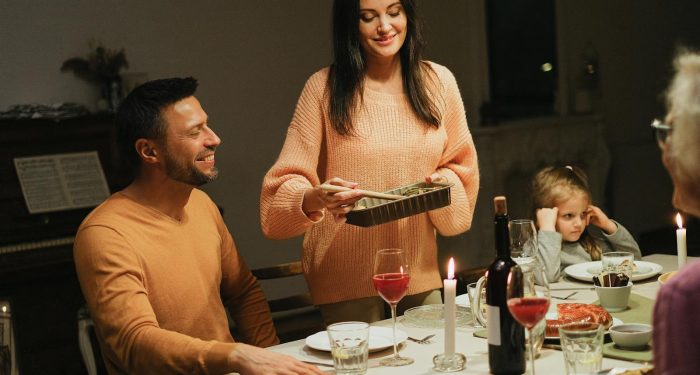
The real turning point happened three months ago during one of our regular family dinners. I was mid-story about converting a hostile vendor into an ally back in my restaurant days when I noticed my son's eyes had that familiar glaze. Sophie was scrolling her phone. James was nodding along while clearly thinking about something else entirely.
I used to get angry about this. Here I was, a man who'd survived 35 years in the restaurant business, who'd navigated near-bankruptcy and rebuilt after the 2008 crash, trying to pass on valuable lessons. But that night, watching my vegan lasagna go cold while I dispensed unwanted wisdom, something finally clicked.
They weren't waiting for my guidance. They were waiting for me to finish talking so they could share their own lives.
The thing nobody tells you about having adult children is that they genuinely, deeply love you while simultaneously believing you have absolutely nothing useful to teach them about their actual problems. My son Ethan works in tech, dealing with distributed teams and sprint planning. Sophie navigates the gig economy with tools and strategies that didn't exist when I was her age. James is drowning in law school case studies about cryptocurrency. What could I possibly tell them? How to properly sharpen a knife? How to spot a lying supplier across a handshake?
They live in a different world
When I was 33, Ethan's current age, I was working eighteen-hour days trying to keep my restaurant afloat and destroying my first marriage in the process. He works from his laptop, has boundaries, and goes to therapy preventatively rather than after everything falls apart. He reads articles about emotional intelligence and actually applies them.
My kids don't need to know how to handle a drunk customer because they can just block someone online. They don't need my negotiation tactics because they research salary ranges before any interview. They don't need to learn from my divorce because they're already approaching relationships with more awareness than I developed until my fifties.
The world changed faster than my wisdom aged. All those expensive lessons I learned through failure and pain? They're solutions to problems my children will never have. It's like I spent forty years becoming an expert blacksmith right as cars replaced horses.
Accepting the shift changed everything
Once I stopped trying to be their teacher, I could finally just be their father. And something unexpected happened: they started sharing more.
Now our Sunday dinners are different. I still cook elaborate vegan feasts, but instead of launching into stories about the restaurant days, I ask real questions. Not the kind designed to segue into my own experiences, but genuine curiosity about their worlds. I let Ethan explain blockchain technology even though I understand maybe a third of it. I have Sophie teach me about her work even though the freelance world is foreign to me. I ask James about his law studies without immediately comparing them to contract negotiations I handled thirty years ago.
The shift has been remarkable. Ethan recently opened up about imposter syndrome at work, something he'd never mentioned when I was busy explaining how to handle difficult employees. Sophie talked about the isolation of freelance life once I stopped suggesting she "network more" like it was still 1995.
Last month, James actually asked for my opinion about a job opportunity. A prestigious firm that felt wrong in his gut. I told him to trust that feeling, just like I should have trusted mine about certain people over the years. That was it. No long story, no detailed framework for decision-making. Just trust your gut. He thanked me and made his choice.
What my experience actually gives them
This doesn't mean everything I learned is worthless. My children absorbed my work ethic from watching me build a business, not from my lectures about it. They inherited my belief that feeding people is an act of love, even if they'll never need to know how to run a kitchen. They learned resilience from watching me go vegan at 47, remarry, and find joy in a garden that barely produces enough tomatoes for one batch of sauce.
My experience matters, just not in the way I expected. They don't need my specific knowledge about supplier relationships or food costs or health inspections. But they saw me take care of my staff during the recession, not drawing a salary for six months so everyone else could get paid. They watched me change course in middle age when my path wasn't working anymore. They witnessed me choose happiness over stubbornness.
The other day, I was consulting for a local restaurant, helping them restructure their supply chain. The owner, probably 35, hung on every word as I explained seasonal pricing and farm relationships. He took notes. He asked follow-up questions. He valued my experience in a way my children never will. And that's perfectly fine. He needs what I know because he's in my old world. My kids don't live there.
Becoming a witness instead of a teacher
Being a parent to adult children isn't about being an oracle. It's about being a witness. They need me to see them, not instruct them. They need pride in who they're becoming, not pressure to become who I think they should be.
My granddaughter calls basil "the pizza leaf" because I taught her that in the garden. She doesn't know I once ran restaurants or that I can make thirty different sauces from memory. She just knows Grandpa lets her pick the messiest fruit at the farmers market. That's enough. More than enough.
I think about my own father sometimes, how he tried to teach me everything about running his souvlaki shop. How frustrated he was when I dropped out of business school to wash dishes in someone else's restaurant. How he couldn't understand why I needed to find my own way. I get it now, Dad. Finally.
The unexpected rewards
Last Thursday, during our regular call, Ethan mentioned he was thinking about going vegan. Not because of my advocacy or carefully crafted arguments about sustainability. But because he'd noticed my energy at 62, how I cycle 40 kilometers on Saturdays and still cook dinner. "You seem happier, Dad," he said. "More yourself."
He didn't ask for recipes or guidance on dealing with skeptical friends. He just wanted me to know he was considering it. And that was everything. Not because he was following my path, but because he was choosing his own and wanted to share it with me.
Final words
At 62, I've learned the greatest gift I can give my adult children is to stop trying to give them anything except attention, acceptance, and unconditional love. They don't need my answers. They need my presence. They don't need me to have all the wisdom. They just need me to show up every Sunday with something warm in my hands and space in my heart for whoever they're becoming.
The restaurant is sold. The lessons are learned. The mistakes are survived. Now I get to do what I was too busy teaching to understand: simply love them, exactly as they are, without agenda or expectation. Turns out that's the only wisdom that actually matters.
If You Were a Healing Herb, Which Would You Be?
Each herb holds a unique kind of magic — soothing, awakening, grounding, or clarifying.
This 9-question quiz reveals the healing plant that mirrors your energy right now and what it says about your natural rhythm.
✨ Instant results. Deeply insightful.

Gerry Marcos
Gerry spent 35 years in the restaurant business before trading the kitchen for the keyboard. Now 62, he writes about relationships, personal growth, and what happens when you finally stop long enough to figure out who you are without the apron. He lives in Ontario with his wife Linda, a backyard full of hot peppers, and a vinyl collection that’s getting out of hand.
More Articles by Gerry