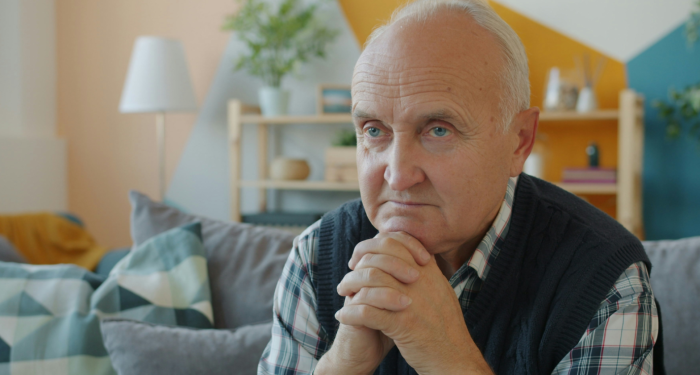
After decades of teaching, I discovered that retirement isn't the peaceful shore you swim toward—it's the moment you realize you've been so focused on reaching the finish line that you forgot to ask what happens when the race ends.

Add VegOut to your Google News feed. 
For thirty-two years, I marked time by school bells and semester breaks. September meant fresh starts, June meant endings, and retirement loomed like some golden shore I'd eventually reach if I just kept swimming. I had it all mapped out in my mind: the last day of classes, the goodbye party, the moment I'd hand in my keys and walk out of that high school for the final time as a teacher. What I hadn't mapped out was what came after. Nobody tells you that crossing a finish line without knowing why you were running in the first place leaves you standing there, breathless and bewildered, wondering what on earth you're supposed to do next.
I retired at 64, two years earlier than planned. My knees had other ideas about standing for six hours a day, and after one particularly painful afternoon trying to hide my wincing from my students, I knew it was time. The decision felt both sudden and inevitable, like watching a glass tumble off a counter in slow motion.
The myth of the golden years
Have you ever noticed how we talk about retirement like it's a reward for endurance? We say things like "I've earned this" and "Now I can finally relax." But relax into what, exactly? For decades, I'd defined myself by lesson plans and student essays, by the rhythm of academic years that gave shape to my life. Without that structure, I felt like a actor who'd wandered onto stage without knowing the play.
Those first few months, I'd wake up at 5:30 AM out of habit, make coffee, and then sit at my kitchen table with nothing to grade. The silence was deafening. All that time I'd fantasized about having time to read for pleasure, to garden, to take long walks. But when faced with endless empty hours, I discovered that freedom without purpose feels less like flying and more like falling.
The truth nobody mentions at retirement parties is that work gives us more than a paycheck. It gives us a reason to get dressed, a place where we matter, problems to solve that aren't our own. Strip that away, and you're left asking uncomfortable questions about who you are when you're not being useful to anyone.
When identity crumbles
T.S. Eliot wrote, "What we call the beginning is often the end / And to make an end is to make a beginning." Pretty words, but they don't capture the messy middle part where you're neither ending nor beginning, just floundering.
I spent the better part of a year mourning the teacher I used to be. Not the grading or the faculty meetings, but the moments when a student's face would light up understanding metaphor for the first time, or when a shy kid would find their voice through writing. Those teenagers taught me far more than I ever taught them about resilience, about seeing the world with fresh eyes, about the courage it takes to become yourself.
Without those daily connections, I felt hollowed out. My second husband had passed away three years before I retired, and I'd thrown myself even deeper into teaching as a way to avoid the echoing empty of our house. Now, without my classroom armor, grief came rushing back. There were six months where I barely left the house except for groceries. I told myself I was adjusting, but really I was hiding.
The unexpected catalyst
Do you know what finally pulled me out of my retirement fog? A friend's gentle bullying. She showed up one morning, uninvited, with coffee and a challenge: "You've been telling stories your whole life. Maybe it's time to write them down."
I laughed at first. Teaching literature and writing it are entirely different beasts. But she persisted, and at 66, with nothing to lose and too many hours to fill, I started writing. Not lesson plans or comments on student papers, but my own thoughts, my own stories, my own attempts to make sense of this strange new chapter.
What emerged surprised me. All those years of teaching had given me a treasury of insights I'd never fully examined. The widow's grief I'd been avoiding needed words to give it shape. The wisdom my students had shared deserved to be passed along. Writing became less about filling time and more about discovering what all those years had actually taught me.
Racing toward something, not away
Here's what I've learned about finish lines: they're only satisfying if you know what you're racing toward, not what you're racing from. I'd spent so long focused on reaching retirement that I'd never asked myself what I wanted retirement to reach toward.
The answer came slowly, one essay at a time. I wanted to keep teaching, just in a different classroom. I wanted to share what I'd learned about resilience from teenagers who faced more before eighteen than many adults face in a lifetime. I wanted to talk about how grief doesn't shrink—you just grow larger around it, developing new chambers of your heart that can hold both sorrow and joy simultaneously.
As I mentioned in a previous post about finding purpose after loss, sometimes our greatest gifts come disguised as endings. My teaching career ended, yes, but my writing life began. The students I could no longer reach in a classroom, I might reach through words on a screen. The lessons I'd learned about grace and grit and growing older could find new homes.
Final thoughts
If you're approaching your own finish line, whatever it might be, let me offer this: start asking yourself what comes after the tape breaks. What are you racing toward, not from? The view from the other side of retirement isn't automatically golden just because you've arrived. It becomes golden when you discover new races worth running, new purposes worth pursuing, new ways to matter in a world that still needs what you have to offer.
The real gift of crossing that finish line wasn't the ending. It was discovering that endings are really just oddly-disguised beginnings, waiting for us to be brave enough to see them for what they truly are.