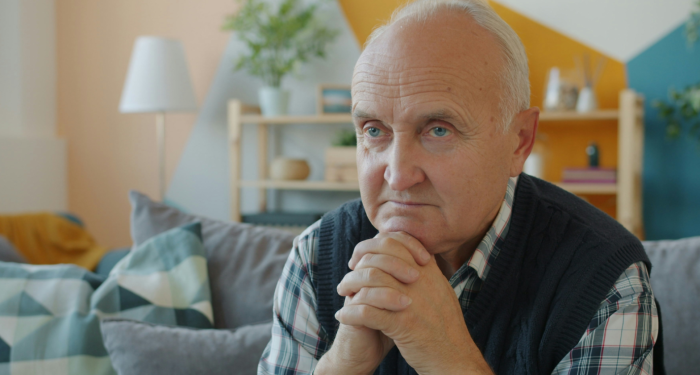
After years of exhausting conversations where every life update triggered a detailed action plan from 1985, I discovered that the most loving thing I could do for our relationship was to stop sharing the messy, complicated parts of my life altogether.

Add VegOut to your Google News feed. 
The phone call started innocently enough. I was telling her about a new project I'd launched, something I'd been working on for months. Within thirty seconds, she'd already mapped out exactly how I should be marketing it, who I should be partnering with, and why my timeline was completely wrong.
Sound familiar?
I love my mother. She's brilliant, caring, and genuinely wants the best for me. But somewhere along the way, I realized that sharing the real details of my life with her had become exhausting. Not because she judges me or doesn't care, but because every conversation turns into a masterclass on what I should be doing differently.
When support becomes a strategy session
Here's what I've learned: my mother's generation was taught that love means fixing things. They grew up in a world where problems had clear solutions, careers followed predictable paths, and success looked pretty much the same for everyone.
So when I tell her I'm struggling with work-life balance while building my business, she doesn't hear "I need someone to listen." She hears "I need a five-point action plan by tomorrow morning."
The thing is, she's usually got good advice. She spent decades as a teacher, managing classrooms and solving problems. She knows how to break down complex situations into manageable steps. But sometimes, I just need to vent about a difficult client without receiving a dissertation on conflict resolution techniques from the 1980s.
I remember calling her after a particularly rough week. A major deal had fallen through, and I was questioning everything. Before I could even finish explaining what happened, she'd already decided that I needed to completely restructure my business model. "You should consider getting your real estate license as a backup," she suggested, completely missing the point that I wasn't looking for a career change.
The generational divide in problem-solving
My parents valued education above everything else. Growing up, the message was clear: get good grades, get a stable job, follow the rules. And for them, it worked. They had successful careers as teachers, retired with pensions, and built a comfortable life following a predictable blueprint.
But my world looks nothing like theirs did at my age. When I took a three-year break to live in Bangkok and figure out my next move, my mother couldn't understand why I'd walk away from a "perfectly good career." To her, it looked like self-sabotage. To me, it was the best investment I'd ever made in myself.
The disconnect isn't about intelligence or care. It's about context. She's trying to navigate my life using a map from 1985, and honestly, who can blame her? That map worked perfectly for her generation.
What's interesting is how this dynamic plays out in small moments. I'll mention that I'm experimenting with intermittent fasting, and suddenly I'm getting articles about the importance of three meals a day. I'll share that I'm dating someone new, and before I know it, she's outlined the exact timeline we should follow before moving in together.
Learning to filter what I share
So I started editing. Not lying, just... curating.
Instead of "I'm dealing with imposter syndrome as I scale my business," it became "Work's going great, really busy."
Instead of "I'm navigating a complicated situation with a business partner," it became "Everything's moving along nicely."
The real stuff? The messy, complicated, very-much-still-figuring-it-out stuff? That stays with friends who understand that sometimes you just need someone to say, "That sucks, want to grab a drink?"
This shift happened gradually. After years in luxury hospitality, I'd learned that wealthy clients taught me something valuable: panic costs more than patience. But try explaining that philosophy to someone who believes every problem needs immediate action, preferably following a proven formula from forty years ago.
The irony is that by sharing less, our relationship actually improved. Without the constant stream of "helpful suggestions" about my life choices, we could actually enjoy our conversations. We talk about books, travel, her garden. Safe topics where her expertise doesn't feel like an invasion.
Finding support in unexpected places
Here's what nobody tells you about setting these boundaries: you still need support, just from different sources.
I've built a network of people who get it. Friends who understand that "I'm thinking about pivoting my business model" doesn't require an immediate SWOT analysis. Mentors who know that sometimes the best advice is no advice at all.
There's something liberating about having conversations where vulnerability isn't immediately met with a solution. Where you can say "I don't know what I'm doing" without someone rushing to tell you exactly what you should be doing.
This isn't about my mother being wrong or me being ungrateful. It's about recognizing that the support we need isn't always the support we're offered, and that's okay.
The cost of constant correction
What really sealed the deal for me was realizing how this dynamic was affecting my confidence. Every conversation left me second-guessing myself, not because she was critical, but because she always had a "better way."
Excellence, I've learned, comes from attention to detail, curiosity, and consistent practice. But it also comes from trusting your own judgment, something that's hard to do when every decision you make is met with an alternative proposal.
The mental load of constantly defending your choices or explaining why her suggestions won't work in your context is exhausting. It's easier to just keep things surface level, to share the highlights reel rather than the behind-the-scenes footage.
And ultimately, preserving your energy for the actual challenges in your life rather than defending against well-meaning advice might be the most practical form of self-care there is.
Final thoughts
I still call my mother regularly. We have great conversations about safe topics, and I genuinely enjoy hearing about her life. But the deep stuff, the real stuff, the things that keep me up at night? Those stay elsewhere.
This isn't a tragedy. It's an adjustment, a recognition that different relationships serve different purposes. My mother gave me an incredible foundation, values that still guide me today. But she can't be my sounding board for a life that looks nothing like the one she planned for me.
Sometimes the most loving thing you can do is protect your relationship from the weight of expectations it can't bear. My mother will always want to fix things for me because that's how she shows love. And I'll always edit what I share because that's how I preserve both my sanity and our relationship.
The blueprint she offers comes from a place of love. It's just written for a different building, in a different city, in a different era. And recognizing that doesn't make me a bad son. It makes me someone who's learned that not every problem needs solving, and not every story needs telling.
At least not to your mother.
If You Were a Healing Herb, Which Would You Be?
Each herb holds a unique kind of magic — soothing, awakening, grounding, or clarifying.
This 9-question quiz reveals the healing plant that mirrors your energy right now and what it says about your natural rhythm.
✨ Instant results. Deeply insightful.

Adam Kelton
Adam Kelton is a writer and culinary professional with deep experience in luxury food and beverage. He began his career in fine-dining restaurants and boutique hotels, training under seasoned chefs and learning classical European technique, menu development, and service precision. He later managed small kitchen teams, coordinated wine programs, and designed seasonal tasting menus that balanced creativity with consistency.
After more than a decade in hospitality, Adam transitioned into private-chef work and food consulting. His clients have included executives, wellness retreats, and lifestyle brands looking to develop flavor-forward, plant-focused menus. He has also advised on recipe testing, product launches, and brand storytelling for food and beverage startups.
At VegOut, Adam brings this experience to his writing on personal development, entrepreneurship, relationships, and food culture. He connects lessons from the kitchen with principles of growth, discipline, and self-mastery.
Outside of work, Adam enjoys strength training, exploring food scenes around the world, and reading nonfiction about psychology, leadership, and creativity. He believes that excellence in cooking and in life comes from attention to detail, curiosity, and consistent practice.
More Articles by Adam