From the frustrating beauty of Italian bureaucracy to the shocking discovery that an entire country actually takes August off, these are the unfiltered realities that transformed my romanticized expectations into something far more profound—and occasionally maddening.

Add VegOut to your Google News feed. 
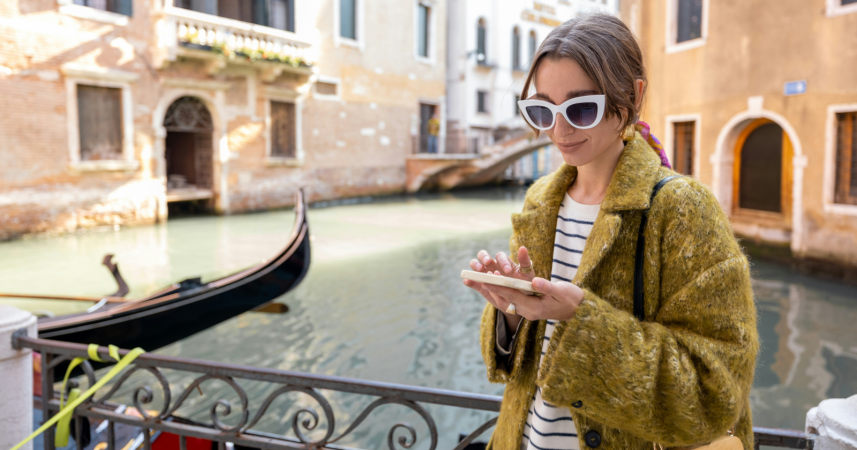
Picture this: you're sitting in a charming piazza, sipping espresso while the Mediterranean sun warms your face. Locals gesture wildly as they chat, and somewhere a Vespa buzzes past. This is the Italy everyone dreams about.
I'll confess something right off the bat. When I packed up my life for a year in Italy, I thought I had it all figured out. After spending three years in Bangkok during what I called my "long break" between careers, I considered myself pretty worldly. I'd already learned to slow down, to eat slower, to think slower. How different could Italy be?
Turns out, very different. And not always in the ways Instagram would have you believe.
The Mediterranean dream is real, but it comes with footnotes nobody mentions. After twelve months of navigating Italian bureaucracy, decoding unwritten social rules, and yes, gaining about fifteen pounds from all that pasta, I learned some truths that no travel blog prepared me for.
1. The paperwork will make you question your sanity
Remember that scene in The Godfather where everything moves at its own pace? Well, Italian bureaucracy makes that look like Formula One racing.
Getting my residence permit involved seven different offices, fourteen forms (three of which were the exact same document but needed for different departments), and a mysterious stamp that could only be obtained on Tuesday mornings between 10 and 11:30. I'm not exaggerating.
One morning, I stood in line for three hours only to be told I needed a photocopy of a document I already had the original of. The copy shop? Closed for lunch. Obviously.
The kicker? Once you accept this as normal, something weird happens. You stop rushing. You bring a book. You make friends in line. You realize that maybe not everything needs to happen at Silicon Valley speed.
2. August doesn't exist
Here's something nobody tells you: Italy basically shuts down in August. And I mean shuts down.
Your favorite restaurant? Closed. The mechanic? On vacation. That important government office? See you in September. Even some ATMs seem to take a holiday.
My first August, I ran out of coffee. The store near me was closed. The backup store? Also closed. I ended up taking a forty-minute bus ride to find an open supermarket, feeling like Will Smith in I Am Legend.
But here's what this taught me: when an entire country agrees to press pause, something magical happens. People actually disconnect. They don't check emails on the beach. They don't take work calls during family dinners. Revolutionary concept, right?
3. Dinner before 8 PM marks you as a tourist forever
Think you'll grab dinner at 6:30 after a long day? Think again.
I once walked into a restaurant at 7 PM, and the owner looked at me like I'd asked to eat breakfast at midnight. "Kitchen opens at eight," he said, then offered me a drink and proceeded to tell me his entire family history while we waited.
This isn't just about meal times. It's about rhythm. Italians have mastered something we've lost: the art of building your day toward something. Dinner isn't fuel; it's the crescendo your entire day builds toward.
4. Your neighbors will know everything about you (and you'll love it)
Within a week of moving into my apartment in a small town outside Florence, my neighbor knew my name, my job, and why I wasn't married yet. She also started leaving extra portions of her homemade ragu outside my door.
This level of community involvement felt invasive at first. Where I come from, we barely make eye contact in elevators. But when my laptop died and I needed to find a repair shop, guess who knew exactly where to go and got me a discount because her cousin worked there?
5. The "15-minute" coffee is a three-act play
"Want to grab a quick coffee?" doesn't exist here.
Coffee is a ritual. You stand at the bar. You discuss the weather with the barista. You argue about last night's soccer match with a complete stranger. You leave, somehow having spent forty-five minutes on what should have been a two-minute transaction.
At first, this drove me crazy. I had things to do, places to be. Then I read somewhere that Italians have one of the highest life expectancies in the world. Coincidence? After experiencing their approach to daily pleasures, I think not.
6. Your Italian will never be good enough (and that's okay)
I studied Italian for months before arriving. I was confident. I was ready.
I was also completely unprepared for the reality that every region, city, and sometimes neighborhood has its own dialect. My textbook Italian in Naples? Useless. My carefully practiced phrases in Sicily? Might as well have been speaking Klingon.
But here's the beautiful part: Italians will love you for trying. They'll correct you, teach you the local way to say things, and somehow understand your butchered attempts through pure willpower and hand gestures.
7. The driving will rewire your nervous system
Italian driving isn't chaotic. It's jazz.
Stop signs are suggestions. Lane markers are rough guidelines. That gap between two cars that you think is too small? That's practically an invitation.
The first time I drove in Rome, I white-knuckled the steering wheel so hard I had marks for days. By month six, I was cutting through traffic like a local, using my horn as punctuation, and somehow understanding the complex dance of who goes first at an intersection with no clear rules.
8. You'll stop counting calories (and somehow get healthier)
I ate pasta almost daily. Real pasta, with real butter, real cream, real everything. I enjoyed wine with lunch. I discovered that gelato is perfectly acceptable at 11 AM.
According to everything I thought I knew about nutrition, I should have needed a forklift to get home. Instead, something strange happened. I felt better than I had in years.
Maybe it was the walking everywhere. Maybe it was the absence of processed foods. Or maybe there's something to be said for eating with genuine pleasure instead of guilt.
9. Sunday is sacred (and legally enforced)
Forget about running errands on Sunday. Shops are closed. Many restaurants too. Even the pharmacy has limited hours.
This forced rest initially frustrated me. What if I need something? What if I'm bored? But Sundays became my favorite day. Long lunches with friends that stretched into dinner. Walks with no destination. The radical act of doing absolutely nothing productive.
10. Leaving will be harder than you think
Finally, here's what really caught me off guard: the reverse culture shock when you return home.
After my year in Italy, returning to America felt like stepping off a plane onto a different planet. Everyone moved too fast. Ate too quickly. The coffee was huge but somehow tasted like nothing. People scheduled lunch meetings for thirty minutes. Thirty minutes!
I found myself defending three-hour dinners to friends who couldn't understand why anyone would "waste" so much time eating. I caught myself trying to air-kiss colleagues goodbye. I kept expecting shops to close for riposo.
Final thoughts
Living in Italy isn't just about changing your address. It's about rewiring your entire operating system. The Mediterranean dream is real, but it's not what you see in movies or on Instagram. It's messier, more frustrating, and ultimately more transformative than any romanticized version could capture.
The biggest thing they don't tell you? You won't just be visiting Italy. Italy will be reshaping you, one impossibly long lunch at a time. And years later, you'll still catch yourself pausing before dinner, wondering if it's really acceptable to eat before 8 PM.
The real question isn't whether you can handle living the Mediterranean dream. It's whether you can handle returning to life without it.
What’s Your Plant-Powered Archetype?
Ever wonder what your everyday habits say about your deeper purpose—and how they ripple out to impact the planet?
This 90-second quiz reveals the plant-powered role you’re here to play, and the tiny shift that makes it even more powerful.
12 fun questions. Instant results. Surprisingly accurate.