The most unforgettable lessons about humanity, creativity, and connection often come not from classrooms or books—but from a paper plate on a crowded street.
There’s something raw, unfiltered, and deeply human about street food.
It’s not about Michelin stars or tasting menus—it’s about people. It’s about the old man frying dough in a cart he’s pushed for thirty years, or the young woman stirring broth before dawn while the city wakes up around her.
When you eat street food, you’re not just feeding yourself—you’re stepping into someone else’s world. You’re tasting centuries of history, migration, and creativity, all packed into a dish that might cost less than your morning coffee.
And that’s the beauty of it. Street food strips food down to its essence—flavor, connection, and survival. It’s food that tells the truth.
If you’ve eaten street food in these countries, you’ve experienced something most travelers miss. You’ve tasted the heartbeat of a place, one bite at a time.
Let’s dive in.
1) Thailand
Few places on earth make food feel so alive.
Walk through Bangkok at night and the city practically hums with energy. The smell of grilled pork skewers, chili, and lemongrass fills the air. Steam rises from woks as vendors toss noodles at lightning speed.
You grab a stool, order pad kra pao, and watch it come together in minutes—ground pork, holy basil, garlic, chili. The first bite hits hard: salty, spicy, sweet, fragrant. You sweat, you laugh, you keep eating.
Street food in Thailand doesn’t just feed you—it wakes you up. It’s a reminder that great food doesn’t need polish; it just needs passion.
As Anthony Bourdain once said, “Food is everything we are. It’s an extension of nationalist feeling, ethnic feeling, your personal history.”
In Thailand, that couldn’t be truer. Every bite tells a story of balance and intensity—a kind of harmony born from chaos.
2) Mexico
If Thailand is chaos, Mexico is rhythm.
In Mexico City, you can smell the al pastor spinning long before you see it. The meat glistens under a slice of pineapple as the taquero works his blade in a blur. The taco lands in your hand—warm, fragrant, perfect.
The first bite? Citrus, spice, smoke, and that unmistakable punch of authenticity.
What I love about Mexico’s street food is how it refuses to be tamed. It’s not trying to impress—it’s trying to nourish. Every torta, sope, or tamale carries generations of family recipes, refined not in restaurants but in alleyways and markets.
And beyond the flavor, there’s the ritual. Locals eat standing up, elbow to elbow, sharing salsa, stories, and laughter. No one checks their phone. No one rushes. It’s food as community, not convenience.
If you’ve ever eaten street food in Mexico, you know—it’s not just delicious. It’s soul-level human.
3) Japan
Precision. That’s the word that defines Japanese street food.
Even the simplest skewer feels intentional. You can walk through Osaka’s Dotonbori district and see stall after stall of takoyaki sizzling in perfect orbs, each one flipped with surgical precision.
When you bite into one, it’s molten inside—but that’s part of the fun. It burns your tongue, and you smile anyway.
Japanese street food mirrors its culture: disciplined yet playful. A taiyaki fish-shaped pastry, a yakitori stick glazed just right, or ramen slurped in a late-night alley—they’re all crafted with quiet pride.
You realize something important while eating in Japan: mastery doesn’t always shout. Sometimes it whispers.
And maybe that’s why street food here feels so profound—it’s proof that excellence doesn’t need fanfare, just repetition, respect, and heart.
4) India
If Japan whispers, India sings. Loudly. Joyfully.
Indian street food is chaos in technicolor—explosive flavors, honking horns, and the hum of people who’ve perfected this art through instinct, not recipes.
You stand by a chaat stall in Delhi, watching a man in a faded shirt toss puffed puris, chickpeas, potatoes, and tamarind water together with impossible speed. The mix is tangy, spicy, crunchy, and sweet all at once.
Then there’s vada pav in Mumbai—a spiced potato patty sandwiched in soft bread with chutneys so fiery they make your eyes water. But you keep eating because it’s too good to stop.
What makes Indian street food unforgettable isn’t just flavor—it’s generosity. No matter where you are, there’s always someone ready to hand you food with a smile.
It’s a lesson in abundance: that joy can be found in the simplest moments, especially when shared over a paper plate.
5) Turkey
Istanbul might just be the best food city on the planet.
The city stretches across two continents, and you can taste that diversity on every corner. From sizzling doner kebabs to fresh simit coated in sesame, the air is thick with temptation.
One night, I stopped by a vendor selling midye dolma—stuffed mussels with spiced rice. You squeeze lemon on top and pop them like candy. Standing there with a paper plate in hand, the Bosphorus glittering behind me, I realized: this is how food was meant to be eaten—fresh, fleeting, unforgettable.
Turkish street food bridges East and West in a way no restaurant can replicate. It’s living history on a skewer, a sandwich, a bite.
There’s pride here, but not pretense. Every vendor believes their version is the best, and honestly, they might all be right.
6) Vietnam
If balance had a flavor, it would taste like Vietnam.
Street food here is all about contrasts—hot and cold, sour and sweet, crisp and soft. Every dish feels like a conversation between opposites that somehow agree.
You can’t walk ten steps in Hanoi without passing a steaming pot of pho. The broth simmers for hours, layered with spices and care. When you sit down on a tiny stool, knees tucked to your chest, and take that first sip, time slows down.
Or take banh mi—French bread, Vietnamese fillings. A symbol of colonial history turned into something uniquely local. It’s crunchy, spicy, rich, and fresh all at once.
Vietnam taught me that food doesn’t have to be complicated to be profound. The magic lies in proportion, in balance, in knowing when to stop adding and just let things be.
7) Morocco
Marrakech hits you like a symphony.
The call to prayer echoes over the rooftops, the scent of grilled meat fills the square, and you find yourself drawn into Jemaa el-Fnaa’s chaos.
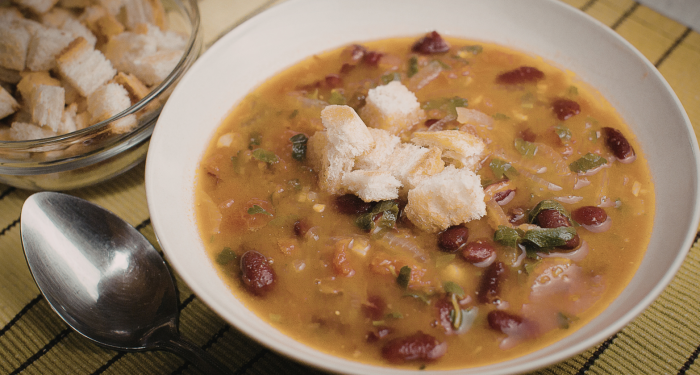
You order a bowl of harira soup—tomato, lentils, chickpeas, and spice—and the vendor ladles it out with quiet confidence. It costs next to nothing, but it tastes like centuries of tradition.
Then you wander, snacking on snail soup, kefta skewers, and warm msemen pancakes drizzled with honey. Around you, there’s laughter, bargaining, and the constant rhythm of drums in the distance.
Morocco’s street food isn’t just food—it’s performance. It’s theater. It’s culture unfolding right before your eyes.
And it stays with you. Not just the flavor, but the feeling of being fully immersed in something ancient and alive.
8) Italy
Finally, Italy—the country where food feels like a birthright.
Yes, Italy is famous for its fine dining, but the soul of Italian cuisine lives on the street.
In Sicily, you’ll find arancini—golden-fried rice balls stuffed with ragu or cheese. In Naples, it’s pizza fritta, deep-fried dough stuffed with ricotta and salami. In Rome, pizza al taglio—square slices you eat standing up, paper plate in hand, sauce on your chin.
There’s something about eating Italian street food that makes you feel part of the neighborhood. You’re chatting with strangers, gesturing wildly with your hands, laughing between bites.
It’s warm. It’s loud. It’s perfectly imperfect.
One evening in Naples, I grabbed a paper cone of fried seafood—cuoppo—from a stand near the port. The batter was crisp, the calamari sweet, the lemon fresh. I ate it standing on the curb, watching scooters zip by, and thought: this is it. This is what happiness tastes like.
The bottom line
Street food does more than fill your stomach—it fills your soul.
It humbles you. It reminds you that some of the best things in life come without pretense or perfection.
When you sit on a plastic stool in Bangkok, stand under neon lights in Mexico City, or crouch by a grill in Istanbul, you’re part of something timeless. You’re sharing in the same rituals locals have performed for decades, maybe centuries.
You stop thinking about presentation, about calories, about “good” or “bad” food. You start thinking about connection. About how incredible it is that we can travel across the world and still understand each other through taste.
Eating street food in these countries changes you. It makes you braver. More curious. More human.
Because once you’ve shared a meal with someone on the street, you stop seeing “foreigners” and start seeing people—just like you—doing their best to live, love, and create something beautiful.
That’s not just food. That’s the world, served one bite at a time.