These throwback lunchbox staples say a lot about how convenience once mattered more than nutrition.
School cafeterias in the 60s and 70s looked nothing like the ones today. Forget rainbow bento boxes and stainless-steel Yeti bottles filled with cucumber water.
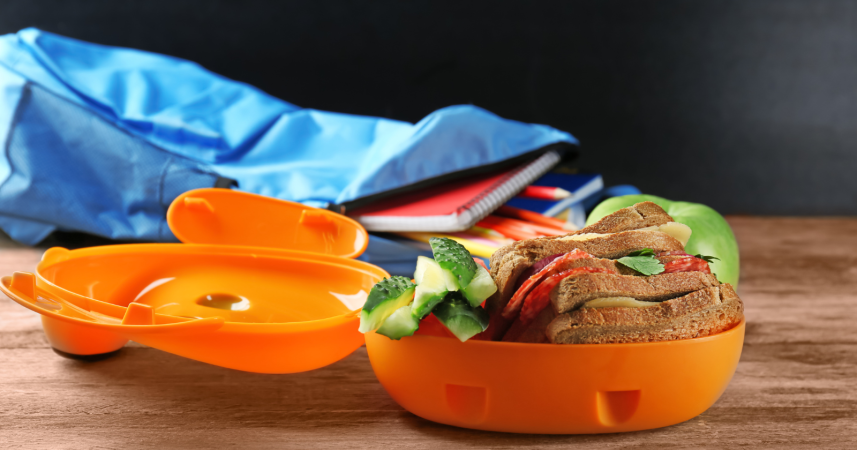
Back then, kids carried colorful metal lunchboxes—sometimes with The Brady Bunch or Scooby-Doo plastered across the front—and inside was whatever mom had time to slap together before the bus came.
It wasn’t about nutrition labels, macros, or sugar content. It was about convenience, cost, and what the grocery store had on sale. Processed foods were the future, and television ads promised moms that “quick” was just as good as “homemade.”
And some of the things kids ate at lunchtime would honestly make a Gen Z kid gag. Let’s take a tour of nine old-school staples that wouldn’t stand a chance in a modern cafeteria.
1) Bologna sandwiches on white bread
The undisputed heavyweight champion of 60s and 70s lunches: bologna on Wonder Bread. Two slices of soft white bread that squished into doughy balls if you pressed too hard, a round of bologna, maybe a squirt of yellow mustard.
If your mom was feeling fancy, she’d toss in a slice of processed American cheese that doubled as edible glue.
This wasn’t “charcuterie” or “artisanal cold cuts.” This was mystery meat, pressed into a uniform circle and tasting faintly of salt and smoke. Still, it was cheap, it filled you up, and nobody thought twice about it.
Imagine offering that to today’s kids, who are used to turkey wraps with avocado or hummus sandwiches on sprouted grain bread. They’d probably stage a protest.
2) Spam and pickle sandwiches
Spam was the other processed meat superstar. It slid out of the can with that gelatinous slurp, a pinkish brick ready to be sliced and fried—or, more often, just eaten cold. Moms would slap a slice of Spam on bread with pickles for a tangy crunch.
Spam wasn’t a joke back then. It was a pantry hero, born during World War II and celebrated in postwar kitchens as a symbol of modern convenience.
Today, Spam has made a comeback in trendy fusion dishes—think Spam musubi in Hawaiian cuisine or Spam fries at gastropubs. But a plain Spam-and-pickle sandwich in a kid’s lunchbox? That would go viral for all the wrong reasons.
3) Peanut butter and Miracle Whip
This one sounds like something from a dare, but it was a real thing.
Some families swapped jelly for Miracle Whip, the sweet-and-tangy mayo-like spread. Why? Because Miracle Whip was cheaper, stretched further, and was marketed as a “zesty” alternative.
Kids didn’t know better—they just ate what they were given. And some grew to genuinely like the flavor combo. But hand that to a kid today, and you’d probably end up on a “worst school lunches” TikTok compilation.
It’s proof of how much taste evolves. A mix that once felt normal now feels downright criminal.
4) Deviled ham spread
Nothing says “retro” quite like deviled ham. Packaged in little cans decorated with a cartoon devil, it looked like cat food to anyone unfamiliar.
Parents would stir it with mayo and spread it on white bread or crackers, and suddenly it became “lunch.” It was salty, spicy, mushy—and not something you wanted to smell at room temperature by noon.
It’s wild to think how shelf-stable canned meats were considered high-tech. Today, we refrigerate everything and freak out if something’s been left out too long. But back then, deviled ham was marketed as safe, easy, and modern.
Drop it into a kid’s lunch today, though, and you’d probably clear out half the cafeteria.
5) Canned fruit cocktail
Let’s talk “fruit.”
Fresh fruit wasn’t always practical or affordable in the 60s and 70s, so canned fruit cocktail was the answer. It came swimming in syrup, with soft cubes of pear, pale grapes, and—if you were lucky—one or two bright red cherries. Kids fought over those cherries like they were gold.
Parents thought it was healthy. After all, it was fruit, right? But really, it was sugar in disguise.
Compare that with today’s snack culture: fresh-cut melon, apple slices in baggies, even little pouches of organic freeze-dried strawberries. Hand a kid syrupy canned grapes today and they’d probably give them away at recess.
6) Tang in a thermos
If you grew up in the 60s or 70s, you probably drank Tang.
Tang was the orange-flavored drink powder that became a household name after NASA used it during space missions. Kids loved it because it felt futuristic. Parents loved it because it was cheap and easy—just add water and suddenly you had “juice.”
Of course, it tasted nothing like real juice. It was neon orange, a little sour, and chalky if you didn’t stir it well. But it made you feel like an astronaut, which was half the point.
Today, kids carry Hydro Flasks with electrolyte water or Honest Kids juice boxes made with “100% organic fruit juice.” Tang? That belongs in a museum of space-age optimism.
7) Cheese Whiz sandwiches
Here’s where things got really strange.
Cheese Whiz—bright orange, shelf-stable, and spreadable—was marketed as a miracle product. Just open the jar, smear it on white bread, and voilà: instant sandwich. No knives, no slicing, no refrigeration.
Kids loved the gooey texture, and parents saw it as modern convenience at its best.
But today, with all the warnings about processed foods, artificial dyes, and chemical additives, Cheese Whiz feels almost radioactive. If a parent packed it now, they’d probably get a note from the teacher suggesting “healthier choices.”
8) Liverwurst sandwiches
Not every kid had liverwurst, but those who did never forgot it.
Liverwurst was a spreadable sausage made of—you guessed it—liver. Parents thought of it as nutritious, high in iron and protein. On rye bread with mustard, it was a grown-up sandwich that some unlucky kids found in their lunchboxes.
The taste? Rich, funky, and very “adult.” Probably too adult.
Imagine sitting at lunch with classmates who had PB&J or pretzels while you pulled out a liver sandwich. Instant nickname material. In today’s world of Instagram-worthy school lunches, this would be social suicide.
9) Tuna salad with mayo and relish
Finally, the infamous tuna salad sandwich.
Canned tuna mixed with mayo and sweet pickle relish was standard in the 70s. But here’s the terrifying part: ice packs weren’t a thing. Lunchboxes were metal, and food sat at room temperature for hours. By the time noon rolled around, you were eating warm tuna mixed with mayo.
How kids survived without mass food poisoning is honestly a mystery.
Today, tuna still has its place, but it’s neatly packaged in pouches or paired with avocado on whole grain bread. Leave mayo-laden tuna in a lunchbox all morning now, and you’d probably end up in the nurse’s office.
The bottom line
Looking back, these lunches feel almost absurd. Bologna, Spam, liverwurst, neon orange drinks—what were we thinking?
But here’s the thing: those foods reflected the times. The postwar era was obsessed with efficiency and shelf-stable convenience. Moms were influenced by TV commercials promising that canned meat or instant drinks were the modern way to care for a family. Nobody was talking about organic kale or probiotics.
And while these foods make us laugh (or gag) today, they’re part of the story of how food culture evolved. They paved the way for the backlash that brought us farmers’ markets, health-conscious brands, and Instagrammable lunches.
So maybe it’s less about judgment and more about context. Fifty years from now, kids will probably look back at our kombucha bottles, chia puddings, and protein bars with the same disbelief.
Because every generation thinks their food is normal—until the next one shows up and asks, “You actually ate that?”
Just launched: Laughing in the Face of Chaos by Rudá Iandê
Exhausted from trying to hold it all together?
You show up. You smile. You say the right things. But under the surface, something’s tightening. Maybe you don’t want to “stay positive” anymore. Maybe you’re done pretending everything’s fine.
This book is your permission slip to stop performing. To understand chaos at its root and all of your emotional layers.
In Laughing in the Face of Chaos, Brazilian shaman Rudá Iandê brings over 30 years of deep, one-on-one work helping people untangle from the roles they’ve been stuck in—so they can return to something real. He exposes the quiet pressure to be good, be successful, be spiritual—and shows how freedom often lives on the other side of that pressure.
This isn’t a book about becoming your best self. It’s about becoming your real self.