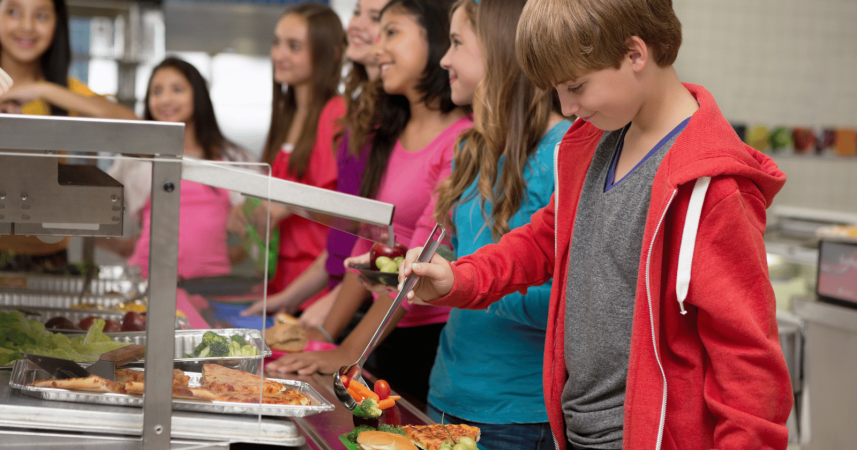
Long before food trends and meal prep, a generation learned its first life lessons through the strange, comforting chaos of the school lunch line.

Add VegOut to your Google News feed. 
There’s something strange about memory.
We forget birthdays, phone numbers, even faces we once swore we’d never forget, but one whiff of cafeteria pizza or canned peaches, and suddenly we’re eight years old again, clutching a lunch tray under flickering fluorescent lights.
For boomers, those lunches weren’t just food; they were a snapshot of childhood. The sounds of metal trays clattering, sneakers squeaking on the linoleum floor, and the unmistakable scent of industrial gravy somehow mixed with dish soap.
Before avocado toast and oat milk lattes, there was the era of the school cafeteria. It was a world of mystery meats, powdered mashed potatoes, and milk cartons that never opened quite right.
And yet, for all their quirks, those lunches left a mark. They were shared experiences before “shared experiences” became a marketing phrase.
Here are eight cafeteria classics boomers still remember more vividly than their report cards, because let’s face it, those grades didn’t come with a side of tater tots.
1) Sloppy Joes
If nostalgia had a smell, it would be a Sloppy Joe simmering in a pot the size of a washing machine.
Served on a soft white bun that disintegrated on contact, this was the king of cafeteria meals, equal parts delicious and disastrous. You’d sit down determined to stay clean, but halfway through lunch, your tray looked like a crime scene.
Still, everyone loved it. That tangy mix of tomato, onion, and ground beef hit the perfect balance between chaos and comfort. Some kids even brought extra napkins preemptively, like seasoned pros.
The Sloppy Joe wasn’t just lunch; it was a rite of passage. You learned about balance, patience, and the art of eating fast before your bun gave up.
Funny how something so simple could stick in people’s memories longer than algebra ever did.
2) Fish sticks on Friday
Every boomer remembers fish stick Fridays. You didn’t need an announcement; you could smell it halfway down the hall.
It was crispy on the outside, soft and suspiciously uniform on the inside, and always served with a scoop of something pretending to be tartar sauce. Some schools paired them with peas, others with mac and cheese (which, in hindsight, was an underrated combo).
No one really knew what kind of fish it was. Cod? Haddock? Something with fins? Didn’t matter. It was comfort in rectangle form.
I think there’s something oddly grounding about how routine it was. Before meal plans, food apps, or celebrity chefs, lunchrooms offered the original “set menu.” Every Friday, the same thing. Predictable. Simple.
There’s comfort in that kind of consistency, especially for kids trying to navigate the chaos of growing up.
3) Pizza squares
Ah yes, the rectangular slice of cafeteria fame. The dough was thick and soft, the sauce tasted like tomato soup, and the cheese could stretch halfway to the next table.
But it didn’t matter. Pizza day was sacred.
The smell alone could spark a stampede. Kids who usually brown-bagged it would “accidentally” forget their lunches just for a chance at a slice.
It wasn’t “good” pizza by any standard we’d use today, but it was our pizza. Something about that perfect square, slightly burnt on the edges and floppy in the middle, just hit different.
I’ve eaten in Michelin-starred restaurants where the food was exquisite but forgettable. Yet one thought of those cafeteria pizza squares, and I can practically taste them again.
That’s the thing about memory; it’s not about flavor; it’s about feeling.
4) Salisbury steak
This one was supposed to be the “fancy” option. Even the name sounded sophisticated. Salisbury steak.
You’d think you were getting something from a diner menu, but what landed on your tray was… well, not quite that.
A grayish patty swimming in brown gravy, mashed potatoes on the side, maybe a scoop of green beans for good measure. It wasn’t glamorous, but it was filling, and when you’re twelve, that’s all that matters.
Still, there was a charm to it. It made you feel a little more grown-up. Like you were having “real food” instead of just another sandwich.
Looking back, there’s something wholesome about that. It was the cafeteria’s attempt at sophistication, even if it looked like dog food with dreams.
But to this day, mention Salisbury steak to a boomer, and you’ll see that flicker of recognition—the taste, the texture, the gravy that could have doubled as glue.
5) Mystery meat
No school lunch lineup would be complete without the legend itself: mystery meat.
Was it beef? Pork? Chicken? A combination of all three? No one knew, and that was part of the fun (or the fear).
It usually came as a rectangular patty or loaf, slathered in brown gravy thick enough to hide any evidence. And somehow, it always tasted fine.
Kids would whisper jokes about it in line, but most still ate every bite. Because that’s what you did, you trusted the lunch lady and hoped for the best.
Today’s generation might obsess over ingredient labels and sourcing, but boomers learned a different lesson: sometimes it’s okay not to know everything.
There was a weird kind of faith in that. Or maybe just hunger. Either way, it left an impression.
6) Peanut butter sandwiches with honey or jelly
Before “nut-free zones” and allergy tables were standard, peanut butter ruled the lunchroom.
PB&J was as classic as it got. Sometimes it came with grape jelly, sometimes strawberry, and on lucky days, a drizzle of honey that seeped through the bread by noon.
It wasn’t gourmet, but it was dependable. You could trade it, share it, or devour it in three bites if recess was calling.
For many boomers, that sandwich symbolized comfort and simplicity. Just bread, peanut butter, and something sweet, no preservatives, no packaging, no marketing campaign.
And maybe that’s why it endures. It reminds people of a time before everything was branded, tracked, and optimized. Just lunch and laughter and a carton of milk that always seemed a little too warm.
7) Tater tots
If cafeteria food had a currency, it was tater tots.
Golden, crispy, and slightly oily, these little cylinders of joy showed up next to everything: burgers, hot dogs, chicken nuggets, Sloppy Joes, you name it.
And everyone knew their value. Kids traded them like stockbrokers on Wall Street. Two tots for a cookie, three for a pudding cup.
You could tell who was having a good day based on how many tots were left on their tray.
It’s funny, something so small ended up teaching a lot about patience and prioritization. Everyone knew the rule: save the crispiest ones for last.
Today, tater tots have made a comeback in trendy diners and gastropubs, but for boomers, they’ll always belong to the cafeteria, served with a plastic fork and the sound of chatter in the background.
8) Chocolate pudding cups
Finally, dessert. The light at the end of the lunch line.
Chocolate pudding cups were the great equalizer. No matter how questionable the main course was, pudding made it better.
Peel back the foil lid, take that first cool, creamy spoonful, and suddenly the world felt right again.
Sometimes they came topped with a dollop of whipped cream or, if you were really lucky, chocolate shavings (though more often, just air bubbles).
It wasn’t gourmet, but it didn’t need to be. It was simple, sweet, and satisfying, three words that defined the golden age of cafeteria lunches.
For many boomers, that tiny cup symbolized the joy of small rewards. A reminder that even the roughest days could end on a high note.
The bottom line
If you ask a boomer about their school days, they might struggle to recall their report cards or locker combinations, but mention cafeteria pizza, and you’ll get a story.
Because food, more than almost anything else, anchors memory. It’s sensory, emotional, and deeply tied to identity.
Those lunches, messy, humble, sometimes downright weird, were more than meals. They were shared experiences that connected millions of kids across towns and decades.
Sure, today’s lunches are cleaner, healthier, and more Instagrammable. But for the generation that grew up on rectangular pizza and mystery meat Mondays, cafeteria food will always be a symbol of simpler times.
Maybe that’s the real reason it sticks with them. Because those lunches weren’t perfect, but neither was childhood. And that’s exactly what made both worth remembering.
If You Were a Healing Herb, Which Would You Be?
Each herb holds a unique kind of magic — soothing, awakening, grounding, or clarifying.
This 9-question quiz reveals the healing plant that mirrors your energy right now and what it says about your natural rhythm.
✨ Instant results. Deeply insightful.

Adam Kelton
Adam Kelton is a writer and culinary professional with deep experience in luxury food and beverage. He began his career in fine-dining restaurants and boutique hotels, training under seasoned chefs and learning classical European technique, menu development, and service precision. He later managed small kitchen teams, coordinated wine programs, and designed seasonal tasting menus that balanced creativity with consistency.
After more than a decade in hospitality, Adam transitioned into private-chef work and food consulting. His clients have included executives, wellness retreats, and lifestyle brands looking to develop flavor-forward, plant-focused menus. He has also advised on recipe testing, product launches, and brand storytelling for food and beverage startups.
At VegOut, Adam brings this experience to his writing on personal development, entrepreneurship, relationships, and food culture. He connects lessons from the kitchen with principles of growth, discipline, and self-mastery.
Outside of work, Adam enjoys strength training, exploring food scenes around the world, and reading nonfiction about psychology, leadership, and creativity. He believes that excellence in cooking and in life comes from attention to detail, curiosity, and consistent practice.
More Articles by Adam