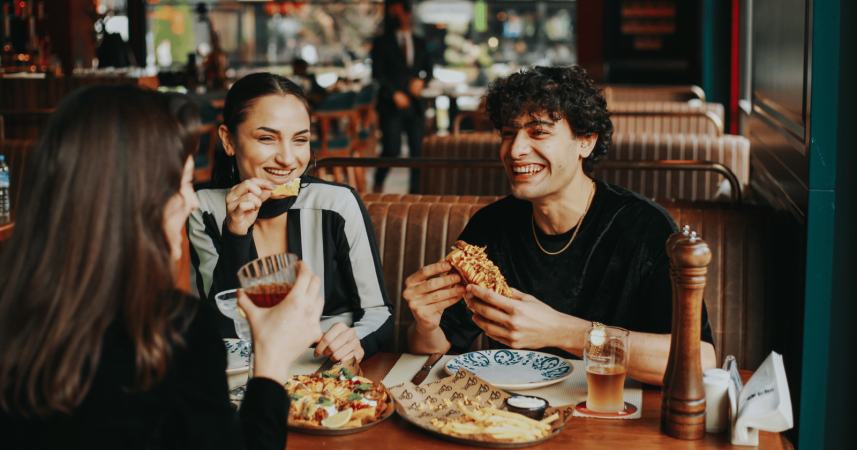
Beneath the nostalgia and breadsticks is a lesson in how culture, class, and taste evolve when everyone finally gets a seat at the table.

Add VegOut to your Google News feed. 
I still remember when dining at The Cheesecake Factory felt like an event. You’d plan your outfit, maybe wear a bit of perfume, and pray the waitlist wasn’t longer than a movie.
Now? It’s where people go to eat oversized portions and post #foodcoma on Instagram.
That shift, from “special” to “standard,” isn’t just about money. It’s about accessibility, branding, and how culture moves faster than businesses can keep up.
Restaurants that once felt exclusive slowly became everyman’s go-to spot, and in doing so, lost their sparkle. It’s the same story, over and over: something feels aspirational until it’s everywhere.
Then we start looking for the next thing that makes us feel just a little fancier, a little more “in the know.” Because what we’re really chasing isn’t luxury; it’s novelty.
Here are eight restaurant chains that went from high-end to “hey, let’s just go there,” and what that quiet shift reveals about how we evolve as consumers.
1. The Cheesecake Factory
When The Cheesecake Factory first opened, it felt luxurious. Dim lighting, endless menu pages, and slices of cake so indulgent they seemed forbidden.
It was a date-night staple for middle-class families wanting a taste of “fine dining.”
The portions were enormous, the décor borderline dramatic, and the service just attentive enough to make you feel special.
You’d sit there, staring at that 20-page menu, pretending to read it when really you already knew you were getting the chicken Madeira.
But over time, it became... everywhere. The menu grew absurdly long, the portions larger, and the experience predictable.
It’s not that the food got worse; it’s that familiarity stripped away the fantasy.
When something stops being an occasion, it becomes routine. And that’s exactly what happened here.
The Cheesecake Factory didn’t change; we did. We stopped romanticizing the things that once made us feel grown-up.
2. Olive Garden
In the early 2000s, Olive Garden was basically the definition of a fancy night out.
Unlimited breadsticks, creamy Alfredo, and those mint chocolates at the end were pure joy. Families celebrated birthdays there because it felt “a step above” fast food.
I still remember seeing ads where people in crisp shirts laughed over wine and pasta, pretending they were in Tuscany. It worked.
Olive Garden sold an illusion of European dining without the plane ticket.
Then came the memes. Suddenly, Olive Garden became the punchline of “basic dining.”
It was the corporate version of Italian comfort food, served in portions that made actual Italians faint. And while the food didn’t necessarily decline, the perception did.
When “authenticity” became the new currency of cool, Olive Garden’s image stayed stuck in 2004. Still, for a lot of people, those breadsticks taste like home, and maybe that’s the point.
3. Red Lobster
For a generation of middle-class families, Red Lobster was fine dining. Those cheddar biscuits were magic.
You’d dress up a little, order something with “lobster” in the name even if it was 90% shrimp, and feel like you’d splurged. It was seafood luxury for people who didn’t live near the sea.
And for years, it worked. Then came the “endless shrimp” promotions, coupon culture, and eventually, bankruptcy headlines.
The aura of indulgence disappeared under a mountain of discounts. You can’t be luxury and bargain-friendly at the same time, at least not convincingly.
Yet, there’s something bittersweet about it. Red Lobster didn’t fail because people stopped liking it.
It failed because it became too available. And in our minds, scarcity still equals value.
4. P.F. Chang’s
There was a time when P.F. Chang’s was the cool spot for first dates.
Low lighting, dragon motifs, and cocktails that looked like art. It felt like sophistication you could actually afford.
The lettuce wraps were a revelation. And ordering them made you feel like you were doing something trendy.
But when every mall in America opened one, the magic disappeared. What once felt exotic became formulaic, polished, predictable, and painfully commercial.
People started seeing it less as “Asian fusion” and more as “Americanized everything.”
The restaurant’s problem wasn’t quality. It was the illusion of uniqueness, gone the moment everyone could access it.
I think about that sometimes, even in my own life. How the things I used to find “cool” start feeling tired once they go mainstream.
It’s not snobbery; it’s human nature. We crave discovery more than comfort.
5. Outback Steakhouse
Growing up, going to Outback Steakhouse was a family highlight. You’d get the Bloomin’ Onion, steak sizzling on a hot plate, and your parents would feel like they’d “made it.”
Australian branding gave it an exotic edge, even though no one in Australia eats like that.
It was a restaurant that smelled like ambition, the kind where people went after pay raises or anniversaries. Now, it’s nostalgia more than novelty.
You can still get a decent steak, but the experience feels stuck in another era.
Casual dining chains have struggled to compete with boutique steakhouses that focus on locally sourced meat, craft cocktails, and dim lighting that screams “modern luxury.”
Outback’s rustic charm doesn’t impress like it used to. It’s not their fault; it’s just that expectations changed.
Sometimes, the “fancy” we remember is really just childhood innocence wrapped in good marketing.
6. TGI Fridays
Fridays used to feel like a celebration in itself. That red-and-white striped decor, upbeat servers shouting “Happy Friday!”, and sizzling fajitas passing by were pure joy.
You’d go there to feel like you were part of something fun and spontaneous.
Back then, dinner wasn’t just food. It was theatre. And TGI Fridays nailed the script.
Then the novelty wore off. People wanted quiet sophistication, not noise and neon.
The same “fun” atmosphere that once drew crowds started feeling forced, especially when corporate chains tried to replicate it globally.
Even the flair pins on the staff uniforms became a joke after Office Space mocked them. Once your vibe becomes a meme, recovery is hard.
Still, I have a soft spot for TGI Fridays. There’s something endearing about its lack of subtlety, like the friend who tells bad jokes but means well.
7. Chili’s
I used to think Chili’s was cool just because of that jingle, “I want my baby back ribs.” For a while, it worked. Chili’s had personality.
It was casual, but with just enough flair to make you feel like you’d gone out. Their menu felt adventurous at the time, Tex-Mex with a side of optimism.
You could bring your kids, your date, or your coworkers, and it somehow suited all three.
But in trying to please everyone, Chili’s lost its edge.
Not cheap enough to be fast food, not unique enough to be a true dining experience, it ended up sitting in that awkward middle ground. And yet, it endures.
Because sometimes “good enough” is exactly what people want.
Not every meal needs to impress; sometimes, it just needs to fill the gap between chaos and comfort.
8. Applebee’s
Applebee’s might be the ultimate example of a chain that flew too close to the sun. Once marketed as a “neighborhood grill,” it became a parody of itself.
Bright lights, microwaved meals, and décor that looked like a stock photo of Americana.
For a while, it was the casual dining choice, accessible, friendly, and consistent. But as food culture evolved, Applebee’s didn’t.
TikTok turned it into meme material: cheap drinks, chain playlists, and low expectations. Even their attempt to rebrand with $1 margaritas and late-night menus didn’t quite land.
But I’ll admit, there’s comfort in its predictability.
Applebee’s is where you can show up in sweatpants, order mozzarella sticks, and not feel judged. That, in itself, is a kind of freedom.
Because luxury isn’t always about fancy plating. Sometimes, it’s about being somewhere you can exhale.
Final thoughts
Restaurant chains reflect culture more than they realize.
When they first open, they tap into aspiration, giving ordinary people a taste of something “more.” But as they expand, they stop being symbols of luxury and start being symbols of accessibility.
And maybe that’s not such a bad thing.
Food isn’t just about status. It’s about familiarity, comfort, and memory. The moment everyone can afford it, it becomes communal, not cheap.
Before we finish, here’s something to chew on:
Maybe what we miss isn’t the restaurant itself, but the version of ourselves that felt lucky to be there.
The teenager who thought chain cheesecake was high society. The parents who saved up for steak night. The person who once believed a breadstick could make a bad day better.
Turns out, it still can.
If You Were a Healing Herb, Which Would You Be?
Each herb holds a unique kind of magic — soothing, awakening, grounding, or clarifying.
This 9-question quiz reveals the healing plant that mirrors your energy right now and what it says about your natural rhythm.
✨ Instant results. Deeply insightful.

Adam Kelton
Adam Kelton is a writer and culinary professional with deep experience in luxury food and beverage. He began his career in fine-dining restaurants and boutique hotels, training under seasoned chefs and learning classical European technique, menu development, and service precision. He later managed small kitchen teams, coordinated wine programs, and designed seasonal tasting menus that balanced creativity with consistency.
After more than a decade in hospitality, Adam transitioned into private-chef work and food consulting. His clients have included executives, wellness retreats, and lifestyle brands looking to develop flavor-forward, plant-focused menus. He has also advised on recipe testing, product launches, and brand storytelling for food and beverage startups.
At VegOut, Adam brings this experience to his writing on personal development, entrepreneurship, relationships, and food culture. He connects lessons from the kitchen with principles of growth, discipline, and self-mastery.
Outside of work, Adam enjoys strength training, exploring food scenes around the world, and reading nonfiction about psychology, leadership, and creativity. He believes that excellence in cooking and in life comes from attention to detail, curiosity, and consistent practice.
More Articles by Adam