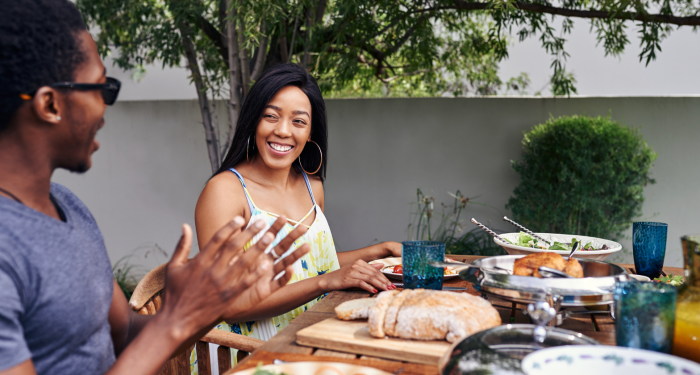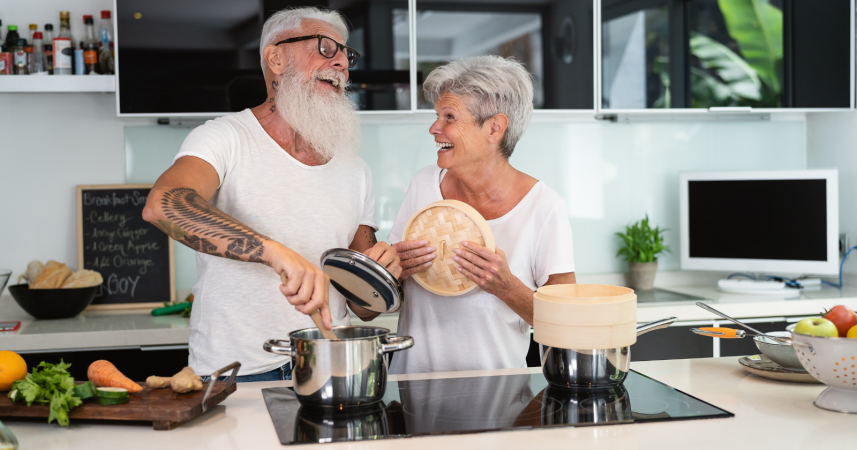
Before delivery apps, dinner often meant hours of slow cooking that turned simple ingredients into something unforgettable.
Every generation has its own relationship with food. Boomers grew up in a world where “ordering in” wasn’t an everyday thing—it was a rare treat. Dinner meant going into the kitchen, pulling out a few ingredients, and making something from scratch.
Fast forward to today, and a lot of those meals have been replaced with Uber Eats notifications and pre-made sauces. It’s not that younger generations can’t cook. It’s that convenience has become the default.
And honestly, with work, side hustles, and constant notifications pulling us in every direction, who has the time to make lasagna noodles from scratch?
But here’s the thing: many of the meals boomers cooked at home weren’t just about the food. They were about patience, care, and stretching ingredients to feed a whole family.
They were meals that taught lessons about resourcefulness—lessons that still apply today, even if we’re more likely to DoorDash our way through the week.
Let’s look at eight dinners boomers often made from scratch that most younger generations would simply order in.
1) Roast chicken with sides
Boomers thought nothing of buying a whole chicken, seasoning it, roasting it for hours, and serving it with mashed potatoes and vegetables. It wasn’t just dinner—it was an event. The smell would fill the house all afternoon, letting everyone know something good was coming.
Today? Most people head straight to the rotisserie section at the grocery store—or open their phone and order delivery fried chicken instead.
But here’s what’s wild: roasting a chicken at home isn’t that hard. You season it, pop it in the oven, and let time do the work. The payoff is huge, too. The skin crisps beautifully, the meat stays juicy, and you get leftovers for sandwiches, chicken salad, or even soup.
It’s the kind of meal that teaches patience—something we don’t practice as much when dinner comes in a paper bag. Michael Pollan once wrote in Cooked that the act of roasting connects us to “the alchemy of time and heat.” Boomers lived that truth, while most of us have replaced it with delivery apps.
2) Spaghetti and meatballs
Ask your average twenty-something how often they make tomato sauce from scratch, and you’ll probably get a laugh. For boomers, though, simmering sauce with onions, garlic, and herbs was standard.
They’d roll their own meatballs, too—half beef, half pork, breadcrumbs, and a bit of parmesan to tie it all together. The sauce would bubble for hours until it thickened, filling the kitchen with a smell you just don’t get from jarred marinara.
Sure, it takes time. But a homemade sauce has depth you just can’t replicate with a jar. And when you compare that to tapping an app for takeout pasta, you realize just how much food culture has shifted toward convenience.
There’s also something deeply personal about sauce. Some families guarded their recipes like secrets. Others improvised every time, tossing in whatever herbs they had. Either way, it became a kind of signature—your family’s version of comfort in a bowl.
3) Beef stew
Slow-cooked meals used to be staples, not special projects. A beef stew wasn’t just dinner—it was a way to stretch a tougher cut of meat into something flavorful and nourishing.
Carrots, potatoes, celery, onions—all simmered for hours until the broth turned rich and savory. Boomers knew how to take inexpensive ingredients and turn them into something hearty enough to feed a crowd.
Younger generations? They’re more likely to grab pho or ramen for that “slow-simmered” flavor. The irony is that stew is basically the Western version of the same concept: patience plus heat equals comfort in a bowl.
And it wasn’t just about eating. A pot of stew meant leftovers for days. It was practical. Efficient. Exactly the opposite of today’s world, where so much food comes in single-serving portions, meant to be consumed and forgotten.
4) Meatloaf
If there’s one dish that screams “boomer dinner table,” it’s meatloaf.
To younger people, it might sound outdated, even a little boring. But the idea was simple: take inexpensive ground meat, mix it with breadcrumbs, eggs, and seasoning, and bake it into something hearty enough to feed the whole family.
Some families topped it with ketchup. Others with gravy. Either way, it was the definition of budget-friendly comfort food.
Today, if we want something hearty and comforting, we tend to think in terms of burgers, not meatloaf. And we don’t make them at home—we order them from Shake Shack.
Meatloaf wasn’t glamorous, but it got the job done. And maybe that’s the part we’ve lost—sometimes food isn’t supposed to be an Instagram moment, it’s just supposed to feed you well.
5) Cabbage rolls
These are the kinds of meals that require real time and patience. You parboil cabbage leaves, stuff them with a rice-and-meat mixture, then simmer them in tomato sauce until tender.
It’s a dish that’s as much about tradition as it is about flavor. A lot of boomers learned it from their parents, who carried the recipe over from Eastern Europe. For immigrant families, cabbage rolls weren’t just food—they were a link back to home.
Younger generations, though? They’re more likely to go for dumplings or stuffed peppers from a takeout menu. The idea of rolling cabbage leaves on a weeknight feels impossible in today’s pace of life.
But maybe that’s the point. Food like this slows you down. It forces you to spend time in the kitchen, to get your hands messy, to connect with where your food actually comes from.
6) Homemade pizza
This one’s interesting. Yes, pizza delivery existed in boomer times, but it wasn’t the default. Many families made their own dough, added tomato sauce, and topped it with whatever cheese and vegetables they had lying around.
It wasn’t about crafting the perfect Neapolitan crust. It was about making something fun and customizable. Everyone could add their favorite toppings, and dinner became interactive.
Compare that to today, where pizza might be the single most-ordered delivery item in the U.S. The apps have made it so easy that most people never even consider making it themselves.
What we miss when we skip the homemade version is the creativity. Boomers didn’t make pizza to compete with a pizzeria—they made it to gather the family around the table and say, “What do we have? Let’s make it work.”
And honestly, with better ingredients and access to online recipes, we could make homemade pizza that rivals restaurant versions. But the culture of convenience wins out more often than not.
7) Lasagna
Here’s one that really shows the shift. Making lasagna from scratch isn’t just cooking—it’s a project.
You’ve got the sauce to make, the noodles to boil, the ricotta mixture to prep, the layers to build. And then, after all that, it still needs to bake for nearly an hour.
Boomers didn’t blink. They made it for Sunday dinners or special occasions. Today, most people would rather order it from their favorite Italian spot than lose half their Saturday assembling noodles and cheese.
But the truth? A homemade lasagna is unbeatable. Every layer carries the work and love you put into it. And maybe that’s why the best lasagna you’ve ever eaten was probably in someone’s home, not at a restaurant.
There’s a lesson here, too: sometimes the effort is part of the reward. It’s not just about feeding yourself, but about creating something you’re proud of.
8) Pot roast
Finally, let’s talk about the Sunday pot roast.
This was the centerpiece of many boomer households—a slow-braised cut of beef with onions, potatoes, and gravy. It wasn’t just about the food. It was about family sitting down together, no phones, no TV, just conversation over a hearty meal.
Nowadays, if you want something like pot roast, you’re probably ordering braised short ribs from a restaurant. And while they’re delicious, they don’t carry the same sense of tradition.
Cooking a pot roast taught boomers how to turn time into flavor—and how to make a single cut of meat stretch across multiple meals. That’s a skill younger generations often miss out on, since delivery doesn’t leave you with leftovers to reinvent.
Dan Buettner, in his work on Blue Zones, notes that some of the longest-living people on earth gather daily over home-cooked meals. The pot roast wasn’t just food—it was a ritual of togetherness. And that’s something worth bringing back.
The bottom line
Food culture has changed. We live in a world where dinner can show up in twenty minutes, still warm, and we barely have to think about it.
But maybe that’s why it’s worth revisiting some of these meals. They weren’t just about eating. They were about slowing down, working with your hands, and turning simple ingredients into something that could bring people together.
I’m not saying you need to give up delivery apps altogether. Life is busy, and convenience has its place. But try making one of these meals at home. Roast a chicken. Simmer a sauce. Bake a lasagna.
You might find that what you gain isn’t just a great dinner—it’s a sense of satisfaction that no delivery order can replace.
If You Were a Healing Herb, Which Would You Be?
Each herb holds a unique kind of magic — soothing, awakening, grounding, or clarifying.
This 9-question quiz reveals the healing plant that mirrors your energy right now and what it says about your natural rhythm.
✨ Instant results. Deeply insightful.

Adam Kelton
Adam Kelton is a writer and culinary professional with deep experience in luxury food and beverage. He began his career in fine-dining restaurants and boutique hotels, training under seasoned chefs and learning classical European technique, menu development, and service precision. He later managed small kitchen teams, coordinated wine programs, and designed seasonal tasting menus that balanced creativity with consistency.
After more than a decade in hospitality, Adam transitioned into private-chef work and food consulting. His clients have included executives, wellness retreats, and lifestyle brands looking to develop flavor-forward, plant-focused menus. He has also advised on recipe testing, product launches, and brand storytelling for food and beverage startups.
At VegOut, Adam brings this experience to his writing on personal development, entrepreneurship, relationships, and food culture. He connects lessons from the kitchen with principles of growth, discipline, and self-mastery.
Outside of work, Adam enjoys strength training, exploring food scenes around the world, and reading nonfiction about psychology, leadership, and creativity. He believes that excellence in cooking and in life comes from attention to detail, curiosity, and consistent practice.
More Articles by Adam