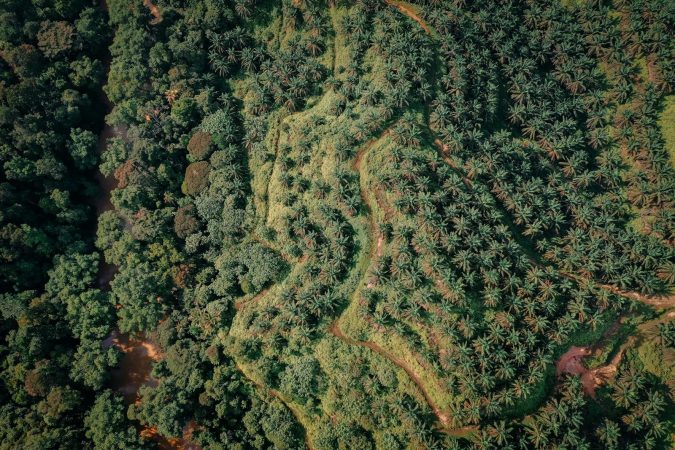
The Trump administration's record biofuel blending mandates will force massive vegetable oil imports that threaten tropical rainforests, with projected deforestation emissions three to four times greater than the fossil fuel reductions the policy achieves.

Add VegOut to your Google News feed. 
The Trump administration appears to have finalized significantly elevated crop-based biofuel blending targets for the U.S. gasoline supply — and the policy's biggest casualty may be tropical rainforests halfway around the world. As Inside Climate News reported today, the new EPA mandate appears to call for a substantial increase in biomass-based diesel over 2025 levels, with total biofuel volumes for 2026 and 2027 reportedly set at approximately 27 billion gallons.
The conventional framing here is straightforward: more biofuels mean less fossil fuel dependence and a lifeline for American farmers squeezed by tariffs and rising fertilizer costs. The administration is presenting the rule as a win for energy independence and rural economies. But the counterargument is damning — and it comes backed by the EPA's own numbers.
The U.S. simply doesn't grow enough vegetable oil to meet these targets. Imported vegetable oils and animal fats already account for a substantial portion of U.S. bio-based diesel demand, according to Jeremy Martin, a senior scientist at the Union of Concerned Scientists. "That 60 percent increase is massive," Martin told Inside Climate News. "That's going to be a huge shock to the U.S. and global markets for vegetable oil and fat."
The supply gap means one thing: more imports. And more imports mean more pressure on tropical forests in Southeast Asia, Africa, and Latin America to clear land for oil crops like soybeans and palm.
Tim Searchinger, a researcher at Princeton University, put it bluntly: research suggests that increased U.S. biodiesel could result in significant increases in imports of vegetable oil. He estimated that biodiesel expansion alone could drive substantial tropical deforestation, with resulting greenhouse gas emissions over several decades potentially offsetting the reductions in fossil emissions from diesel.
This isn't hypothetical. Research from Aaron Smith at the University of California, Berkeley, has examined how global demand for biomass-based diesel has contributed to deforestation in Southeast Asia and associated carbon dioxide emissions.
Dan Lashof, a senior fellow at the World Resources Institute, told Inside Climate News the rule "by EPA's own analysis, will cost about $20 billion over the two years that it's in effect. And rather than having any environmental benefits, it will actually drive deforestation and increased emissions of heat-trapping carbon dioxide."
The EPA's analysis also reportedly projects diesel price increases as a direct result of the mandate.
The timing is notable. The European Union recently moved to eliminate soy-based biofuels from its renewable fuel mandates, concluding that "the expansion of the palm oil and soybeans production area into high-carbon stock land is so significant that the greenhouse gas emissions that result from land use change offset all greenhouse gas emission savings." The U.S. is heading in the exact opposite direction.
For anyone who pays attention to how food systems and climate policy intersect, this story is a reminder that "green" labels don't automatically mean good outcomes. The vegetable oil that goes into biodiesel competes directly with the vegetable oil that goes into food — and when demand outstrips domestic supply, the consequences ripple through global markets in ways that can torch the very ecosystems the policy claims to protect. The question worth asking isn't just whether biofuels are better than fossil fuels. It's who bears the cost when the math doesn't add up.
What’s Your Plant-Powered Archetype?
Ever wonder what your everyday habits say about your deeper purpose—and how they ripple out to impact the planet?
This 90-second quiz reveals the plant-powered role you’re here to play, and the tiny shift that makes it even more powerful.
12 fun questions. Instant results. Surprisingly accurate.