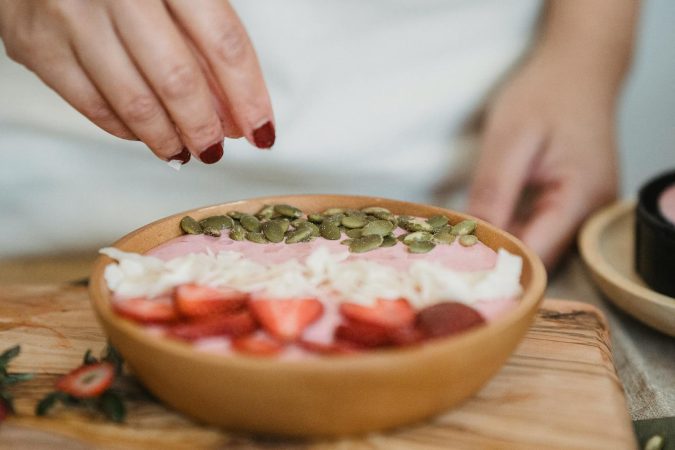
Wellness smoothies now cost $15-20 in major cities, pricing out the very people plant-based eating claims to help. What does the luxury smoothie boom reveal about whose health actually matters in the wellness industry?

Add VegOut to your Google News feed. 
Walk into any upscale smoothie shop and the menu reads like a supplement store crossed with a luxury spa. Ashwagandha. Collagen peptides (plant-derived, naturally). Blue majik. Maca. Tremella mushroom. Each add-on costs $2 to $4. The base smoothie itself might be $12, but by the time you've customized it to match whatever your favorite wellness influencer recommends, you're pushing $18 easily.
The ingredients themselves aren't the problem. Many of them are genuinely nutritious. The problem is the packaging of those ingredients into an aspirational identity that requires a specific income bracket to participate in.
The conventional wisdom says this is a sign of progress. Plant-based eating is booming. Wellness culture is mainstream. More options means more access. And there's some truth to that framing. The number of plant-based products on shelves appears to have grown substantially over the past five years. But what gets lost in the celebration is a harder question: if plant-based food keeps climbing in price, who exactly is it progressing toward?
When "premium" became the default
I spent ten years working professional kitchens in Portland and San Francisco, and I watched this shift happen in real time. When I started cooking, plant-based food occupied a scrappy, unglamorous corner of the food world. Brown rice bowls at co-ops. Bulk bin lentils. Smoothies made with a banana, some peanut butter, and whatever frozen fruit was on sale. The food wasn't pretty, but it was affordable, and affordability was part of the ethos.
Somewhere along the way, plant-based eating got a rebrand. The scrappy co-op aesthetic gave way to marble countertops, millennial pink branding, and menus where a 16-ounce smoothie costs the same as a decent bottle of wine.
The economics of a blended drink
Here's what actually goes into an $18 smoothie, from a cost perspective. A banana: roughly $0.25. A cup of frozen organic berries: about $1.50. A tablespoon of almond butter: maybe $0.40. A cup of oat milk: around $0.50. A scoop of plant-based protein powder: this varies, but according to Forbes, quality options range from roughly $1 to $2 per serving. Toss in a teaspoon of some adaptogen, and the ingredient cost for the entire drink lands somewhere between $4 and $6.
That means you're paying $12 to $14 for labor, rent, branding, and the privilege of drinking it in a space that looks like it was designed by a Scandinavian architect. Those overhead costs are real. I'm not suggesting juice bars should operate at a loss. Rent in urban cores is punishing. Wages need to be fair.
But the markup on smoothies is dramatically higher than what you see in most food service. Industry standards suggest restaurants typically target around a 28-32% food cost. These smoothie shops may be running at lower food cost percentages. That gap isn't going into staff wages. It's going into the brand experience.
And the brand experience is, quite specifically, exclusivity.
Who gets to be "plant-based"?
The $18 smoothie is a symbol, but it points to a broader pattern. Plant-based eating has become increasingly coded as a premium lifestyle choice rather than a practical, affordable way to feed yourself. The meal kit subscriptions, the high-end vegan restaurants with $35 entrées, the cold-pressed juice cleanses that cost more than some people's weekly grocery budget.
This matters because the cheapest foods on the planet are, and have always been, plants. Rice. Beans. Lentils. Potatoes. Seasonal vegetables. The global poor eat mostly plant-based diets out of economic necessity. The idea that eating plants is inherently expensive is a manufactured narrative, one that serves the interests of companies selling premium products.
When I went plant-based five years ago, I grew up eating everything, Korean food at home, whatever my parents' grocery store had in stock. My grandmother's kimchi cost almost nothing to make. My mother's banchan spread, a dozen small dishes covering the table every weekend, was built on vegetables, tofu, and fermented pastes. It was plant-heavy by default, not by ideology. And it fed our whole family for less than the cost of two of those smoothies.
That background makes me a better plant-based cook. It also makes me skeptical when someone tells me that eating well from plants requires a $300 blender.
On that note, even Bon Appétit's blender guide makes clear that excellent results come from models at every price point. You don't need the $500 machine to make food that tastes good.
The access gap nobody wants to talk about
Here's where the conversation gets uncomfortable. The plant-based food industry has a customer it's designing for, and that customer is predominantly white, urban, college-educated, and earning above median income. The branding, the store locations, the price points, the influencer partnerships: all of it signals a specific demographic.
This isn't a conspiracy. It's just market economics. Companies go where the margins are. And the margins are in selling $18 smoothies to people who can absorb that cost without thinking twice.
But the downstream effect is that plant-based eating gets perceived as something that belongs to that demographic. People outside that bracket look at the price tags and the Instagram aesthetics and reasonably conclude: this isn't for me.
That's a loss. A big one. Because the health benefits of eating more plants are universal, and the environmental benefits scale with adoption. Every person who looks at the price of a wellness smoothie and decides plant-based eating is out of reach is a person the movement failed to include.
Plant-based community, at its best, has always been about something larger than consumer products. As one VegOut writer explored, the real power of this space is in belonging and shared values, not in what you can afford to buy.
Making a better smoothie for less money
I make smoothies at home three or four mornings a week. They cost me about $2.50 each. Here's what I do.
Frozen fruit over fresh. It's cheaper, it's already prepped, and it's often frozen at peak ripeness, which means better flavor and nutrition. A bag of frozen mixed berries at my local grocery runs about $4 and lasts me four smoothies.
Banana as the base. Always. It adds natural sweetness, body, and creaminess. At $0.25 per banana, nothing else comes close to that value.
Oats instead of expensive protein powder. A quarter cup of rolled oats blended into a smoothie gives you fiber, protein, and a creamy texture. Cost: roughly $0.10. If you want a dedicated protein powder, that's fine too. Plenty of solid plant-based options exist without the designer price tag.
Peanut butter over almond butter. Fight me. Peanut butter has more protein, costs less, and tastes better in a smoothie. The almond butter premium is mostly vibes.
Skip the adaptogens. If you want ashwagandha, buy it in bulk and add it yourself for a fraction of what a juice bar charges. But also, honestly, a good smoothie doesn't need eleven supplements. Fruit, greens, a fat source, a protein source, some liquid. That's the formula. Everything else is optional.
A decent mid-range blender handles all of this. You don't need to spend more than $80.
The real question behind the price tag
None of this is an argument against nice things. I like a well-made smoothie in a cool space as much as anyone. I've paid $16 for one and enjoyed it. The occasional splurge is fine.
The argument is against a food system that takes something inherently cheap and accessible, blending plants together, and repackages it as a luxury. Because when plant-based food becomes synonymous with premium pricing, it stops being a movement and starts being a market segment.
And market segments, by definition, exclude.
The plant-based food industry is worth paying attention to here. The companies and brands that genuinely want broad adoption should be asking themselves whether their pricing and positioning actually support that goal, or whether they're just selling status with a health halo.
Progress in plant-based eating won't come from making fancier, more expensive products for people who were already going to buy them. It'll come from making the simple, affordable, deeply satisfying food that plants have always offered visible and valued.
A $2 smoothie made at home with frozen berries and peanut butter does more for the planet than an $18 one with high-vibration spirulina. The math isn't complicated. The politics of who gets to feel like they belong in this space, that's the part we're still figuring out.