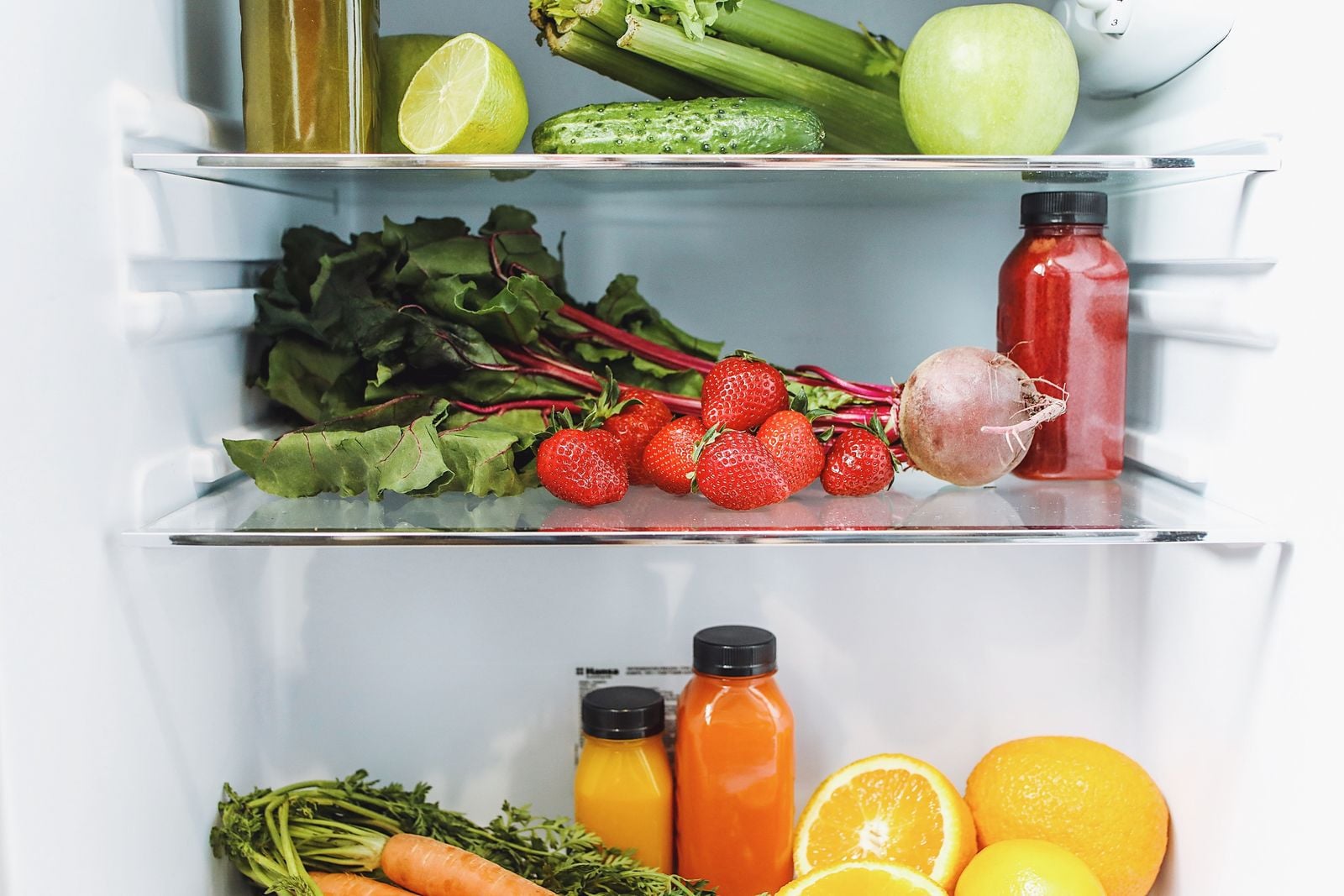
The labeled leftover container is not a personality trait. It is a bet — placed by a calmer, better-rested version of a person against the version of that same person who will walk through the door at 6:14 p.m. on a Tuesday, drop their bag, open the fridge, and eat whatever requires the fewest decisions to become food.
The tidy fridge wins that bet most nights. The chaotic fridge loses it.
This is the part of the wellness conversation that rarely gets named honestly. The Pinterest-perfect refrigerator with its glass jars and washed lettuces gets coded as aspirational, performative, or quietly smug — a flex by people with too much time and too much produce.
But the people who actually live this way are mostly not chasing an aesthetic. They have simply met their evening selves enough times to stop pretending that person is going to rinse, chop, and improvise.
The 6 p.m. version of you is not the same person
By dinner, most adults are running on a different operating system than the one that planned the week on Sunday. The morning self made the grocery list. The afternoon self powered through meetings. The evening self is depleted, hungry, and reaching for the path of least resistance — which is exactly what happens when self-control has been exercised all day on small acts of restraint.
The pattern is familiar: spend the day not snapping at a colleague, not checking the phone, choosing the salad at lunch — and by evening there is less left in the tank. The lived experience of this exhaustion is hard to argue with. People are simply not their sharpest selves at the end of the day. Mental exhaustion measurably increases hostility and impulsivity, which tracks with what anyone who has ever tried to "decide what's for dinner" at 7 p.m. on a long workday already knows.
The tidy-fridge person is not denying this. They are designing around it.
Labeled leftovers as outsourced willpower
A container that says lentil soup, Tuesday in blue marker is not a Pinterest project. It is a message from the past self to the future self. It says: do not negotiate with the takeout app. Do not stand in front of the open fridge for four minutes. The decision has already been made.
The behavioral framing here is what's known as implementation intentions — the simple act of deciding in advance, when stakes are low, what you will do when stakes are high. Habit formation research consistently shows that environmental cues do a huge amount of the work that people credit to willpower. The fridge becomes the cue. The container is the prompt.
Washed greens work the same way. A bag of unwashed spinach requires three steps before it becomes dinner. A clamshell of pre-washed arugula requires zero. The gap between three steps and zero steps is, on a tired Tuesday, the entire difference between eating a vegetable and not.
The fruit bowl at eye level is the same principle in its most distilled form. An apple in a drawer is invisible. An apple at eye height, three feet from where you stand when you walk in the door, is dinner-adjacent before you have taken your shoes off.
This isn't really about food
The same pattern shows up in everything from laying out tomorrow's clothes on a chair to keeping a water glass by the bed to setting the coffee maker the night before. The person doing these things is not more disciplined. They have simply stopped expecting future versions of themselves to summon discipline at the moments when discipline is hardest to find.
There is a generational thread here worth pulling on. Adults who grew up watching a parent run a household on tight time and tighter budgets — the kind of sparse-pantry, half-empty-fridge approach that prioritises eating what is there over buying what looks good — tend to arrive at adulthood already fluent in this kind of pre-decision. The fridge is organised because chaos costs money and energy that nobody had to spare.
Others learned it the harder way, from a stretch of years when the dinner decision was being made badly every night, and the body started sending the bill.
Future-self continuity, in fridge form
Psychologists have a name for the skill the tidy-fridge person is unconsciously practising: future self-continuity. It is the degree to which a person experiences their future self as actually them — as opposed to a vague stranger who will deal with the consequences later.
People with stronger future self-continuity make different choices. They save more. They procrastinate less. A 2024 paper in Scientific Reports found that temporal discounting — the tendency to weigh immediate rewards far more heavily than future ones — directly predicts real-world procrastination. The less real the future feels, the harder it is to act on its behalf in the present.
And the reverse is also true. Work on future-oriented cognition, including a study published in Scientific Reports on intertemporal decision-making, shows that people who habitually consider future consequences when making everyday choices discount the future less steeply. They behave, in effect, as if the future person is a real person they owe something to.
An MIT team explored what happens when that connection is made viscerally vivid. Their Future You system lets users have an AI-mediated conversation with a simulated version of themselves at age 60. After roughly half an hour, participants reported decreased anxiety and a stronger sense of connection to the future self. The researchers framed it as a kind of virtual time machine — a way to make the abstract future feel concrete enough to matter today.
A labeled container of soup is a much lower-tech version of the same trick. It is a small, physical message from yesterday's planner to tonight's eater that says: I was thinking about you.
The 6 p.m. test most diets fail
This is also why so much nutrition advice quietly collapses on contact with a real week. Every plan that depends on the evening self being motivated, organised, and willing to chop is a plan that fails in the third week of October when the days get shorter and the work gets harder.
The structural fix is not more willpower. It is fewer required decisions at the moment willpower is lowest. A fridge designed around the depleted evening self does not demand resolve — it removes the situations in which resolve would be required.
This reframes a lot of what gets sold as "discipline." The person who eats vegetables most weeknights is rarely the person with the strongest character. They are usually the person who, on Sunday, spent twenty minutes washing greens and chopping peppers when their energy was still high. They cashed out future willpower in advance, while the exchange rate was good.
The clean kitchen isn't the point — the friction is
There is a temptation to read all of this as a celebration of order for order's sake. It isn't. Plenty of people keep an immaculate kitchen as a stress response, a way to feel that something is steady when the rest of the day is not — a pattern that often traces back to an early experience of mess meaning the house felt less steady. Tidiness is not automatically wisdom.
What matters is the friction map. Every choice in a kitchen has a cost in steps, time, and decisions. The tidy-fridge person has spent some quiet thought on which costs land on the morning self (high energy, low stakes) and which land on the evening self (low energy, high stakes). They have shifted as many of the costs as possible into the morning column.
That is not aspiration. That is logistics.
Small shifts, not lifestyle overhauls
None of this requires a glass-jar pantry or a colour-coded meal plan. The shift is mostly internal — from I will eat better this week to what would make eating better the path of least resistance on Thursday at 6:30?
A few specific moves do most of the work. Washing the greens the day the groceries come in, not the day they get eaten. Cooking one pot of something on Sunday or Monday that can feed two or three dinners. Pulling the fruit bowl out of the cupboard and onto the counter at eye level. Labeling the container, even if it feels excessive, because labels remove the "what is this and is it still good" decision that ends with everything getting thrown out on Saturday.
These are tiny. They are also the difference between a week of eating that matches a person's actual values and a week that doesn't.
The honest part
The honest part is that nobody does this perfectly. The fridge gets messy. The greens go slimy. The leftover container ends up at the back, forgotten, and gets composted on Sunday with a small wave of guilt.
The point is not perfection. The point is recognising that the evening self is not a character flaw to be overcome — she is a real person who will be tired, and she deserves a kitchen that was set up by someone who took her seriously.
The labeled container is, in the end, a small act of self-respect across time. Past self to future self. Morning brain to evening body. A tiny note that says: I knew you'd be tired. I left this where you could find it.