Respect the plate, even when the ingredients are humble.
Some weeks your plate looks less like a menu and more like a survival plan.
Tight budgets narrow choices and push us toward the foods that are cheap, filling, and flexible.
If you’re cycling through the same five ingredients, you’re not failing—you’re adapting.
What matters is how you use this season to build better habits, steadier energy, and a little dignity at the table without pretending you can drop a small fortune on groceries.
Let’s keep it simple, keep it vegan, and make the staples work harder:
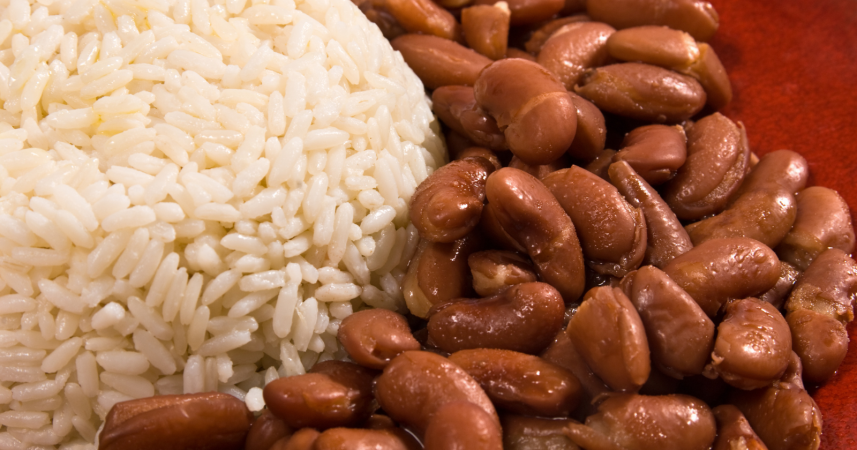
1) Beans
Beans are what happens when common sense meets plant power.
They’re inexpensive, shelf-stable, and carry more protein and fiber per dollar than almost anything in the store; they forgive imperfect schedules and long days.
If a pot of lentils or a stack of chickpea cans is showing up in most of your dinners, you’re doing what people have done for centuries: Choosing one ingredient that covers a lot of bases for not a lot of money.
When I first moved into a tiny place in Los Angeles, my “menu” was seven lines long and beans took up three of them: Chickpea scramble for breakfast, black bean tacos for lunch, lentil soup for dinner.
It wasn’t glamorous, but it kept the rent paid and the lights on.
The psychology behind this is straightforward: Scarcity shrinks options, and your brain craves reliable defaults because they cut decision fatigue.
Beans are a reliable default. The trap is that reliability can slide into repetition and repetition can drain motivation.
Boredom is where budgets go to die, because bored eaters overspend.
The solution is to change the frame around them by cooking one neutral batch and splitting it across different flavor profiles during the week.
One night smoky with paprika and cumin, another bright with lemon and parsley, another spicy with chili oil or harissa.
Those small moves trick your brain into perceiving variety while your wallet keeps steady.
The goal is to create a sustainable momentum; if beans are everywhere in your week, you’re closer to being a resourceful cook than you think.
2) Rice
Rice is the metronome of budget cooking—it keeps steady time when everything else is chaos.
If it anchors most of your lunches and dinners, you’re prioritizing volume, predictability, and comfort—smart moves when money is tight.
Rice is also a quiet teacher of money principles.
First, compounding: Cook once, eat many. A big batch on Sunday turns into five different meals if you season late, not early.
Second, switching costs: When “bowl with rice” is your template, you spend less chasing novelty and more enjoying consistency.
If plain white rice feels flat, rotate forms with the same batch-cook logic; brown rice brings fiber and a nutty chew, jasmine brings aroma, short-grain brings stickiness and comfort.
Hunger makes us terrible decision-makers, so a rice bowl with protein and a little fat—peanut sauce, avocado when you can swing it, or simply a drizzle of olive oil and lemon—keeps your appetite steady and your choices calmer.
3) Oats
If your mornings start with oats and more oats, you’re just being strategic.
Oats are among the lowest-cost breakfasts that actually keep you full, and they shape-shift on command.
Hot or cold, sweet or savory, stovetop or baked—they bend to your life instead of the other way around.
When my budget was squeaky, I ran a two-oat system: Stovetop during the week, and overnight jars on the weekend.
Same tub, different textures; no boredom, no mid-morning crash.
If you want more protein, use soy milk, fold in hemp seeds, or blend silken tofu with cinnamon and stir it through.
Oats do more than fill a bowl because they create a predictable opening act for your day, and that steadiness bleeds into money choices later.
Start with something warm, simple, and balanced, and your 11 a.m. “I deserve this” purchases lose their pull.
Did I mention that oats bring soluble fiber for heart health? It's a quiet benefit that compounds over time while your account recovers.
4) Pasta
Pasta is what you reach for when time and money both tap out.
It cooks fast, carries flavor, and happily catches whatever’s left in the fridge, and it can be a mindless default or a deliberate template.
Short cuts like penne and rotini hold onto chunky sauces and fridge-clearing add-ins; long strands like spaghetti shine when all you’ve got is olive oil, garlic, and a few chili flakes.
Sauce is where broke weeks win or lose.
You don’t need a slow simmer to get depth because all you need to do is just bloom tomato paste in oil with garlic until it darkens, splash in water, and add a little soy sauce for umami.
For creamy cravings, turn to silken tofu, just blend it with lemon juice, nutritional yeast, a spoon of miso, and plenty of black pepper; toss with hot pasta and a handful of frozen peas or spinach and you’ll wonder why you ever worried about dairy.
Pasta also exposes our present bias. When dinner is twelve minutes away, we discount the benefit of chopping another vegetable, so we don’t.
If the week demands three pasta nights, make them feel intentional; night one can be tomato sauce with chickpeas, night two lemon-garlic with edamame, and night three tofu-cream with spinach and those crunchy crumbs.
You’re not eating the same thing; you’re running a system that respects your time and your bank account.
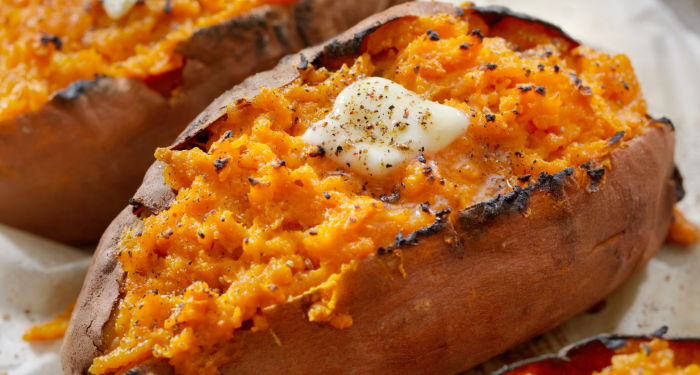
5) Potatoes
Potatoes are the people’s carb.
They don’t ask for much and they give a lot: volume, comfort, and a ridiculous range of possibilities.
If you’re rotating baked, roasted, and air-fried versions like it’s your job, I see you.
Years ago, backpacking through hostels from Lisbon to Prague, I kept seeing the same lesson in shared kitchens.
Everyone had a potato trick—boiled and smashed with olive oil, layered with onions in a pan until crisp at the edges, cubed and roasted until shattering when you tap them with a fork.
Different countries, same math: Cheap, filling, and shareable.
That lesson came home with me and kept me fed when rent numbers looked like phone numbers—it’s the budget bistro move you’ll actually repeat.
Potatoes are also a master class in constraints.
When options are limited, creativity wakes up; you learn the difference between “not enough” and “enough,” and that difference changes how you feel about your entire week.
A bite of perspective
So, what do you do if these five foods dominate your week? You use them to build systems instead of chasing perfect recipes, of course.
- Buy by unit price, not sticker shock—bigger bags beat tiny boxes if you’ll use them.
- Cook staples plain so they can pivot all week and add seasoning at the moment of eating; it’s the simplest way to turn one pot into five different meals.
- Change the flavor profile before you change the grocery list; a jar of smoked paprika or a bottle of good vinegar can rescue an entire month of dinners for the price of a single delivery tip.
Respect the plate, even when the ingredients are humble.
Your brain reads “real meal,” and you’re less likely to wander back to the kitchen an hour later.
When these five foods make up most of your weekly meals, it means you’re practicing resourcefulness under constraint, a skill that bleeds into every other part of life—your money, your energy, your confidence.
Lean weeks come and go while systems stay.
Beans, rice, oats, pasta, and potatoes—done with intention—can carry you farther than you think.
Just launched: Laughing in the Face of Chaos by Rudá Iandê
Exhausted from trying to hold it all together?
You show up. You smile. You say the right things. But under the surface, something’s tightening. Maybe you don’t want to “stay positive” anymore. Maybe you’re done pretending everything’s fine.
This book is your permission slip to stop performing. To understand chaos at its root and all of your emotional layers.
In Laughing in the Face of Chaos, Brazilian shaman Rudá Iandê brings over 30 years of deep, one-on-one work helping people untangle from the roles they’ve been stuck in—so they can return to something real. He exposes the quiet pressure to be good, be successful, be spiritual—and shows how freedom often lives on the other side of that pressure.
This isn’t a book about becoming your best self. It’s about becoming your real self.