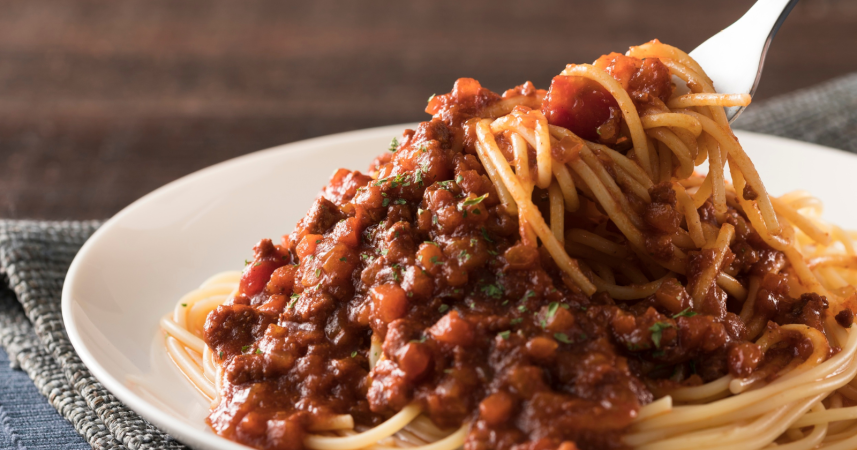
When she asked for the recipe, I panicked and said I'd email it later.

Add VegOut to your Google News feed. 
Let me set the scene. Sunday dinner at my partner's parents' house. His mother, born and raised in Bologna, has been making her family's ragù recipe for over forty years. She takes pasta seriously.
Like, personally-offended-by-jarred-sauce seriously. So when I offered to cook for the family last month, I knew I was walking into dangerous territory.
The twist? I made a completely vegan bolognese and didn't mention it until... well, I still haven't mentioned it. She cleaned her plate, asked for seconds, and then requested the recipe. I mumbled something about emailing it later and immediately changed the subject to the weather.
Now I'm sitting here wondering if I've pulled off the greatest culinary deception of my life or if I'm about to cause an international incident at the next family gathering.
Why vegan bolognese actually works
Traditional bolognese is all about building layers of umami, that deep savory flavor that makes you want to keep eating. The meat itself isn't doing as much heavy lifting as you'd think. It's the soffritto, the tomato paste, the wine, the long simmer. Those are the real stars.
Vegan versions can absolutely nail this because umami isn't exclusive to animal products. Mushrooms, soy sauce, miso, nutritional yeast, and tomato paste are all packed with glutamates, the compounds responsible for that savory depth. When you layer these ingredients correctly, your brain registers the same satisfaction signals it would from a meat-based sauce.
The texture secret nobody talks about
Here's where most vegan bolognese recipes fall short. They get the flavor right but forget that traditional ragù has a specific mouthfeel. It's hearty without being chunky, rich without being greasy. You need that slightly grainy, meaty texture that clings to pasta.
My solution was a combination of finely chopped cremini mushrooms, green lentils, and walnuts pulsed in a food processor. The mushrooms bring moisture and umami. The lentils add protein and that ground-meat texture. The walnuts contribute fat and a subtle richness that mimics the fattiness of beef and pork.
Processed separately and added at different stages, they create complexity that a single protein source can't achieve.
The soffritto is non-negotiable
If you skip the soffritto or rush it, you've already lost. This is the foundation of any good bolognese, vegan or otherwise. Finely diced onion, carrot, and celery cooked low and slow in good olive oil until everything is soft and slightly caramelized. We're talking twenty minutes minimum.
This step builds the aromatic base that carries the entire dish. It's also where patience separates a good sauce from a great one. I know it's tempting to crank up the heat and speed things along. Don't do it. The sugars in those vegetables need time to develop.
That sweetness balances the acidity of the tomatoes and the earthiness of the mushrooms later on.
Wine and time do the heavy lifting
A generous pour of dry red wine is essential. Let it reduce almost completely before adding your tomatoes. This concentrates the flavor and burns off the alcohol, leaving behind fruity depth and acidity. Cheap wine is fine here. Save the good stuff for drinking while you cook.
Then comes the long simmer. At least ninety minutes, preferably two hours. This is where everything melds together and the sauce develops that characteristic richness. The lentils will absorb liquid and soften further. The mushrooms will break down. The flavors will marry in ways that a thirty-minute sauce simply cannot replicate.
Good bolognese rewards patience.
The moment of truth
When I served it over fresh tagliatelle, I watched my mother-in-law's face carefully. She twirled her fork, took a bite, and nodded slowly. Then she took another bite. No questions, no suspicion, just quiet appreciation. That nod meant everything.
The thing is, she wasn't fooled because I tricked her. She was satisfied because the dish delivered on its promise. It tasted like comfort, like Sunday dinner, like something made with care. The absence of meat didn't register because nothing was missing from the experience. Every element was intentional and present.
Final thoughts
I'm still debating whether to tell her. Part of me thinks she'd appreciate the craft involved. Another part worries she'd feel deceived, even though my intention was never to trick anyone. I just wanted to make something delicious that I could actually eat at family dinner.
Maybe the real lesson here is that good food transcends categories. When you understand why a dish works, you can recreate that experience with different ingredients.
Bolognese isn't about beef. It's about umami, texture, aromatics, and time. Get those right, and the rest is just details. Whether I ever confess remains to be seen. But if she asks me to cook again, I'm definitely making the same sauce.
If You Were a Healing Herb, Which Would You Be?
Each herb holds a unique kind of magic — soothing, awakening, grounding, or clarifying.
This 9-question quiz reveals the healing plant that mirrors your energy right now and what it says about your natural rhythm.
✨ Instant results. Deeply insightful.

Jordan Cooper
Jordan Cooper is a pop-culture writer and vegan-snack reviewer with roots in music blogging. Known for approachable, insightful prose, Jordan connects modern trends—from K-pop choreography to kombucha fermentation—with thoughtful food commentary. In his downtime, he enjoys photography, experimenting with fermentation recipes, and discovering new indie music playlists.
More Articles by Jordan