Stop staring into your fridge wondering what's for dinner and start building bowls that actually make sense.
You know that moment when you're standing in front of an open fridge, trying to reverse-engineer a meal from random vegetables and half a container of quinoa?
I used to panic and order takeout. Then I figured out the grain bowl formula that works every single time.
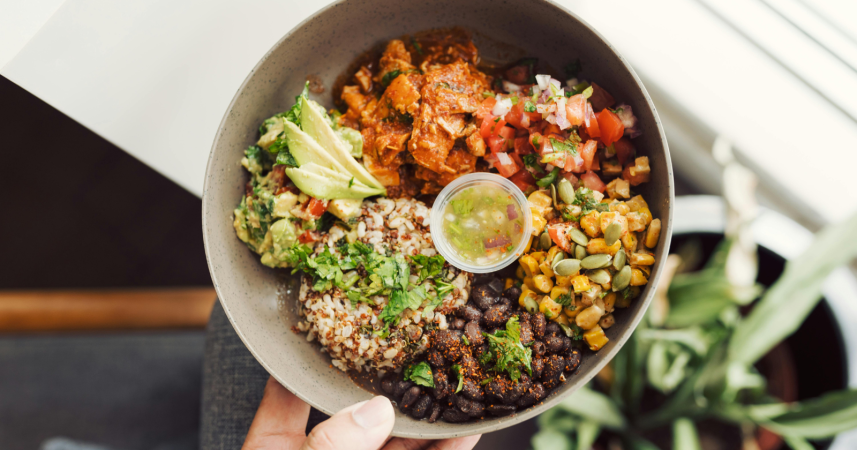
Think of it like a choose-your-own-adventure book, but for dinner. You pick one thing from each category, throw it in a bowl, and somehow it always tastes good. No recipe required, no meal plan needed.
Just a framework that turns fridge chaos into something you'd actually want to eat.
1. Start with your base grain (or grain-ish thing)
This is your foundation. Quinoa, brown rice, farro, whatever.
I usually cook a big batch on Sunday and keep it in the fridge all week. Takes about 15 minutes of actual attention and saves you from decision fatigue later.
But here's the thing: this doesn't have to be an actual grain.
I've used cauliflower rice when I'm feeling low-carb. I've used leftover roasted sweet potato chunks. My friend swears by using massaged kale as the base, which sounds very Los Angeles but actually works.
The goal is something that fills space and soaks up whatever dressing you're about to dump on top. That's it. Don't overthink it.
2. Add your protein situation
Chickpeas are the obvious choice because they're always in my pantry. I usually just drain, rinse, toss with olive oil and whatever spices are nearby, then roast at 400 degrees for 20 minutes. Crispy, salty, done.
But you've got options. Baked tofu cubes. Edamame straight from the freezer. Those pre-marinated tempeh strips from Trader Joe's. Black beans if you're going for a Mexican vibe. Even a scoop of hummus counts as protein, and nobody's checking your work here.
The behavioral science part of my brain says having three go-to proteins makes this infinitely easier than trying to be creative every time. Pick your favorites and rotate.
3. Pile on the vegetables (at least two kinds)
This is where you use up whatever's about to go bad. I'm talking that half a bell pepper, those cherry tomatoes, the broccoli you bought with good intentions three days ago.
Raw works. Roasted works better. I usually just chop everything into similar-sized pieces, toss with oil and salt, and roast alongside my chickpeas. Same temperature, same timing, one less thing to think about.
The secret is mixing textures. Something crunchy like cucumber or shredded cabbage. Something soft like roasted zucchini or sautéed mushrooms. Your mouth gets bored eating the same texture for an entire bowl, even if the flavors are great.
4. The sauce is doing most of the work
Real talk: a good sauce makes mediocre ingredients taste intentional.
I keep three bases in rotation. Tahini thinned with lemon juice and garlic. Peanut butter mixed with soy sauce and rice vinegar. Olive oil blended with whatever fresh herbs are still alive on my windowsill.
The ratio doesn't have to be precise. You're going for something pourable but not watery. Taste it, adjust it, move on with your life.
Sometimes I just use store-bought dressing and feel zero shame about it. The point is having something that ties all these random ingredients together into something that tastes like you meant to make it this way.
5. Finish with a textural topper
This step takes 30 seconds and makes you feel like you're eating at one of those build-your-own bowl places that charges $15.
Toasted nuts or seeds. Crispy onions from a jar. Nutritional yeast if you're into that. Fresh herbs. A handful of sprouts. Literally anything that adds crunch or visual interest.
I keep a container of toasted pepitas in my pantry specifically for this. Whenever I remember, I toast a bunch in a dry pan for five minutes, let them cool, and store them. Future me is always grateful.
Final thoughts
The beauty of this formula is that it scales with your energy level.
Feeling ambitious? Roast three kinds of vegetables and make a fancy tahini drizzle. Barely functioning? Microwave some frozen edamame and use bottled dressing. Both versions work.
I've made some version of this bowl probably 200 times in the past year. Sometimes it's Mediterranean with chickpeas and cucumber. Sometimes it's Asian-inspired with peanut sauce and shredded carrots. The formula stays the same, the flavors change, and I never get bored.
Once you internalize the structure, you stop needing recipes for weeknight dinners. You just open the fridge, pick one thing from each category, and trust that it'll work out. Which it always does.