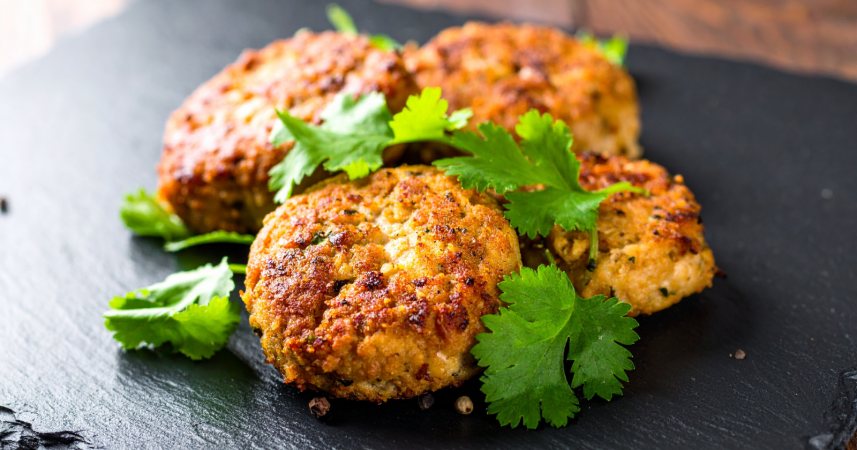
When my Baltimore-raised cousin asked for seconds before realizing these were plant-based, I knew I'd cracked the code on the ultimate seafood dupe.

Add VegOut to your Google News feed. 
Look, I've served plenty of vegan food to skeptical relatives over the years.
The polite nods. The "it's interesting" comments. The way they suddenly remember they're full when dessert comes around.
But last Thanksgiving, something different happened.
My cousin Mike, who grew up in Baltimore and has opinions about crab cakes the way some people have opinions about pizza, went back for thirds.
Then he asked for the recipe. Then, only then, I told him there wasn't a single piece of crab in them.
The secret? Hearts of palm. And a bunch of behavioral science tricks I picked up over the years about why we think food tastes the way it does.
1. The texture is everything, and hearts of palm nail it
Here's what most vegan seafood gets wrong: they focus on flavor and forget that eating is a full sensory experience.
Real crab has this specific flaky, stringy texture that's hard to replicate with chickpeas or tofu.
Hearts of palm, though? They shred into these delicate strands that pull apart exactly like lump crab meat.
When you pulse them in a food processor for just a few seconds, you get chunks that look and feel shockingly similar to the real thing.
The key is not over-processing. You want visible pieces, not mush.
Think of it like the difference between hand-pulled pork and ground meat. That texture variation is what makes your brain believe what it's eating.
2. Old Bay seasoning does the heavy lifting
I'm going to let you in on something: a lot of what we taste is actually what we smell. T
hat's not hippie nonsense, that's neuroscience. Your olfactory system is directly wired to your memory centers.
Old Bay seasoning is so strongly associated with crab cakes in the American food consciousness that your brain starts filling in the blanks the second it hits your nose.
It's like how movie theater popcorn smells make you think you're tasting butter even when you're not.
Don't be shy with it. A proper Maryland crab cake is basically a delivery vehicle for Old Bay anyway.
I use about two tablespoons for a batch that makes eight cakes, plus extra for dusting before pan-frying.
3. Nori adds that ocean umami without tasting fishy
This is where a lot of vegan seafood recipes go wrong. They either skip the sea flavor entirely or go so hard on kelp powder that it tastes like you're eating a tide pool.
One sheet of nori, crumbled fine, gives you just enough of that mineral, briny taste without announcing itself.
It works in the background, the way a good bass line does in a song. You'd miss it if it wasn't there, but it shouldn't be the star.
I also add a squeeze of lemon juice and a tiny bit of dulse flakes if I have them. But honestly, the nori alone does most of the work. It's about suggestion, not imitation.
4. The binder situation is crucial
Traditional crab cakes use egg and mayo to hold everything together.
For the vegan version, I use a combination of vegan mayo and a flax egg, plus panko breadcrumbs that I've let sit in a little aquafaba.
The aquafaba-soaked panko is the secret weapon here.
It creates these pockets of moisture that keep the cakes from being dry, which is the death of any crab cake, vegan or otherwise. Nobody wants to eat a hockey puck.
Mix everything gently, like you're folding in whipped cream.
Overworking the mixture makes the cakes dense and pasty. You want them to just barely hold together. They'll firm up as they chill in the fridge.
5. Pan-fry in a generous amount of oil
I know we all want to be healthy, but a proper crab cake needs to be pan-fried in enough oil to create that golden, crispy crust. This isn't the time for an air fryer or a light spritz of cooking spray.
Use a neutral oil with a high smoke point. Heat it until it shimmers but doesn't smoke.
The cakes should sizzle immediately when they hit the pan. That's how you get the crust that shatters when you bite into it.
Don't flip them too early. Let them develop that deep golden color, about four minutes per side.
Patience here is everything. Flip too soon and they'll fall apart. Wait for the crust and they'll hold together perfectly.
Final thoughts
The thing about fooling people with vegan food is that it's not really about trickery.
It's about understanding what makes food satisfying in the first place. Texture, aroma, temperature, the way flavors build and fade.
My cousin Mike still talks about those crab cakes. He's not vegan, probably never will be.
But now when we have family dinners, he doesn't approach the plant-based options with suspicion. He's curious instead.
And honestly, that's the win. Not converting anyone, just expanding what people think is possible. One really good crab cake at a time.