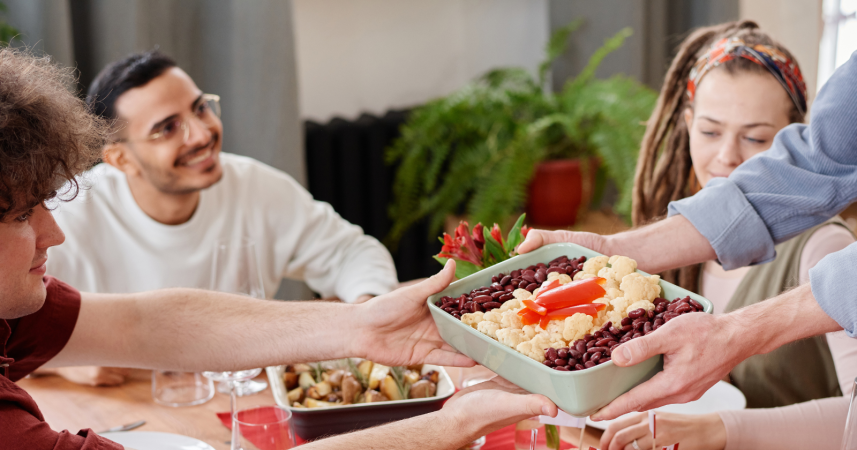
Those church basement tables were packed with accidentally plant-based classics, and your grandma had no idea she was serving vegan food.

Add VegOut to your Google News feed. 
Remember those church potlucks? The ones with folding tables covered in checkered tablecloths, where everyone brought their signature dish in a casserole carrier?
Here's the wild part: mixed in with all the mayo-heavy salads and mystery meat casseroles were a bunch of dishes that were completely vegan. Nobody was trying to be plant-based. Nobody was reading labels for hidden dairy.
These dishes just happened to be made with simple, affordable ingredients that didn't include animal products.
The funny thing is, these accidentally vegan classics were often the most popular items on the table. They disappeared fast, and people asked for recipes. Let's take a look at eight dishes that prove vegan food has been hiding in plain sight at American gatherings for decades.
1. Hawaiian rolls (the sweet orange ones)
Those soft, slightly sweet dinner rolls in the orange bag were at literally every potluck. King's Hawaiian rolls became the gold standard, and most people assumed anything that pillowy and delicious had to be loaded with butter and eggs. Nope. The original recipe uses sugar, a bit of pineapple juice, and vegetable oil.
They were perfect for making little ham sliders, sure. But plenty of people just ate them plain or with jam because they were that good. The texture comes from the dough technique and a longer rise time, not from dairy.
These rolls proved that vegan baking could be soft, sweet, and craveable long before anyone was using aquafaba or flax eggs.
2. Fruit salad with canned mandarin oranges
Every potluck had at least one giant bowl of fruit salad. The classic version mixed canned pineapple chunks, mandarin oranges, grapes, and maybe some melon. Sometimes there was a little of the syrup from the canned fruit to keep everything glossy. Zero dairy, zero animal products, just fruit in a bowl.
The controversial versions had mini marshmallows or whipped cream stirred in, which obviously weren't vegan. But the base recipe that most people made?
Completely plant-based. It was refreshing, it was sweet, and it gave people permission to feel healthy while loading up on casseroles. This was accidentally vegan eating at its most straightforward.
3. Pasta salad with Italian dressing
The tri-color rotini pasta salad was a 90s icon. Cooked pasta, chopped bell peppers, black olives, maybe some cherry tomatoes, all tossed in a bottle of Kraft Italian dressing. The key was making it the night before so the flavors could meld. People treated this like advanced cooking.
Italian dressing back then was usually oil and vinegar based, no cream or cheese. The pasta salad only went non-vegan when someone got fancy and added cubes of mozzarella or pepperoni. But the standard version that showed up in a giant Tupperware container? Totally vegan.
It was proof that you didn't need mayo or dairy to make a crowd-pleasing cold pasta dish.
4. Baked beans (the canned kind, doctored up)
Someone always brought baked beans. Usually it was canned beans dumped into a casserole dish with some brown sugar, mustard, and maybe ketchup stirred in, then baked until bubbly.
The fancy version had onions. Most canned baked beans were made with navy beans, tomato sauce, and molasses. No lard, no bacon, despite the smoky flavor that made people assume otherwise.
Obviously, some recipes added bacon or hot dogs. But the base recipe that most people defaulted to was just beans and sweet sauce. It was filling, it was cheap, and it paired with everything. These beans were doing the heavy lifting at potlucks long before anyone was talking about plant-based protein.
5. Saltine crackers with salsa
This wasn't fancy, but it was everywhere. Someone would bring a jar of Pace picante sauce and a sleeve of saltines, and people would stand around the table making little cracker-salsa bites. It was the appetizer for people who didn't really cook but still wanted to contribute something.
Saltines are just flour, oil, salt, and leavening. Most jarred salsas were tomatoes, onions, peppers, and spices. The whole setup was vegan by default. It wasn't trying to be healthy or ethical, it was just easy. But it worked, and it got people snacking before the main dishes came out.
Sometimes the simplest option is the most accidentally inclusive one.
6. Oreos (straight from the package)
Oreos showed up on every dessert table, usually just dumped onto a paper plate. People assumed a cookie that good had to be made with butter. But Oreos have been accidentally vegan since they switched from lard to vegetable oil back in the 90s. The cream filling is sugar and oil, no dairy involved despite the name.
Kids loved them, adults loved them, and nobody questioned it. They were the backup dessert when someone forgot to bake. Oreos proved that vegan junk food could be just as craveable as the conventional kind. They weren't health food, but they were inclusive in a way that most desserts at those potlucks weren't.
7. Peanut butter and jelly sandwiches (cut into triangles)
There was always a plate of PB&J sandwiches cut into triangles, usually for the kids but adults ate them too. White bread, peanut butter, grape jelly. The most basic sandwich in America, and completely vegan unless someone used honey instead of jelly.
Nobody thought of PB&J as special or intentional. It was just the default, the thing you made when you didn't know what else to bring. But it was filling, it was familiar, and it didn't have any animal products. Sometimes the most inclusive food is the one that's so common we forget to analyze it.
8. Spice cake from a box mix
Duncan Hines spice cake mix was a potluck staple. The back of the box called for oil, water, and eggs, but a lot of people accidentally made it vegan by using applesauce instead of eggs because they ran out or were trying to cut fat. The cake still came out moist and flavorful, with all those warm cinnamon and nutmeg notes.
Some people topped it with cream cheese frosting, which obviously wasn't vegan. But plenty of others just dusted it with powdered sugar or served it plain.
The cake itself could easily be plant-based, and it tasted just as good. It was a reminder that vegan baking doesn't require fancy substitutes or specialty ingredients. Sometimes it just requires using what you already have.
Final thoughts
These dishes weren't trying to make a statement. Nobody was preaching about animal welfare or environmental impact. They were just affordable, easy recipes that people made with ingredients they had on hand. The fact that they were vegan was completely incidental.
But that's kind of the point. Vegan food doesn't have to be complicated or preachy or expensive. Sometimes it's just the simple stuff that's been on potluck tables for decades.
The dishes people actually liked and asked for seconds of. Maybe the best vegan food is the kind that doesn't announce itself, it just shows up and tastes good.
If You Were a Healing Herb, Which Would You Be?
Each herb holds a unique kind of magic — soothing, awakening, grounding, or clarifying.
This 9-question quiz reveals the healing plant that mirrors your energy right now and what it says about your natural rhythm.
✨ Instant results. Deeply insightful.

Jordan Cooper
Jordan Cooper is a pop-culture writer and vegan-snack reviewer with roots in music blogging. Known for approachable, insightful prose, Jordan connects modern trends—from K-pop choreography to kombucha fermentation—with thoughtful food commentary. In his downtime, he enjoys photography, experimenting with fermentation recipes, and discovering new indie music playlists.
More Articles by Jordan