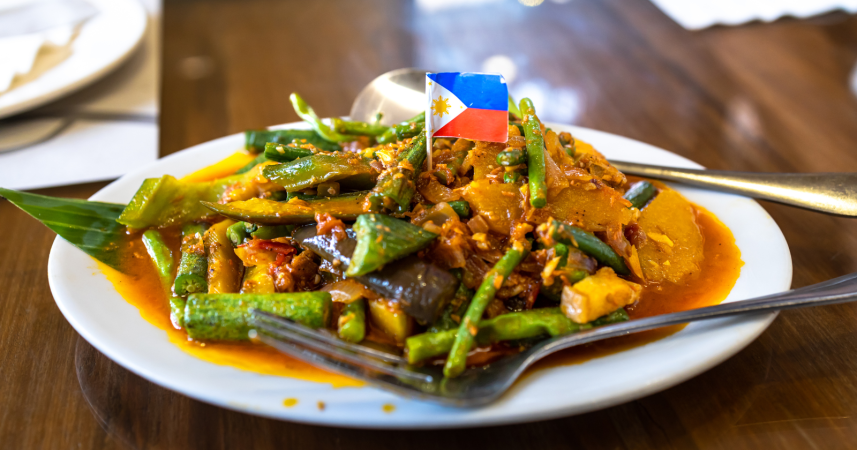
Your lola has been serving up plant-based bangers for decades, she just never called them that.

Add VegOut to your Google News feed. 
Here's something that always makes me smile about the plant-based movement. We act like eating vegetables is some revolutionary discovery.
Meanwhile, Filipino grandmothers have been quietly perfecting accidentally vegan dishes for generations. No hashtags. No meal prep influencers. Just good food that happens to be entirely plant-based.
Filipino cuisine gets stereotyped as meat-heavy, and sure, lechon and adobo get all the spotlight. But dig a little deeper into everyday home cooking and you'll find a treasure trove of dishes that were plant-based before plant-based was a thing.
These aren't adaptations or substitutions. They're the real deal, passed down through generations, served at family tables across the Philippines and in Filipino households worldwide. Let's give them the recognition they deserve.
1. Ginisang munggo (sautéed mung bean stew)
This humble stew shows up on Filipino tables every Friday, a tradition rooted in Catholic abstinence from meat. But here's the thing: even without that religious nudge, ginisang munggo would still be a staple because it's absolutely delicious.
Mung beans simmered until creamy, swimming in a garlicky, tomato-based broth with bitter melon leaves or spinach stirred in at the end.
The traditional version sometimes includes shrimp or pork cracklings on top, but plenty of households skip those entirely. The mung beans themselves are the star, providing that satisfying, earthy richness that makes you want seconds.
It's comfort food that also happens to be packed with protein and fiber. Your lola knew what she was doing.
2. Ensaladang talong (grilled eggplant salad)
Charred eggplant, smoky and collapsed, mixed with tomatoes, onions, and a splash of vinegar. That's ensaladang talong, and it's proof that simple ingredients handled right can be transcendent. The eggplant gets grilled directly over an open flame until the skin blackens and the flesh turns silky.
What makes this dish special is that smoky, almost meaty quality the eggplant develops. Peel away the charred skin, chop it up with fresh tomatoes and onions, hit it with some fish sauce or salt and vinegar, and you've got a side dish that steals the show.
Swap the fish sauce for soy sauce or salt, and it's completely plant-based without losing any of its soul.
3. Pinakbet (vegetable stew with fermented shrimp paste)
Okay, technically traditional pinakbet uses bagoong, fermented shrimp paste, which isn't vegan. But here's the secret: many Filipino cooks, especially those watching their budget, make pinakbet with just salt or soy sauce instead.
And it's still incredible. Bitter melon, squash, eggplant, okra, tomatoes, and string beans, all simmered together until the flavors meld into something greater than the sum of its parts.
The beauty of pinakbet is how each vegetable contributes something different. The squash breaks down and thickens the sauce. The bitter melon adds that distinctive edge. The eggplant soaks up all the flavors. It's a masterclass in vegetable cookery that predates any modern plant-based cookbook by centuries.
4. Ginataang kalabasa at sitaw (squash and long beans in coconut milk)
Coconut milk is the great unifier of Filipino cooking, and this dish proves it. Chunks of kabocha squash and long beans swimming in rich, savory coconut milk, seasoned simply with garlic, onion, and salt. Some versions add shrimp, but the vegetable-only version is just as common and arguably more satisfying.
The squash partially dissolves into the coconut milk, creating this gorgeous golden sauce that clings to everything. The long beans keep their snap, providing textural contrast. It's the kind of dish that makes you wonder why anyone would complicate it with animal products.
The coconut milk brings all the richness you need.
5. Lumpiang sariwa (fresh spring rolls)
Fresh lumpia is the elegant cousin of the fried version, and it's often completely plant-based. A soft crepe wrapper filled with sautéed vegetables, typically heart of palm, jicama, carrots, green beans, and cabbage, all bound together with a sweet peanut sauce drizzled on top.
The wrapper itself is usually just flour and water, no eggs required.
What I love about lumpiang sariwa is how it celebrates vegetables without trying to hide them.
Each bite gives you that satisfying crunch, the sweetness of the sauce, and the freshness of the filling. It shows up at fiestas and family gatherings, holding its own next to all the meat dishes. Nobody calls it vegan. They just call it delicious.
Final thoughts
There's something beautifully subversive about these dishes. They challenge the narrative that plant-based eating is a Western invention or a modern trend. Filipino home cooks have been doing this forever, guided by practicality, seasonality, and generations of kitchen wisdom.
They didn't need a label to know that vegetables, cooked with care and the right aromatics, could be deeply satisfying.
If you're exploring plant-based eating, or if you're Filipino and never thought of these dishes as vegan, maybe it's time for a perspective shift. The infrastructure for delicious plant-based meals already exists in cuisines around the world.
Sometimes the most radical thing you can do is look backward, to the dishes your grandmother made without fanfare, and recognize them for what they always were.
What’s Your Plant-Powered Archetype?
Ever wonder what your everyday habits say about your deeper purpose—and how they ripple out to impact the planet?
This 90-second quiz reveals the plant-powered role you’re here to play, and the tiny shift that makes it even more powerful.
12 fun questions. Instant results. Surprisingly accurate.