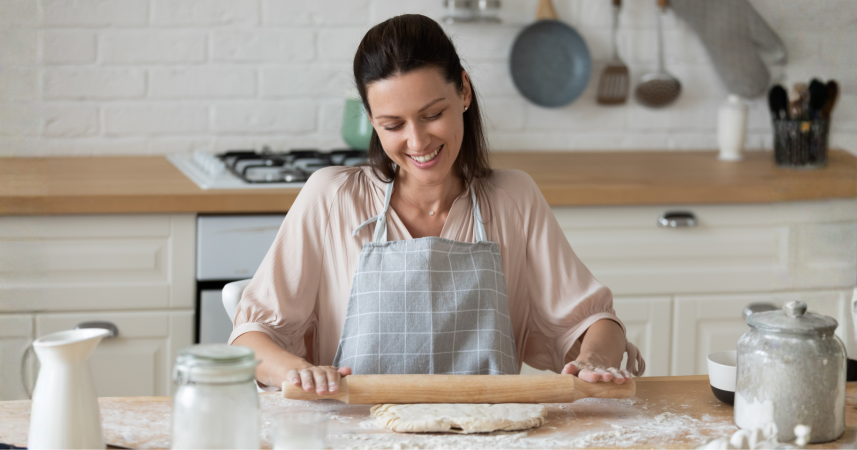
Good ciabatta isn’t magic—it’s the result of a few precise choices made consistently that make it good.

Add VegOut to your Google News feed. 
You don’t need a wood-fired oven or your nonna’s secret recipe to bake great ciabatta at home.
What you do need is to stop making a few tiny mistakes that quietly sabotage the loaf before it ever hits the oven.
I learned this the slow way—flour up my nose in a tiny apartment kitchen, calling every open Italian bakery in my city to ask annoying questions.
One baker in Modena laughed and said, “Your dough is telling you everything. You just aren’t listening yet.”
If you’ve ended up with flat, tight-crumbed, or tough loaves, this is for you.
Here are the six small mistakes that ruin homemade ciabatta—and how Italian bakers taught me to fix them:
1) Treating water like an afterthought
Most home recipes say “warm water” and keep moving—but that’s not enough.
Ciabatta is a high-hydration bread.
That means water isn’t just an ingredient—it’s architecture.
Aim for 70–80% hydration (so, 700–800 g water for every 1,000 g flour).
If that sounds scary, good; you’re probably finally in the right zone.
But it’s not only how much water—it’s the temperature.
Bakers chase a “final dough temperature” around 24–25°C (75–77°F).
Too cold and the yeast sulks; too warm and fermentation races ahead and collapses the structure later.
What I do: Use water that lands the dough in that 24–25°C pocket.
If my kitchen is hot, I go cooler; if it’s winter, I nudge warmer.
A cheap instant-read thermometer is worth its weight in flour.
Also, if your tap water tastes like a swimming pool, switch to filtered.
Chlorine can slow fermentation and mess with flavor.
When I moved apartments, my dough suddenly started behaving again—because I stopped feeding it spa water.
Finally, resist the “just a splash more” habit when the dough feels sticky.
Ciabatta dough is supposed to be slack and clingy.
Stickiness is a feature, not a flaw.
Add flour later for bench dusting, not now.
2) Skipping the biga (or rushing it)
You can make a passable ciabatta with straight dough, but if you want that light, custardy interior and deep flavor, you need a preferment—traditionally a biga.
Biga is simply a stiff mixture of flour, water, and a pinch of yeast made the day before.
It ferments slowly and develops acids and aromatics that make the final bread taste like, well, bread.
Think of it as laying rebar before pouring concrete.
Here’s the common mistake: Making the biga at noon and using it at dinner.
Italians give it time—often 12–18 hours at cool room temperature, or an overnight rest in the fridge if the room’s warm.
It should smell sweet and slightly nutty, not boozy or collapsed.
Another mistake: Over-yeasting the biga.
A preferment isn’t an energy drink.
Use just enough yeast to get slow activity.
When I cut the yeast to a tiny pinch and let the biga work unbothered, my loaves suddenly tasted like a bakery and stayed fresh longer.
If you’re tempted to skip the biga because “who plans ahead,” reframe it as a tiny investment.
You spend five minutes today and your future self eats better tomorrow.
3) Treating mixing like strength training
I used to knead ciabatta like I was trying to win an arm-wrestling match.
Result: A tight crumb and a tired shoulder.
Ciabatta wants strength, yes—but it wants the right kind of strength: extensibility (stretch) as much as elasticity (spring).
That’s why Italian bakers favor gentle mixing and a series of stretch-and-folds over heavy kneading.
Here’s the small mistake: Stopping after a single mix because the dough looks shaggy, or going the other way and blasting it in a stand mixer until it’s hot and overworked.
Both kill the open crumb.
Do this instead:
- Mix just to combine.
- Rest 20–30 minutes (autolyse). This simple pause hydrates flour and kickstarts gluten formation—no effort required.
- Add salt after the rest. Salt tightens gluten; giving flour a head start makes the dough more cooperative.
- Perform 3–5 rounds of stretch-and-folds every 20–30 minutes during bulk fermentation (wet your hands, lift, stretch, fold, rotate the bowl, and repeat)
Each round takes 15 seconds.
You’ll feel the dough change—from swamp creature to silky trampoline.
A windowpane test (gently stretching a thin membrane that doesn’t tear) should be possible by the last rounds.
One more trap: adding lots of bench flour during folds to “make it manageable.”
You’re building a cloud here—don’t weigh it down with dust.
4) Manhandling the dough during shaping
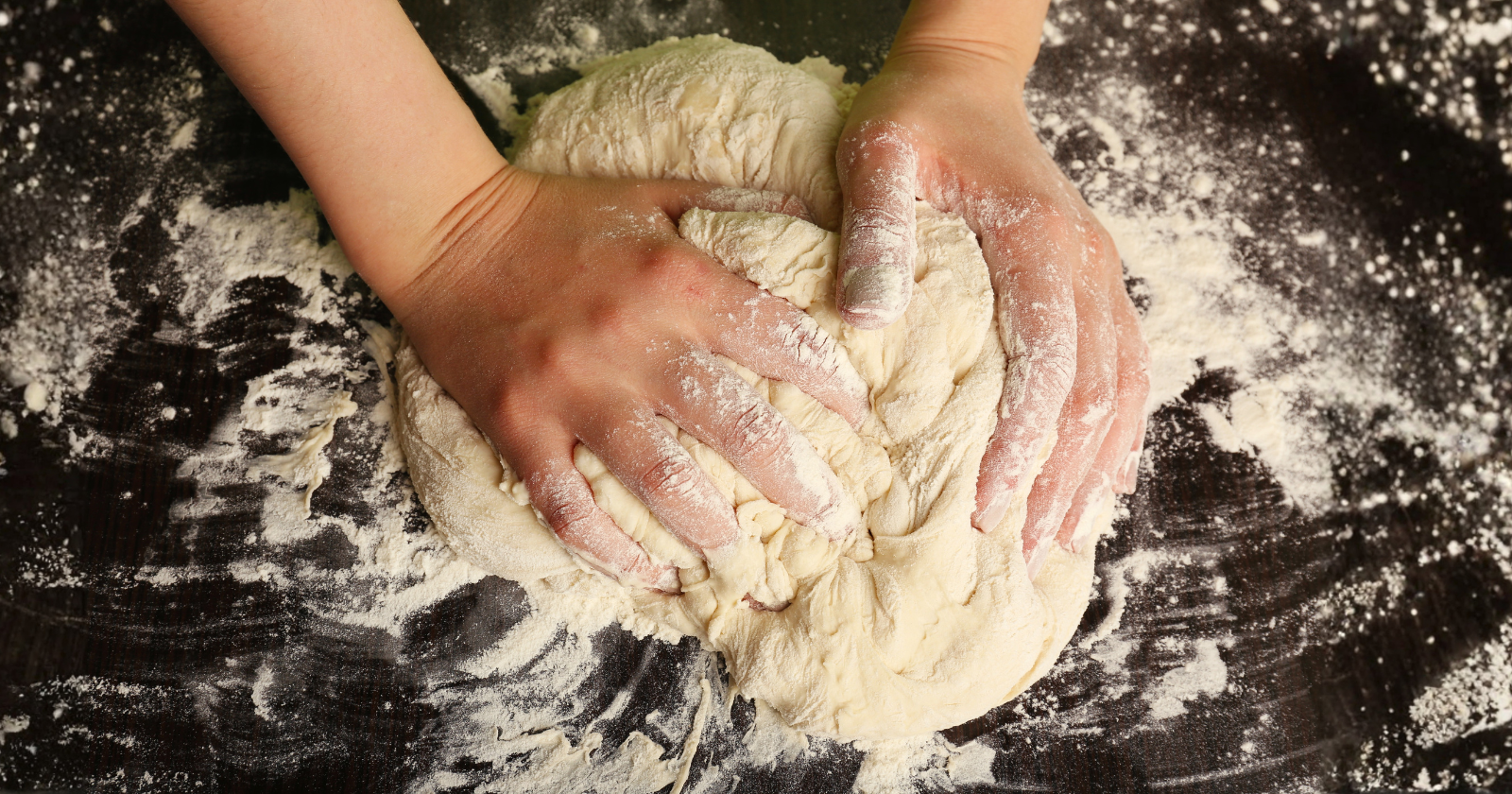
Picture a ciabatta: It’s not tall, it’s not tightly rolled, and it’s basically a rectangle with soul.
The fastest way to ruin that soul is to punch all the gas out while shaping.
Italian bakers treat the dough like a sleeping cat—firm enough to move it, gentle enough not to wake it.
Common mistakes:
- . You worked hard for those airy pockets, don’t iron them out.
- Over-flouring the bench. A snowstorm of flour prevents the dough from gripping itself and creates raw flour streaks on the crust.
- Over-shaping into batons or torpedoes. Ciabatta isn’t a baguette.
Better approach:
- Heavily flour a couche or a towel, but lightly flour the bench.
- Turn the dough out in one confident move.
- Don’t scrape it to death.
- Use a bench knife and wet fingers to cut portions.
- Avoid sawing.
- Nudge each piece into a rough rectangle.
- Fold the short ends slightly toward the center if you want a little height.
A tip I stole from a Parma baker: Place the shaped dough seam-side down on parchment for the final proof, then flip seam-side up right before loading.
The seam opens naturally in the heat, giving you rustic ridges without scoring.
5) Underestimating the oven
Ovens ruin more ciabatta than any sticky dough ever will.
Small mistakes multiply here: not preheating long enough, skipping steam, and baking too timidly.
Ciabatta needs an aggressive start to spring, then time to fully color.
Do this:
- Preheat your oven for at least 45 minutes at 250°C/480–500°F with a stone or steel inside. Home ovens lie; give them time to saturate.
- Create steam in the first 10 minutes (Easiest hack: preheat a cheap metal pan on a lower rack and carefully pour in a cup of boiling water when you load the loaves).
- Spritz the walls quickly and, after 10–12 minutes, vent the steam (open the door briefly) then lower to ~230°C/450°F
- Keep baking until the crust is deeply mottled, not blonde.
If the bottoms are pale, finish directly on the stone/steel for the last 5 minutes.
The fear is real: Nobody wants a burnt loaf, but pale ciabatta is chewy and bland.
Color is flavor—you’re developing caramelization that balances the bread’s gentle tang.
One more pro move: Leave the loaves in the turned-off oven with the door slightly ajar for 5 minutes.
This dries the crust, so it crackles instead of softening as it cools.
6) Using the wrong flour—and forgetting the scale
Finally, the ingredients and measuring.
Small choices here echo through the whole bake.
Flour first: Ciabatta loves medium-to-strong flour—roughly 11.5–12.5% protein. Too low and the dough can’t hold the water; too high and you get chew without the delicate bite.
If you can find an Italian Tipo 0/00 formulated for bread, great; if not, a good bread flour blended with 10–20% all-purpose works well.
Salt matters more than you think: Aim for about 2% of flour weight (20 g salt per 1,000 g flour). Too little and fermentation runs wild and flavor falls flat; too much and the dough tightens and yeast sulks.
Add salt after the autolyse so it doesn’t interfere early.
Yeast: Less than you think, especially if you’re using a biga. A tiny pinch in the preferment and a restrained dose in the final dough is enough when you give it time.
More yeast won’t give you more air—it usually gives you fast, uneven fermentation and a gummy crumb.
And yes, use a scale because volume lies. Flour packs, scoops vary, and a few tablespoons off can move hydration by several points.
Weighing locks in repeatability so you can tweak one variable at a time like a pro.
If you’re tempted to throw in olive oil, olives, or roasted garlic at the start, remember: classic ciabatta is often lean (just flour, water, yeast, salt).
Add-ins are fun, but they can weigh down the structure.
If you do add oil, keep it light and mix it in after gluten has started forming so it doesn’t coat the flour too early.
The bottom line
Good ciabatta isn’t magic.
It’s the result of a few precise choices made consistently: Water you respect, time you plan for, gluten you build gently, dough you handle like it’s alive, an oven you preheat like you mean it, and ingredients you weigh like a pro.
If your past loaves fell flat, don’t overcorrect.
Fix one small thing this week—maybe it’s just letting your biga sit overnight, maybe it’s a longer preheat, or maybe it’s putting the measuring cups away and buying a $20 scale.
As one old-school baker told me over an espresso, “The bread remembers how you treated it.”
Treat it well, and that open, holey crumb will finally show up.
Then make a second batch while you’re on a roll—because the only thing better than fresh ciabatta is the confidence of knowing you can do it again tomorrow.