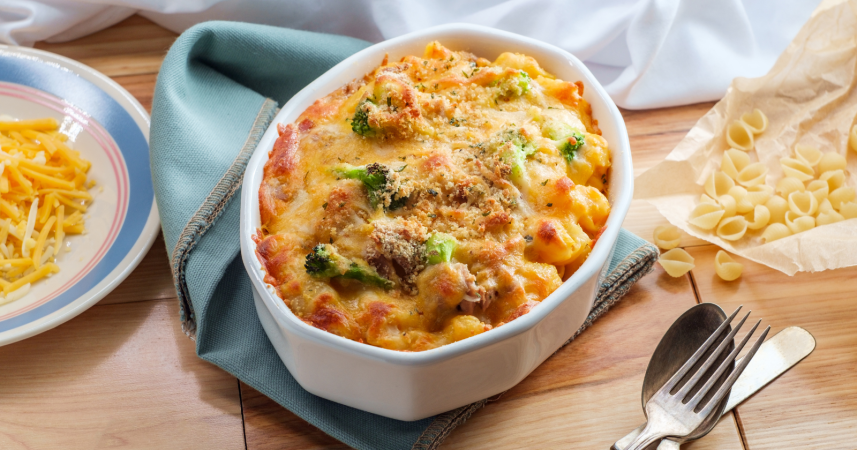
Pick one of these classics and put it on your calendar this week; you will eat well, you will spend less, and you will feel that small but real sense of being taken care of.
Comfort food is a time machine.
One bite and you are back at a crowded family table, someone is passing the peas, and the TV is humming in the next room.
For a lot of us, the ’70s and ’80s wrote the soundtrack to those moments with meals that were cheap, filling, and ridiculously comforting.
I spent my twenties in luxury kitchens tasting demi-glace and caviar, but I learned just as much from pantry meals that stretched a dollar.
Comfort food is hospitality without pretense.
It says, I see you, sit down, you are fed.
Here are six classics that shaped a generation, plus simple ways to make them work for a modern weeknight:
1) Tuna noodle casserole
If you grew up anywhere near a church potluck, you know this one: Egg noodles, canned tuna, peas, and a can of condensed soup, baked under a crunchy topping of breadcrumbs or potato chips.
It is not flashy, but it is reliable, and reliability is underrated.
I still keep a “casserole kit” in my pantry because it solves Tuesday at 7 p.m. when I forgot to plan dinner:
- Boil noodles, stir with a can of tuna, peas, and a quick cream sauce, bake until bubbly.
- You can go classic with cream of mushroom, or whisk milk with flour, garlic, and a splash of broth for a lighter sauce.
- Want to upgrade without killing the budget? Toast the breadcrumbs in a pan with olive oil and a pinch of paprika, then add lemon zest to the mix to wake up the flavors.
If you are plant-based, swap chickpeas for tuna and use a dairy-free cream.
The texture still lands, the comfort still shows up.
This dish is a reminder that constraints create creativity.
2) Sloppy joes
Is there anything more honest than a sloppy joe?
Brown the meat with onions, stir in tomato sauce, ketchup, a little mustard, maybe a dash of vinegar or Worcestershire, and spoon it onto soft buns.
It is sweet, tangy, messy, and it feeds a crowd fast.
I like to make a big batch and portion it into freezer bags laid flat.
They stack like files, and future me says thank you on those nights when the group chat will not stop and my brain is fried.
If you want to skip the meat, lentils simmered in the same sauce hit the same notes, and mushrooms chopped small bring that meaty chew.
A small trick from the line: Bloom your spices in the fat before the liquids go in.
Smoked paprika and garlic powder wake up the sauce, and a teaspoon of brown sugar balances the acidity.
Toast the buns in a skillet so they hold up better, because no one likes a soggy bottom bun.
The lesson here is to welcome a bit of chaos!
3) Hamburger Helper, hold the box
Boxed skillet dinners were a weeknight hero in the ’80s.
Brown meat, add pasta and a packet, pour in milk and water, and you were done.
You can make the same one-pot magic from scratch, no mystery packet required:
- Start with ground beef or a plant-based crumble.
- Sear hard, then add onion and garlic.
- Stir in elbow macaroni, tomato paste, water or stock, and a spice mix you build yourself.
- Think paprika, oregano, a pinch of cayenne, and a little cornstarch for that iconic velvety sauce.
- As it simmers, the pasta releases starch and the whole pot thickens into something that eats like a hug.
- Cheese at the end gives you the classic cheeseburger vibe.
If you are dairy-free, whisk a spoonful of nutritional yeast into a splash of oat milk and stir it in off the heat.
It adds body and a savory note without the cost of a mountain of cheese.
This is the definition of efficient cooking: One pot means less cleanup, which lowers the friction to cook again tomorrow.
4) Meatloaf with a ketchup glaze
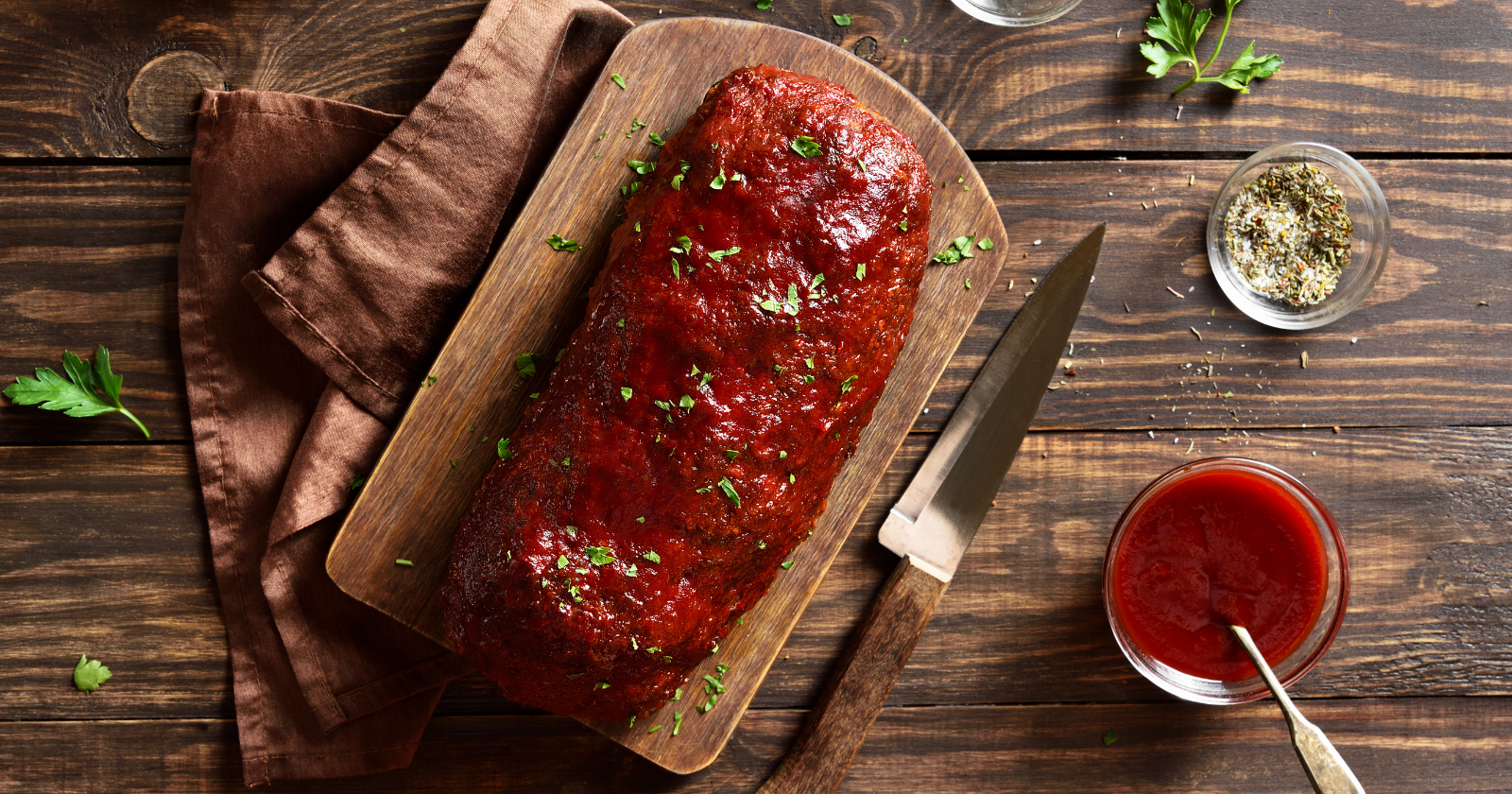
Meatloaf was the king of budget protein.
You took inexpensive ground meat, stretched it with breadcrumbs and eggs, seasoned it well, and glazed the top with ketchup or a quick tangy sauce.
It sliced clean, made great sandwiches, and kept well.
A few pro moves make it special:
- Grate the onion instead of dicing, so it melts into the loaf and keeps it moist.
- Soak the breadcrumbs in milk for a panade that holds everything together.
- Season boldly, salt and pepper are not enough, and mix with a light hand so the loaf stays tender.
- The glaze is where the nostalgia lives, so stir ketchup with a splash of apple cider vinegar and a teaspoon of brown sugar, brush it on halfway through baking so it sets glossy.
If you are cooking for a time-crunched week, bake the mixture in a muffin tin for mini loaves that finish in twenty minutes; if you are plant-based, a lentil walnut loaf with the same glaze scratches the same itch.
What I love about meatloaf is the compounding effect of leftovers.
The second-day sandwich with crisp lettuce and pickles is often better than night one.
That is a quiet money lesson hiding in your fridge: Cook once, eat twice, and your budget and your brain both get a break.
5) Chicken pot pie
You know that steam cloud when you break the crust and the sauce bubbles up.
Chicken pot pie was Sunday energy on a Tuesday budget.
Leftover bird, frozen vegetables, a simple roux, and a pastry lid turned scraps into ceremony.
You do not need to make pastry from scratch, unless you want to.
A store-bought crust or even a biscuit topping is completely on brand for this dish:
- Make a quick sauce by whisking butter and flour, then adding broth and milk, season with thyme, and fold in chicken and vegetables.
- Pour into a dish, top, and bake until golden.
- For a meatless version, do a mushroom and potato filling with peas and carrots.
- Add a splash of soy sauce or miso to the roux, as it deepens the savoriness without extra cost.
If you want more speed, use puff pastry and bake it as a lid on top of the filling in a skillet, the stovetop-to-oven move makes it weeknight friendly.
There is a hospitality lesson here: Pot pie is architecture (food-wise), hot filling under a protective roof.
It turns leftovers into something that feels like a gift, which is what good cooking and good leadership both do.
6) Chili night
Finally, let’s talk chili, the social meal that taught a generation how to feed many with little.
A pot of chili could simmer all afternoon in a slow cooker while kids did homework and parents rotated through shifts.
It was flexible about the meat, tolerant of canned beans, and happy to welcome whatever spices were in the cupboard.
I make two versions depending on the week: Chili con carne with ground beef, kidney beans, onion, garlic, chili powder, and a square of dark chocolate for depth, or a three-bean chili with pinto, black, and kidney beans, bell peppers, and crushed tomatoes.
Either way, I bloom the spices in a little oil first, then deglaze with coffee or beer, which adds a roasty backbone that feels more complex than the price tag.
The toppings bar is half the fun and a budget trick in disguise.
Set out chopped onion, jalapeños, shredded cheese or a dairy-free alternative, lime wedges, and tortilla chips.
Everyone gets to customize, which turns scarcity into abundance.
Leftovers become chili dogs, nachos, or get ladled over baked potatoes.
Future you will not complain as chili also does something smart for your schedule.
When you choose a weekly ritual like chili night, you remove decision fatigue.
The bottom line
Comfort food from the ’70s and ’80s was trying to be there, and that is a pretty solid north star for life too.
Show up consistently, work with what you have, and make it welcoming.
If you want these meals to work in a modern routine, think systems.
Keep a short pantry list that unlocks multiple dishes, like noodles, canned tomatoes, beans, onions, garlic, broth, frozen vegetables, and a couple of proteins.
Batch when you can, portion for the freezer, and build a couple of weekly rituals so dinner becomes a rhythm rather than a puzzle.
Food sets the tone for the rest of your day, your week, your season.
Sometimes the most loving thing you can do for yourself is to make a humble pot of something that tastes like home.
You will eat well, you will spend less, and you will feel that small but real sense of being taken care of.
That is comfort food doing its job.