Curiosity is the best seasoning. Pick one dish from this list and try it the way locals do—ideally with someone who loves it.
Food gets called “weird” when we don’t know its origin story.
Once you learn why a dish exists—what problem it solved, what climate it came from, who it fed—it goes from bizarre to brilliant.
Here are ten national (or nationally beloved) dishes that make perfect sense the moment you understand where they come from—and why people still crave them.
1) Haggis (Scotland)
If you’ve only heard the jokes, haggis sounds like a dare.
In reality, it’s a smart, nose-to-tail solution from a cold, pastoral land where nothing edible was wasted.
Shepherds slaughtered sheep during the autumn cull and needed to use the perishable organs quickly. The answer? Mince heart, liver, and lungs with oats, suet, onion, and spice; tuck the mixture into a stomach (nature’s pressure cooker); then boil or steam it. The oats stretch the protein, the fat adds calories, and the spices make it cozy on a damp Highland evening.
Taste-wise, think peppery meatloaf with nutty texture. I had it in an Edinburgh pub with neeps and tatties (turnips and potatoes) and a splash of whisky gravy. Not a stunt meal—just comfort food that kept generations warm and working.
2) Natto (Japan)
Sticky fermented soybeans that smell like a science experiment and string like mozzarella? That’s natto.
It’s also a breakfast staple that makes perfect sense for a nation that prioritized health long before wellness hashtags existed.
Natto’s fermentation unlocks nutrients and packs a huge protein punch. In a culture where land for livestock was scarce and fish could be pricey inland, soybeans became essential. The Bacillus subtilis bacteria do the heavy lifting, turning soy into something probiotic and satiating. Add hot rice, scallions, a touch of mustard, and suddenly breakfast carries you to lunchtime without a crash.
A Tokyo salaryman showed me how to whisk the packet vigorously before eating—more air, more silk, less funk. Once I tried it that way, I understood the cult following.
3) Balut (Philippines)
Balut—a fertilized duck egg, boiled and eaten warm—often tops Western “nope” lists.
But look at the Philippines’ history and geography and the logic appears.
Ducks thrive in the country’s rice ecosystems. Eggs are portable, nutrient-dense, and cheap. For field workers, a balut with salt and vinegar is the original protein bar: fats, minerals, amino acids, and warmth at midnight on a humid street corner. It’s also social—a snack shared over small talk, like tacos after a shift.
If you’re curious, start with a younger balut (less developed), sprinkle with calamansi and chili, and treat it like bone broth plus a soft egg. Rich? Yes. But it’s richness with a reason.
4) Chapulines (Mexico)
Roasted grasshoppers dusted in lime, chili, and salt—crunchy, tangy, impossible to stop eating.
Pre-Columbian diets in Mesoamerica relied on ingenious proteins: beans, maize, amaranth, and—during seasonal swarms—insects. Chapulines weren’t a gimmick; they were pragmatic, sustainable, and delicious.
Today they’re still sold in Oaxaca’s markets by the scoop. The lime cuts any gamey note, the chili lifts the flavor, and the crunch rides nicely on a tortilla with avocado. If you care about future-friendly protein, chapulines are a master class: low land use, low water, high nutrients.
I picked up a paper cone from a vendor near Mercado 20 de Noviembre, and by the end of the block the cone was empty. That’s not a dare; that’s a snack.
5) Hákarl (Iceland)
Fermented Greenland shark—the one Anthony Bourdain famously grimaced through.
But try surviving Iceland’s winters before global shipping and tell me you wouldn’t get creative.
Greenland shark is toxic when fresh due to natural compounds that help it survive deep, cold waters. Traditional Icelanders solved it with chemistry and time: bury the shark to drain, then hang to ferment and dry in ocean air. The result is safe to eat, storable for months, and rich in protein during a season when gardens don’t exactly flourish.
Yes, it smells like ammonia. No, you don’t eat a steak’s worth. You have a small cube with a bracing sip of Brennivín, the way a culture honors its past and its problem-solving.
6) Surströmming (Sweden)
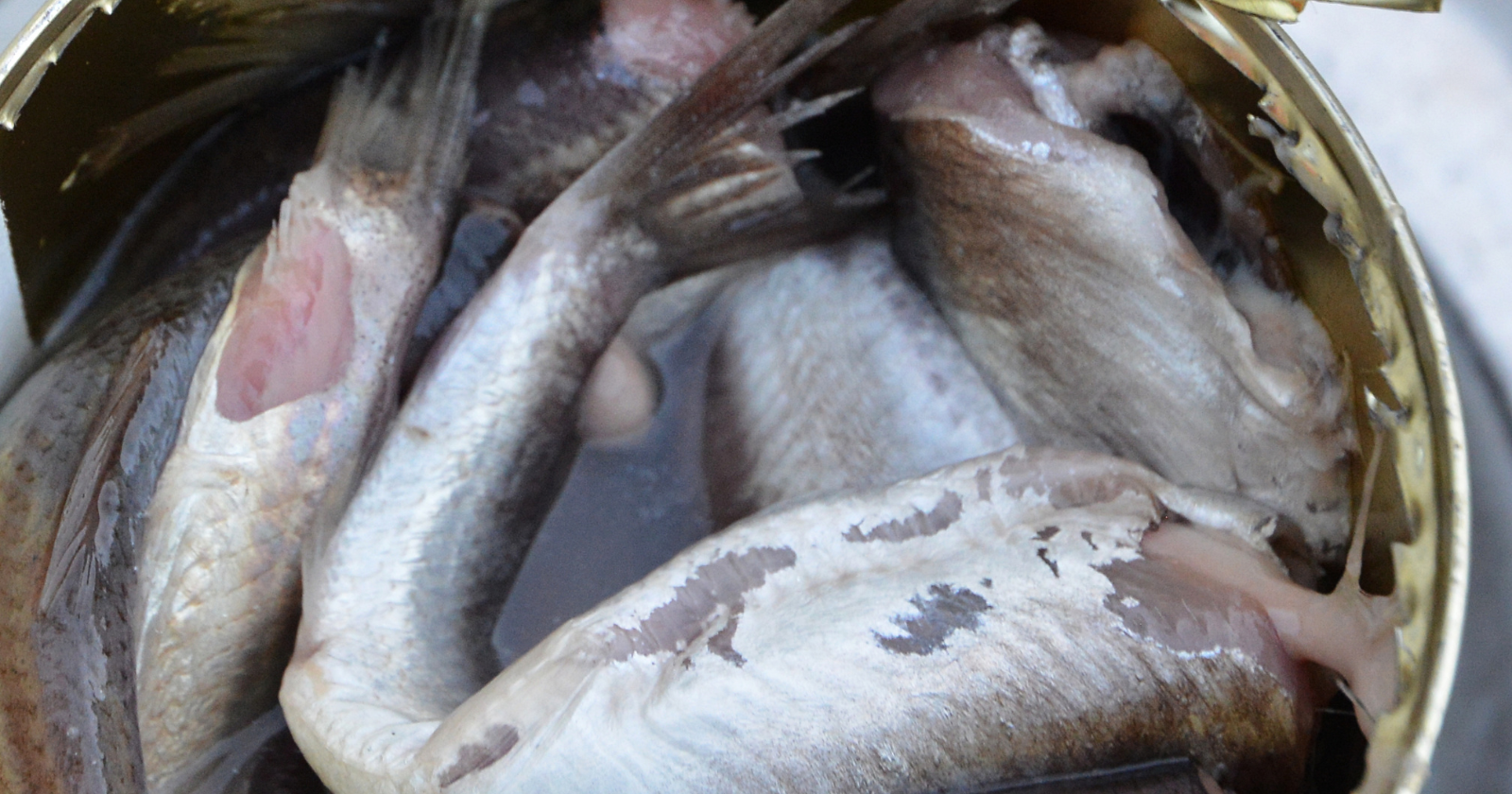
Fermented Baltic herring that’s canned mid-sour and continues to ferment until the tin bulges—how could that be anything but “weird”?
Answer: salt was historically expensive in Sweden, and summers were short. Lightly salting herring, then allowing lacto-fermentation, preserved a cheap, abundant fish for months.
The flavor is pungent, salty, and intensely savory—like putting blue cheese in fish form. Swedes don’t just crack a can in a closed room; they make a ritual out of it: open outdoors, assemble with thin flatbread, potatoes, onion, butter, and sour cream. Fat and starch tame the funk. Community carries the rest.
If you treat it like a delicate anchovy rather than a main course, it clicks.
7) Cuy (Peru)
Roasted guinea pig—cue the shock for pet lovers.
In the Andean highlands, cuy has been food for over 5,000 years. Guinea pigs breed quickly, thrive in small spaces, and convert scraps to protein efficiently—ideal for households living above 10,000 feet where grazing land is precious and larger livestock struggle.
Cuy tastes like dark-meat chicken with crisp skin when roasted over a wood fire. It often shows up on special occasions with potatoes and aji sauce—pure Andes on a plate. Judging it through a pet lens misses the reality: it’s a sustainable, celebratory protein tied to place and history.
8) Century eggs (China)
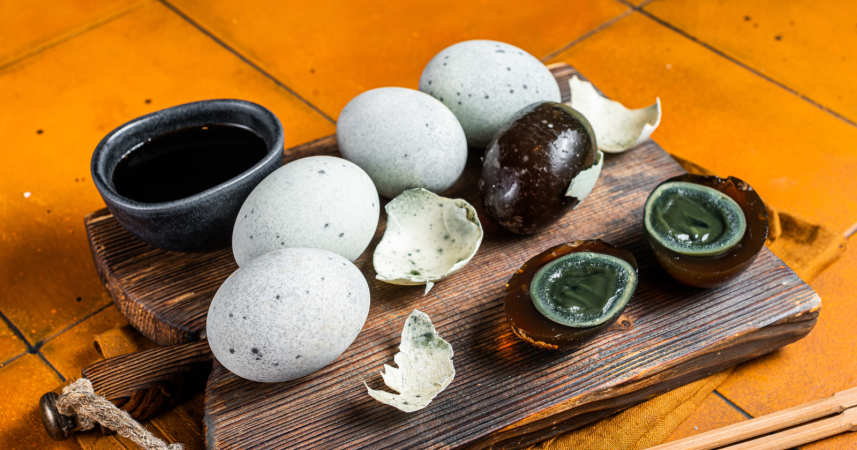
Pidan looks dramatic—jade-brown “whites,” cream-soft yolks—so the myth says they’re buried for 100 years.
The real technique is faster and smarter. Eggs cure in an alkaline mixture (traditionally wood ash, quicklime, tea, and salt; now more controlled methods), which raises pH, gels the proteins, and transforms flavor without heat. In regions where refrigeration was new or nonexistent, it was a way to store a nutrient-dense food safely.
Sliced pidan with chilled tofu, scallions, soy, and sesame oil tastes custardy, mineral, slightly funky in the best cheese-adjacent way. Once you file it mentally next to Roquefort rather than a hard-boiled egg, it stops seeming strange.
9) Lampredotto (Italy)
Florence is famous for bistecca.
But the city’s true street soul is lampredotto: a sandwich of slow-simmered tripe (the fourth stomach of the cow) piled on a roll, dipped in broth, and crowned with salsa verde.
Why tripe? Medieval and Renaissance Florence had strict guild systems. Choice cuts went to the wealthy; working people made genius out of the rest. Tripe stewed with tomato, celery, and herbs becomes tender and deeply savory, and a trippaio (stall) can feed a line for a few euros. It’s equitable eating with a lineage.
I grabbed one near Mercato Centrale on a rainy afternoon. The broth trickled down my wrists, the parsley-garlic sauce cut the richness, and I understood exactly why locals queue.
10) Lutefisk (Norway)
Finally, the gelatinous white fish that shows up at Scandinavian holiday tables and confuses everyone else. Lutefisk starts as stockfish—air-dried cod that can last for years. Coastal Norwegians dried fish to survive long winters and voyages; later, lye baths rehydrated and tenderized the rock-hard fillets. Multiple water rinses remove the caustic lye and leave a translucent, jiggly fish that bakes up silky.
It’s not served plain. The traditional plate includes boiled potatoes, peas, bacon or browned butter—fat and salt to complement a delicate, almost custardy protein. In a landscape of fjords and storms, lutefisk was reliable calories and a holiday reminder that resourcefulness is a virtue.
A few personal notes from the road
The night I finally embraced natto, I was jet-lagged in a tiny business hotel near Shimbashi. The vending machine coffee tasted like chocolate and stationery, and the breakfast buffet had a dozen little bowls, one of which looked like it would glue my chopsticks together. A suited guy next to me showed me the whisking trick, laughed at my first bite, and then nodded when I went back for seconds. That nod did more than any blog post.
In Florence, I thanked the trippaio and he shrugged in that Italian way that says, “We’ve been doing this forever.” That shrug is the point: food doesn’t need to perform. It needs to nourish, gather, and remember.
The deeper lesson
Calling a dish “weird” usually says more about our map than the territory.
Travel—whether across oceans or just across town—expands that map. And when it comes to eating better (for health, for planet, for pleasure), there’s a lot to learn from people who figured out how to thrive with what they had.
So the next time a plate makes you hesitate, ask yourself two questions:
What problem did this solve?
And who smiled when they took the last bite?
Final thought
Curiosity is the best seasoning.
Pick one dish from this list and try it the way locals do—ideally with someone who loves it.
You might not fall head-over-heels every time, but you’ll walk away with a story worth telling—and that’s never weird.
If You Were a Healing Herb, Which Would You Be?
Each herb holds a unique kind of magic — soothing, awakening, grounding, or clarifying.
This 9-question quiz reveals the healing plant that mirrors your energy right now and what it says about your natural rhythm.
✨ Instant results. Deeply insightful.

Adam Kelton
Adam Kelton is a writer and culinary professional with deep experience in luxury food and beverage. He began his career in fine-dining restaurants and boutique hotels, training under seasoned chefs and learning classical European technique, menu development, and service precision. He later managed small kitchen teams, coordinated wine programs, and designed seasonal tasting menus that balanced creativity with consistency.
After more than a decade in hospitality, Adam transitioned into private-chef work and food consulting. His clients have included executives, wellness retreats, and lifestyle brands looking to develop flavor-forward, plant-focused menus. He has also advised on recipe testing, product launches, and brand storytelling for food and beverage startups.
At VegOut, Adam brings this experience to his writing on personal development, entrepreneurship, relationships, and food culture. He connects lessons from the kitchen with principles of growth, discipline, and self-mastery.
Outside of work, Adam enjoys strength training, exploring food scenes around the world, and reading nonfiction about psychology, leadership, and creativity. He believes that excellence in cooking and in life comes from attention to detail, curiosity, and consistent practice.
More Articles by Adam