Go to the main content

I tried snails and frog legs for the first time — here’s what surprised me most

I expected slime and fear—got buttery comfort and one shock I couldn’t stop craving.

Food & Drink

I expected slime and fear—got buttery comfort and one shock I couldn’t stop craving.

I grew up in kitchens where steak tartare and oysters were normal, but somehow I’d never crossed paths with snails or frog legs.

So I fixed that on a rainy night in Paris that bled into a humid afternoon in Lyon.

Two plates I’d successfully avoided for years landed in front of me with quiet confidence, and I realized most of my “no thanks” was borrowed from other people’s faces.

What surprised me most wasn’t the flavor—it was how my brain kept trying to argue with my mouth.

Expectations are the real garnish

Going in, I expected to be grossed out.

Snails (escargots) conjured images of mud and garden hoses. Frog legs sounded like a dare, not dinner. But expectation is a heavy-handed garnish—it can drown out what a dish is actually trying to say.

The escargots arrived in a hot, dimpled pan, each well bubbling with parsley-flecked garlic butter. The aroma hit first: bright, green, roasty. It smelled like the best garlic bread you’ve had after a long walk in the rain. I pulled one out with the little tongs, eased it from the shell with a slender fork, and realized the battle was already half-won.

If something smells like comfort, your brain will follow.

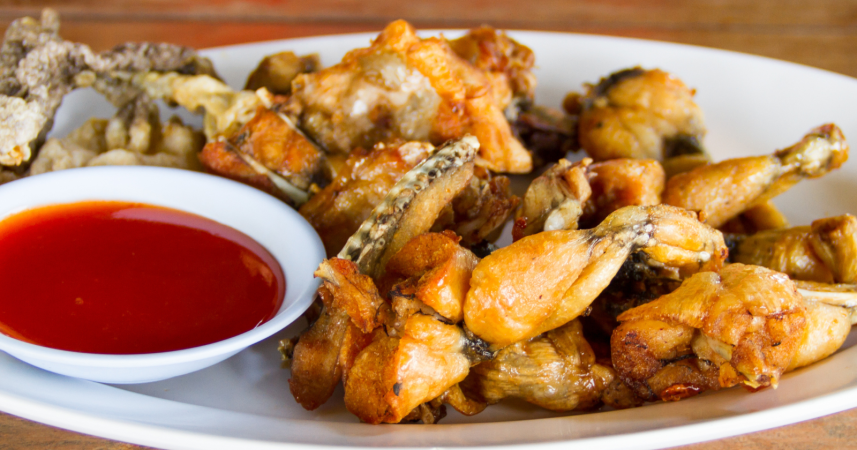
Frog legs came later, at a bouchon where the menus are handwritten and the owner speaks like he’s known you since childhood. They were lightly floured, pan-fried in butter with lemon and capers—gold at the edges, delicate at the joints.

No drama. Just food.

Texture is everything (and nothing like you think)

Let’s talk mouthfeel, because that’s where most people flinch.

Snails are not rubber bands. Done right, they’re more like firm mushrooms that had a summer fling with a scallop—tender with a little spring. There’s an initial chew, then a buttery collapse that carries the garlic and herbs exactly where you want them.

If you enjoy well-cooked octopus or oyster mushrooms with a sear, your palate already has the map.

Frog legs live somewhere between chicken thigh and very fine white fish. The fibers are short, the grain is delicate, and there’s a softness that rewards slow chewing.

The myth that they “taste like chicken” is lazy shorthand. They taste like themselves: mild, slightly sweet, ready to wear whatever sauce you dress them in.

Think of the difference between halibut and sole—same neighborhood, different house.

Flavor rides on fat, acid, and heat

Both dishes taught me the same lesson I learned in luxury F&B: flavor is a vehicle decision.

Escargots aren’t about snails alone; they’re about garlic, butter, parsley, and heat. The shell is a one-bite casserole. You’re eating a system—aromatics bloomed in fat, salt to make it sing, heat to concentrate it.

Sop the leftover butter with a hunk of crusty bread and you’ll catch why people fall in love with “snails”: the sauce is the star, the snail is the textural anchor.

Frog legs are chameleons. In a brown-butter lemon pan sauce, they’re bright and elegant.

Tossed with shallots, white wine, and a whisper of tarragon, they become a spring lunch you’ll talk about for months.

I could imagine them grilled over charcoal with a brush of chili oil and lime, or poached gently and finished with a caper-herb vinaigrette.

The protein is the canvas — your fat and acid choices paint the picture.

The surprise villain: my fork-hand memory

What tripped me up wasn’t flavor—it was muscle memory.

Food carries stories. My first bite of escargot was competing with a childhood memory of stepping on a shell barefoot after rain. My first frog leg had to fight a cartoon frog from a cereal commercial.

That’s the honest part of trying “weird” foods: your brain throws a slideshow you didn’t ask for.

The fix wasn’t to brute-force it. It was to slow down and build new associations. Smell, bite, breathe, notice. The next forkful was easier because the new memory—garlic butter, warm bread, laughter—was already forming.

That’s why dining rooms matter. A friendly room and a well-set table aren’t fluff — they’re psychological mise en place. They help your nervous system stop bracing and start tasting.

Technique, not bravery, makes the difference

Here’s where cooks are the real heroes.

Snails overcooked become pencil erasers. Frog legs left too long in the pan shred into dryness. The plates I loved were cooked by people who respected the ingredient enough to not bully it. Hot fat, short time, finish with acid. Or slow-poach, then quick-sear. Either way, intent shows.

If you’re trying these at home, think gentle. For escargots, bloom minced garlic and shallot in butter without browning, fold in chopped parsley, a splash of dry white wine, and a pinch of salt.

Warm the snails just until tender and bake in shells (or a little dish) to concentrate the flavors.

For frog legs, pat dry, season, dust with flour, and sauté in butter or neutral oil/butter mix until just cooked—then deglaze with lemon and capers.

This is not a place for “set it and forget it.” It’s a place for one eye on the pan and one hand on the spoon.

Ethics and sourcing matter (and make it taste better)

I’m not here to moralize. I am here to say that where and how these animals were harvested matters for flavor and for your conscience.

Ask questions. Are the snails farmed (common in France and elsewhere) or foraged? How are the frog legs sourced? Responsible suppliers exist, and good restaurants know them. I’ve found that the places most transparent about origin are also the ones that cook with the most care.

Conscience and craft tend to hang out together.

If your gut says “not for me,” listen to it. I still eat mostly plants and seafood day to day. When I choose to go off that path, I want it to be for something that tastes like intention, not novelty.

That filter alone will steer you toward better experiences.

How to order them well (and enjoy yourself)

A few things I learned that made the first time feel easy:

Go classic first. For escargots, start with the garlic-parsley-butter version. It’s a masterclass in balance and understands its audience. Save the wild riffs for bite two.

Pair simply. A crisp white (Muscadet, Chablis, Assyrtiko) loves garlic butter and seafood-adjacent textures. With frog legs, I liked a mineral white or a light chillable red that won’t steamroll the dish.

Mind the tools. Those little snail tongs look like a party trick, but they’re functional—use them. If you’re worried about going airborne, anchor your elbow and slow your movements. No one is timing you.

Don’t drown anything. You’ll be tempted to bury frog legs in sauce.

Resist.

Let the meat speak, then edit with acid and herbs like you would with a perfect tomato. Restraint is a flavor, too.

What surprised me most

Two things, actually.

First: this wasn’t an endurance sport. I didn’t “conquer” snails or “survive” frog legs. I met two new textures inside familiar flavor maps and realized the door had always been unlocked.

My palate didn’t need a personality transplant — it needed a better invitation.

Second: I walked away with a calmer relationship to “no.” I used to skip certain foods out of a vague, inherited squeamishness. Now I can say “no” because I tried them, paid attention, and decided where they fit in my life. That feels like adulthood—curiosity first, clarity after.

Back at my apartment, I made a version of both dishes with grocery-store ingredients: canned snails (yes, really—rinsed well), lots of parsley and garlic, good butter, baguette — then frog legs from a reputable fishmonger, a dusting of flour, quick sauté, lemon-caper finish.

I ate with the window open and a cheap but happy white wine in the glass. It tasted like travel without the passport line.

The aftertaste

Will I order them again?

Absolutely—when the room is right and the cook respects the product.

Will I evangelize?

Only to say this: most of what we fear about unfamiliar foods lives in our head, not our mouth.

If you’re curious, borrow my script. Pick a classic preparation in a place that smells like good butter. Breathe. Taste. Notice the moment your expectation steps aside and something simpler takes the wheel—warmth, salt, fat, acid, texture, laughter. That’s the part worth chasing.

And if you still don’t like it? No drama.

Order the steak frites, pass the bread, and steal a caper from your friend’s plate. Good company and hot pans make almost anything delicious, even on the nights you stick with what you know.


What’s Your Plant-Powered Archetype?

Ever wonder what your everyday habits say about your deeper purpose—and how they ripple out to impact the planet?

This 90-second quiz reveals the plant-powered role you’re here to play, and the tiny shift that makes it even more powerful.

12 fun questions. Instant results. Surprisingly accurate.


Adam Kelton

Adam Kelton is a writer and culinary professional with deep experience in luxury food and beverage. He began his career in fine-dining restaurants and boutique hotels, training under seasoned chefs and learning classical European technique, menu development, and service precision. He later managed small kitchen teams, coordinated wine programs, and designed seasonal tasting menus that balanced creativity with consistency.

After more than a decade in hospitality, Adam transitioned into private-chef work and food consulting. His clients have included executives, wellness retreats, and lifestyle brands looking to develop flavor-forward, plant-focused menus. He has also advised on recipe testing, product launches, and brand storytelling for food and beverage startups.

At VegOut, Adam brings this experience to his writing on personal development, entrepreneurship, relationships, and food culture. He connects lessons from the kitchen with principles of growth, discipline, and self-mastery.

Outside of work, Adam enjoys strength training, exploring food scenes around the world, and reading nonfiction about psychology, leadership, and creativity. He believes that excellence in cooking and in life comes from attention to detail, curiosity, and consistent practice.

More Articles by Adam

More From Vegout