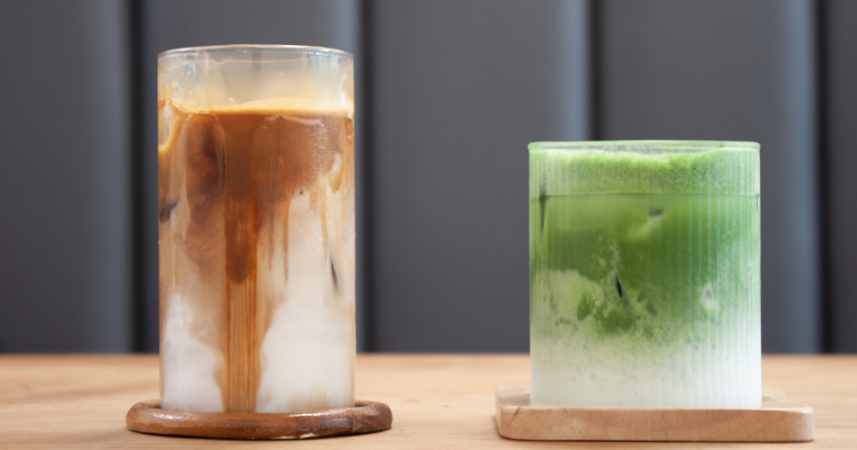
Thirty days of matcha: jitters gone, focus steady, fasting easier, sleep deeper—coffee is now a choice.
Last year, after I finally got my driving license, I bought myself a gift — from me to me: a full matcha set.
Bowl, whisk, scoop, a small tin of bright green powder.
I wanted a calm ritual to balance my other love: the shiny coffee machine that made one cup turn into two, then three.
Some days I felt awake. Many days I felt shaky and tired. I couldn’t tell if my body wanted caffeine or if my mind just wanted the ceremony.
So I set a simple test: I decided to try something different for thirty days. I would keep my same routine—two meals a day, first one at 1 p.m., dinner finished before eight—but I would swap coffee for matcha.
I wanted to see if I missed the caffeine or if I mostly missed the ritual.
I picked matcha for calm energy and for the ceremony
I chose matcha because it usually feels gentler. It still has caffeine, but it also has L-theanine, which many people say makes the focus smoother and less jumpy.
But honestly, the bigger reason was the ceremony.
I like rituals. I like streaks. Ask my Duolingo French owl or my exercise challenges that grow from thirty to ninety days because I don’t like to stop.
Whisking matcha fits that part of me. I can heat water, sift the powder, whisk in small quick motions, and watch a green foam appear.
It feels like breathing. It also fits well with yoga.
I wake around nine or ten, drink water, do a short stretch or yoga, then make plain matcha with water late morning. With my 1 p.m. “breakfast,” I have a small matcha latte with a little milk, no sugar.
The rest stays the same.
How I set the rules for thirty days
I kept the rules simple so I wouldn’t fight with them.
No coffee at home. No coffee outside unless it was a true special event—like a friend’s birthday or a long travel day—and even then only one small cup.
Plain matcha before 1 p.m.; matcha latte at 1 p.m. if I want. No sugar added.
Keep fasting: two meals per day, breakfast at one, dinner done before eight.
Keep my usual work, reading, and walks.
The plan was not to become a perfect tea person. The plan was to give my nervous system a break from the big spike and see what happened.
I told my “obsessive” side that it could help by tracking how I felt: hunger, focus, mood, and sleep. But it couldn’t turn this into a hard game with points and punishments.
We were trying kindness this time.
Week one: headache and missing the button
The first week felt loud. Day one came with a small headache and a fog behind my eyes.
I kept thinking, “Just one espresso and this would be easier.” I also missed the little morning performance: the warm machine, the cup, the smell. It wasn’t only about caffeine.
It was about identity — being a “coffee person,” starting fast. My hand kept reaching for the button even when I told it not to. I almost let my obsessive part take over the matcha instead.
It wanted exact grams, special tools, perfect temperature.
I caught myself and said, “Good enough is enough.”
I whisked matcha powder with the tools I had. I focused on the breath and the color.
By day four, the craving felt smaller. The ritual around matcha started to feel real, not forced. I still missed coffee, but I didn’t feel pulled by it in the same way.
Week two: energy turned into an even line
During the second week, my energy changed shape.
With coffee, mornings were a rocket, afternoons a crash site. With matcha, mornings were a steady train. I moved through tasks without the nervous edge.
My hands were calmer at the keyboard. My mind stayed with a paragraph longer, which helps with PhD reading and writing. I noticed less anxiety late morning, which is often my shaky time.
At 1 p.m., I ate my usual “breakfast”: one egg (scrambled, on toast, or an egg-oat pancake with cheese) and a dessert that looks like dessert but has no sugar — roasted fruit, or cottage cheese mixed with sour cream, cocoa, and cinnamon.
The matcha latte sat well with it. The food felt like fuel, not like rescue.
I didn’t need to chase another high to get through the afternoon. I just worked, took a walk, and felt okay.
Week three: easier stomach, easier sleep
By week three, my body felt steadier. My stomach was less acidic. Fasting until one felt easier, with fewer growls that sounded like alarms.
Small stresses—late bus, full inbox, a tough paper—didn’t push my heart so high.
Nights changed too.
With coffee, my thoughts often walked in circles after midnight. With matcha, they slowed down closer to bedtime. I fell asleep faster and woke up more rested, even though my hours were the same.
I also noticed something small but important: I was kinder to people around me. Less edge, more patience. It’s easier to be gentle when your nervous system is not running on thunder, right?
Week four: soft rules for an obsessive mind
Week four was for attitude.
I know I can grip a plan too hard.
Coffee had become that kind of plan. Matcha could become it too if I let it.
So I practiced soft rules.
If the water was a little too hot, okay. If the foam was not perfect, okay. If I wanted only water one morning, okay. I cared about direction, not perfection
. I also played with the ritual to make it mine: a favorite bowl, a small tray, a slow breath before the first sip, sometimes a short line in my notebook about how I felt.
This kept the “obsessive” part busy but calm. It held the wheel without squeezing it.
The big surprise: the softer I held the rules, the more I wanted to keep them. They felt like support, not like a cage.
What I learned about coffee, tea, and me
At the end of the thirty days, I missed the romance of coffee, but I liked the person I was with matcha.
- My mornings were calm.
- My focus held steady.
- My fasting window felt smooth.
- My stomach was happier.
- My sleep was deeper.
Most of all, I trusted myself more. I saw that I don’t need to shock my body awake to live a full day. I can invite it with a simple ritual—especially after yoga, when my mind is already quiet.
Now matcha is my default.
Coffee is a choice, not a need. I have it on a special day or with a friend at a café.
One cup, enjoyed, then done.
The machine is still there, but it doesn’t run the house. The ritual is still there too, but now it serves me, not the other way around. Maybe I was addicted to both the caffeine and the ritual.
Today I’m loyal to something else: steady attention, soft rules, and the kind of energy that lets me work, learn, and love without the crash.
What’s Your Plant-Powered Archetype?
Ever wonder what your everyday habits say about your deeper purpose—and how they ripple out to impact the planet?
This 90-second quiz reveals the plant-powered role you’re here to play, and the tiny shift that makes it even more powerful.
12 fun questions. Instant results. Surprisingly accurate.