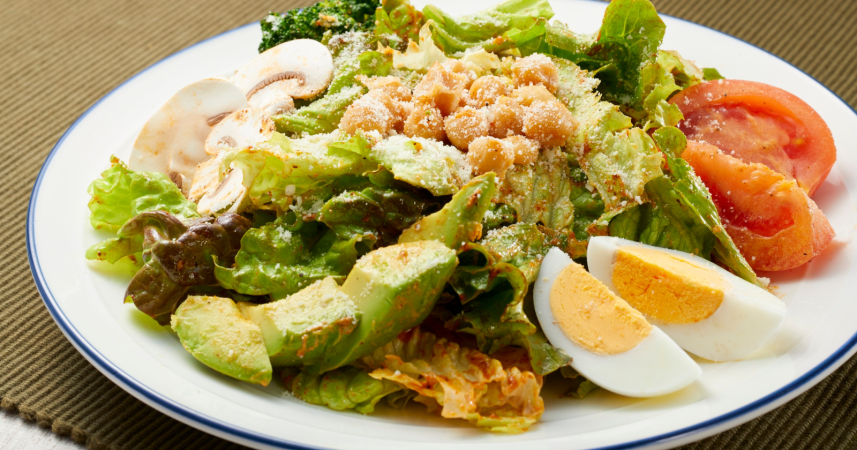
Two meals became a kind frame: breakfast at 1 p.m.—one egg and no-sugar dessert—helped my obsessive self choose softly, eat with care.

Add VegOut to your Google News feed. 
I didn’t start this for balance. I started because I am an obsessive person and I wanted results.
When I begin something, I don’t dabble. I grip it with both hands.
Ask my Duolingo owl—my French streak has survived travel, deadlines, and two dead phone batteries. The same happens with exercise: thirty-day challenges turn into ninety because I can’t stand breaking the chain.
So when I chose two meals a day, it looked like another contest with myself.
Breakfast at 1 p.m. and dinner before 8 p.m.
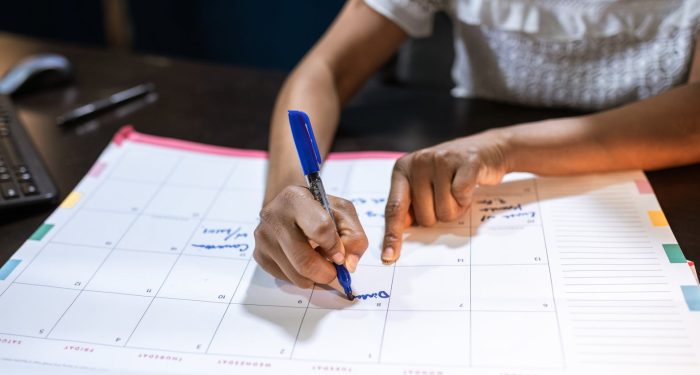
I told the plan to my calendar and set reminders like an airport schedule. Less eating, less thinking, less body.
That was the hope.
But bodies are not projects — they are places to live. In the quiet space between meals, something changed. The fence I built to control hunger slowly became a frame that helped me see it more clearly.
Breakfast at 1 p.m. is still breakfast, because it begins with me
I keep the word “breakfast” on purpose.
Beginning matters, even if the sun is overhead and the city is already loud.
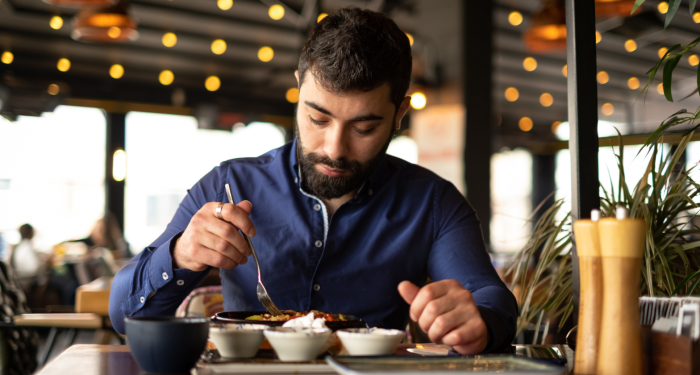
At one o’clock, I sit down with a small, steady plate. There is almost always one egg — soft scrambled, folded into an egg-oat pancake with cheese, or set on toast with salt, pepper, and a little butter melting into the bread.
The egg is a signal: here is protein, here is warmth, you can trust this.
Besides it, I add a dessert that is not truly a dessert.
How so?
Well, I roast fruit until the edges darken and the kitchen smells like late summer. Or I stir cottage cheese with a spoon of sour cream and dust it with cinnamon and cocoa. Berries or sliced peaches make it look like café sweetness, but there’s no sugar.
I am letting my brain exhale without waking the old rush. It works. The plate feels enough, and the fast ends gently, like stepping into water instead of jumping.
The trick dessert taught me to want without fear
I used to place food into strict teams: clean and dirty, safe and dangerous. Sugar was the captain of the enemy team.
Cutting it helped my energy, but it did not fix my fear.
The “fake” dessert — sweet-looking, not sweet — moved me toward peace. A warm peach with cinnamon tastes honest without being loud. The cottage-cheese bowl smells like chocolate cake, but the sweetness is quiet, coming from fruit and memory.
Spoon by spoon, I notice how my mouth stops asking before my mind stops planning.
Desire softens.
Appetite shows us what we are alive for — I think about this as I eat.
My appetite likes color and texture. It likes rhythm. It likes kindness. It doesn’t want to be tricked by rules — it wants to be met.
The dessert that is not dessert lets me practice wanting—without shame, without the old panic that every pleasure might run away with me.
Obsession can be fuel, but it needs a soft steering wheel
My nature loves streaks: the green owl, the exercise calendars with neat checks, the data tables of steps and sleep.
This part of me is helpful. It got me through hard years of study and travel. It got me through days when motivation was a ghost. But obsession can harden into glass.
It looks clear and strong until it shatters.
With two meals a day, I felt the old glass begin to form: never snack, never be late, never bend.
I had to make a new agreement with myself.
Keep the structure, soften the grip.
The rule is simple: if I break the plan, I do it with consciousness, not impulse. If a friend invites me to a late dinner, I go and I enjoy it.
If I want breakfast-for-dinner, I make it with the same care. I don’t throw away the streak — I widen it. Obsession becomes dedication when it is held with warmth. That is my work.
Dinner stopped being a trap and became a second door
Evenings used to be the dangerous hours: endless grazing, a quest for fullness that never landed. Now dinner lives between six and eight.
I would happily repeat breakfast — another egg, another pancake, the comfort of sameness, and coffee any time of the day — but I try to give my body a slightly different song.
I am not a big meat lover — red meat sits heavy. So I keep to my “basics”: tuna with lemon and olive oil, beans with greens, sometimes a small piece of chicken, sometimes rice, often a lot of vegetables and olive oil.
I stop before eight when I can, not for purity but for sleep.
The difference is not the menu — it is the feeling.
Dinner is no longer a test I must pass. It is the second door I walk through, knowing there will be another door tomorrow at one. When that promise is steady, I don’t need to raid the kitchen at ten.
The night can rest.
Listening to hunger instead of chasing urgency
Intermittent fasting gave me something I didn’t expect: a clean signal.
Real hunger has a curve.
It builds slowly and brings focus. Urgency is sharp and loud, usually tied to stress or habit. I used to answer urgency with anything nearby.
Now I wait for the quiet knock around noon.
Donald Winnicott wrote about “good enough” care — the reliable presence that makes a child brave. My two-meal rhythm became that presence for me.
I know when comfort will arrive, so I don’t panic. When the first bite comes at one, it tastes like relief, not rescue.
Rescue keeps me small — relief lets me grow.
On hard days—hormones, deadlines, travel—this difference saves me. I can hold my feelings without stuffing them, and when I finally eat, the food has its own job, not everyone else’s.
The scale became quiet when the plate became honest
Yes, my body changed.
Weight moved in the right direction, slowly, without drama. But the loudest shift was inside my head.
The scale turned from judge to weather report. Useful, but not a verdict.
What helped was the honesty of the plate: protein I can see, color I can name, a dessert shape that calms my brain without waking old cravings.
Nothing in disguise.
The more honest the plate, the less I needed to perform “being good.” I stopped speaking in diets. I started speaking in days.
If I ate late, I didn’t call it a failure.
I asked, what would help next time? Water? A walk? A real pause at 5 p.m. so dinner didn’t turn into a rescue mission?
Kristin Neff says to talk to yourself like you would to a friend. When I do that, my choices improve without the whip. Responsibility shows up. Shame packs its bag.
Breakfast-for-dinner and the art of playful structure
Some evenings I do what I love most: I eat breakfast again. An egg on toast at seven makes me smile.
It feels like a friendly wink to my morning self.
This playfulness matters because my obsessiveness likes to make laws.
The small rebellions keep me human. They also remind my nervous system that safety is not the same thing as sameness.
Structure gives me walls — play opens windows.
On those nights, I might add roasted fruit for dessert, or the cocoa-cottage-cheese bowl, and call it a day.
The body is fed. The mind is calm.
The streak is intact in spirit, even if the details dance. And the next day at one, the ritual begins again with no guilt in the air.
What changed wasn’t my appetite—it was my attention
Two meals a day began as a plan to control the size of my body. It became a way to pay attention.
Breakfast at 1 p.m. turned into a daily anchor. Dinner became a steady door.
The dessert that isn’t dessert taught me that wanting can be soft.
My obsessions learned a new job: hold the rhythm, not the whip.
When I think of my French lessons or my exercise challenges, I see the same lesson. A streak is healthy when it serves life, not when life serves the streak.
The goal is not perfection — the goal is a life that fits.
On some days I still rush. I still judge. I still dream of chocolate cake at 11 p.m.
Then I breathe. I plate an egg. I roast a peach. I shake cinnamon into a small cloud over white cottage cheese. I sit down and eat like someone I care about.
That is how the plan fixed my relationship with food: not by punishing, but by teaching me to stay. And when I stay, I notice something simple and true — enough is a feeling, and I can feel it.
If You Were a Healing Herb, Which Would You Be?
Each herb holds a unique kind of magic — soothing, awakening, grounding, or clarifying.
This 9-question quiz reveals the healing plant that mirrors your energy right now and what it says about your natural rhythm.
✨ Instant results. Deeply insightful.

Nato Lagidze
Nato is a writer and a researcher with an academic background in psychology. She studies self-compassion, emotion regulation, and the emotional bonds between people and places. Writing about recent trends in the movie industry is her other hobby, alongside music, art, culture, and social relationships. She dreams of creating an uplifting documentary one day, inspired by her random experiences with strangers.
More Articles by Nato