Nine “no way” dishes that are everyday somewhere — taste, context, and why shock value misses the meal.
Some dishes are only “weird” because you met them too late.
Travel long enough and you realize taste is mostly training: textures your childhood normalized, aromas your brain calls “home,” and rituals that make a plate bigger than its ingredients.
What Americans tag as unusual, a lot of the world calls comfort food, midnight hero, or Tuesday. I’m vegan, so I skip plenty of these—but I don’t skip the story.
Here are 9 everyday dishes that spark disbelief stateside and barely a shrug where they were born, plus why locals love them and what you’ll miss if you only see shock value.
1. Century eggs (China)
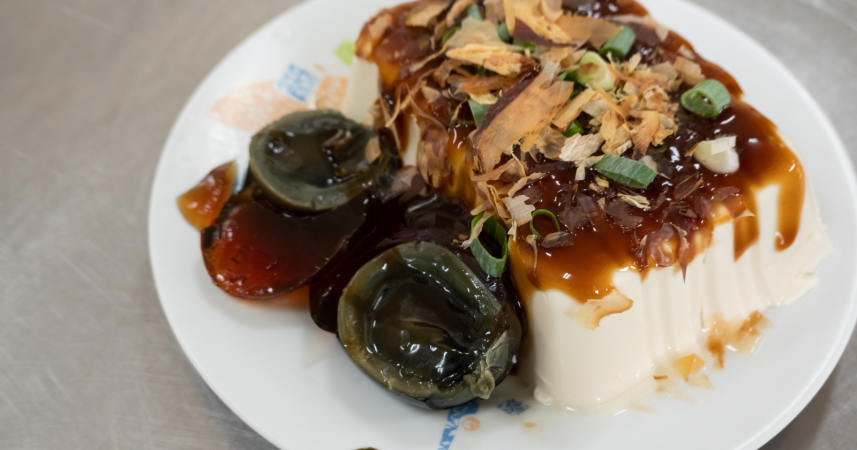
Pidan looks like sci‑fi marbles—amber “jelly” white, jade yolk—and taste like a lovable contradiction: custardy, saline, faintly mineral, a little truffle-adjacent if you squint.
They’re not a century old — they’re cured in an alkaline mix that transforms a simple egg into something spreadable and punchy. You’ll meet them diced over chilled tofu with soy and scallions, tucked into congee for breakfast, or sliced as part of a cold appetizer plate.
Americans often get stuck on the color, which is a shame—the point isn’t the hue; it’s the balance: soft, rich, bright vinegar or ginger on top.
In southern China, pidan with silken tofu is heat-wave medicine. In congee, it’s comfort you can eat with a spoon.
The cultural signal is thrift turned craft: take a humble ingredient, make it shelf-stable, make it satisfying, and pair it with freshness so it sings.
2. Nattō (Japan)
If cheese is “controlled rot,” nattō is its soybean cousin—sticky, nutty, and famously stringy. Those spiderweb threads are the barrier for many Americans; in Japan, they’re a morning routine.
Nattō lands on rice with soy and mustard, sometimes raw egg, sometimes scallions. Think roasted peanut meets blue cheese funk, plus a probiotic résumé your gut would high-five if it had hands.
Texture is the hurdle — repetition is the fix.
People who grew up with it don’t describe the smell as “barn”—they describe it as breakfast. You’ll also find nattō rolled into maki, tucked into omelets, or folded into savory pancakes.
It’s the opposite of a stunt food: cheap, fast, protein-dense, wildly normal. If you’re not vibing with it day one, you’re in excellent company — plenty of Japanese folks avoid it too. But for fans, it’s habit plus health in a bowl.
3. Stinky tofu (Taiwan)
If you’ve ever loved washed-rind cheese, you already understand stinky tofu—it just wears a different passport. Brined with fermented vegetables or milk, then fried or braised, it smells like a back alley in August and tastes like a cloud that learned how to be crispy.
Night markets are its cathedral: cubes go into hot oil, come out with a shell, and get topped with pickled cabbage and chili. In braises, it’s softer, saucier, deeper.
The joy is contrast—funky richness cut by vinegar heat and crunch. Americans balk at the aroma and miss the point: people line up because the bite is insanely balanced. It works in hot weather (acid!), cold weather (heft!), and hangovers (everything!).
As with a lot of fermented traditions, the nose screams so your tongue doesn’t have to; the eating is surprisingly gentle.
4. Surströmming (Sweden)
Fermented Baltic herring has an internet reputation that overshadows its very specific, very social reality.
Opened indoors, it will launch your landlord into your DMs. Opened outdoors in late summer, served on thin bread with potatoes, onions, butter, maybe sour cream, it becomes a loud, funny, once-a-year ritual among friends.
The smell is…committed.
The taste, once you tame the aroma with starch and dairy (or non-dairy), is intensely savory and saline—like anchovies that spent a semester majoring in chaos.
Americans often treat it as a dare; Swedes treat it as a picnic theme with rules (crack the can outside, downwind, thank you). You’re supposed to laugh.
You’re also supposed to notice that under the prank is preservation culture in a cold climate: make fish last, invent a social script to carry it forward, and serve it with enough potato to keep the peace.
5. Hákarl (Iceland)
Fermented Greenland shark is the Nordic bogeyman of travel TV—hung to cure, then cubed and served in tiny bites at bars where someone’s uncle tells a heroic story.
It’s not an everyday dinner; it’s heritage food with a ceremonial vibe, like mezcal poured by a friend who insists you smell first. The ammonia note is real and the portion size tells you everyone knows it.
What matters is context: Icelandic food culture leans heavily on modern seafood and lamb; hákarl survives as a handshake with scarcity and ingenuity.
Americans hear “rotten shark” and picture punishment. Locals hear “hákarl” and picture a holiday table where grandparents smile at your brave face.
You taste it, you chase it with Brennivín, you post the photo, and then you go eat the contemporary stuff Iceland does brilliantly.
6. Black pudding (UK & Ireland)
Blood sausage with oats or barley is a breakfast staple from Cork to Cumbria, and it will always read as daring if your plate grew up on maple links.
The flavor isn’t metallic; it’s earthy, spiced, and surprisingly bready thanks to the cereal. Texture sits between pâté and a firm scramble when lightly crisped.
It’s the densest, cheapest iron delivery system ever invented, built by people who refused to waste a calorie. In a full Irish or full English, it balances salty bacon, sweet tomato, and buttery mushrooms the way a dark ale balances a stew.
Americans often treat it like a test. Locals treat it like balance: a yin to everything else’s yang. Whether you eat it is your call; understanding the no-waste logic it honors is the graceful move.
7. Balut (Philippines)
Fertilized, incubated duck egg—steamed, cracked, sipped, salted—lands on a lot of “unbelievable” lists.
In the Philippines, it’s ordinary street food and late-night comfort, eaten for warmth, protein, and bravado among friends.
There are regional styles, personal rituals, and a thousand arguments about ideal days of incubation. As a vegan, I pass. As a traveler, I try to hear the love language: linger with a vendor, listen to the banter, and notice how many people talk about grandparents when they talk about balut.
Food is memory with salt.
Americans see a dare.
Plenty of Filipinos see a night market, a neighborhood, and a way a city talks to itself after dark. You don’t have to eat something to understand it. You do have to let it be more than content.
8. Cheonggukjang jjigae (Korea)
Imagine nattō graduating into a bubbling stew with tofu, potatoes, zucchini, and gochugaru heat.
Cheonggukjang is a fast-fermented soybean paste with a bold aroma that lands somewhere between miso and “did someone forget the window?”—and it’s beloved for exactly that. It’s weeknight food, winter food, “I need a reset” food.
In jjigae form, the funk gets framed by broth and chili, so it reads deep rather than confrontational.
Americans often meet Korean fermentation through kimchi and stop there; cheonggukjang is the advanced course in savoriness.
The health halo is part of the appeal (probiotics, protein, vegetables) — the bigger piece is tempo: this is a dish that brings you back to earth in twenty minutes. The day gets noisy; the stew says shh.
9. Jellied eels (London)
London’s old East End gift to the “are you sure?” category. Boiled eel set in its own gelatin, served cold with malt vinegar or hot as pie and mash shop gravy’s cousin.
It’s not exactly on every table now, but it’s still around, stubborn and local, a taste of poverty cuisine that stuck because somebody’s granddad still swears by it.
The texture—quivery, tender fish in a natural aspic—clashes hard with American expectations about seafood. But the idea is honest: use the whole fish, respect the river’s catch, make it keep.
If you’ve ever loved head cheese, you already speak this language. If you haven’t, you can still understand that a city keeps stories alive through tastes that refuse to vanish. The eel shop is a museum you can eat in.
Final thoughts
“Unusual” is a mirror, not a verdict.
Most of these dishes were built by necessity, then polished by affection—preserve the harvest, stretch protein, coax flavor from scarcity, celebrate what the landscape gives you. Americans encounter them through headlines and dares; locals meet them through habit and holidays. You don’t have to order everything to travel well.
You do have to let a plate be a culture’s sentence, not your punchline. If you get the chance, stand where the steam is, watch how people eat, ask someone what they love about the thing you don’t understand, and listen longer than you post.
Taste is training. Curiosity is free.
If You Were a Healing Herb, Which Would You Be?
Each herb holds a unique kind of magic — soothing, awakening, grounding, or clarifying.
This 9-question quiz reveals the healing plant that mirrors your energy right now and what it says about your natural rhythm.
✨ Instant results. Deeply insightful.