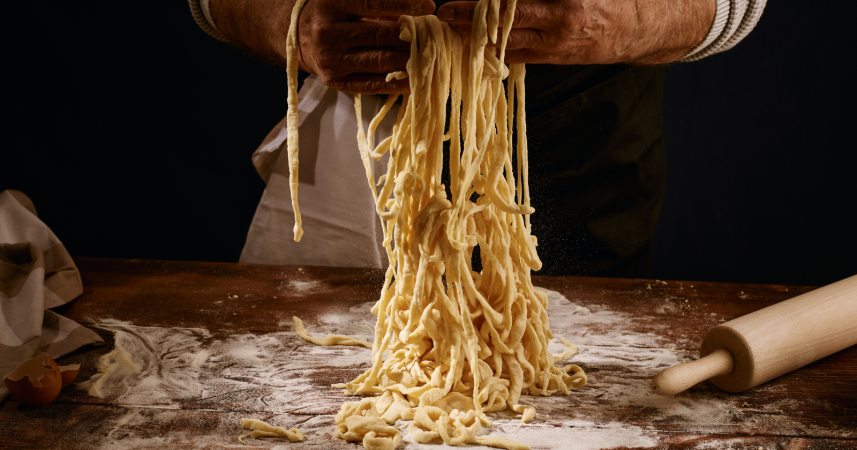
Five pasta confessions that instantly expose you as a clueless tourist.
There are two kinds of pasta talk: the kind that makes Italian grandmothers smile, and the kind that makes them clutch the counter and whisper, “Perché?”
I learned this the friendly way—over long tables in Rome, fast kitchen lessons in Bologna, and one unforgettable moment in
Naples when a waiter gently took the spoon out of my hand and said, “You don’t need that.”
I’m vegan now (so, ciao dairy and pancetta), but the fundamentals didn’t change.
If you want to keep the peace with Italians—and make much better pasta—there are a few confessions you should keep to yourself.
Here are 5 things you should never tell Italians about how you cook pasta… and what to do instead.
1) “I pour olive oil into the pasta water so it won’t stick.”
The only thing oil does in a boiling pot is float like a tiny life raft and make your noodles slippery later—exactly when you want sauce to cling. Italians salt the water generously (it should taste like the sea) and stir for the first 30–60 seconds.
That’s when sticking happens.
After that, a lively boil keeps strands moving. If you tell an Italian you add oil, they’ll blink like you said you put lotion in your bath and called it skincare. Please don’t.
Do this instead: lots of salt, a real rolling boil, and stirring early. Save the good extra-virgin oil for the finish—off the heat, ribboned over the plated pasta. That’s where it adds perfume and gloss instead of sabotage.
2) “I snap spaghetti in half so it fits the pot.”
Breaking long pasta is like cutting a violin string because your case is small. The length exists for a reason: twirling. It changes how sauce coats, how you pace bites, even how the dish smells when it rises to your face.
In Italy, this is near-blasphemy.
If your pot is small, feed the spaghetti in like a fan, and as the submerged ends soften, nudge the rest down with tongs. Thirty seconds and it’s all over.
Do this instead: keep spaghetti long, use a wide pot, and let time—not force—do the work. If long shapes stress you out, choose a short shape on purpose (rigatoni, penne, orecchiette).
Match shapes to sauces: fluid, silky sauces love long strands; chunkier sauces love short ridges.
3) “I rinse my pasta after draining so it doesn’t get gummy.”
Somewhere along the line, “rinsing prevents clumps” turned into gospel. In Italian kitchens, rinsing is what you do to salad, not pasta—unless you’re making a cold pasta salad (and even then, dress it immediately).
Rinsing washes away the starch you need to build a glossy emulsion with the sauce. That starch is your free thickener, your velvet, your restaurant-level finish.
Remove it and you’ll be chasing texture with more oil or (shudder) cream.
Do this instead: reserve a mug of that starchy cooking water, drain (no rinse), and finish the pasta in the sauce for a minute or two with splashes of the water until it clings.
Vegan bonus: a tiny knob of plant butter or a swirl of good EVOO off heat, plus a spoon of finely ground walnuts mixed with nutritional yeast, mimics that Parm-like body without dairy.
4) “I cook pasta fully in water, then dump sauce on top.”
This is the biggest home/restaurant gap. “Boil, drain, dump” is how pasta tastes like two strangers sharing a plate. In Italy, you undercook the pasta by 1–2 minutes, slide it into the simmering sauce, and finish together.
Heat + motion + starchy water = emulsion.
Suddenly, your tomato sauce doesn’t pool under the noodles; it glazes them. Even simple aglio e olio becomes silky. Tell an Italian you don’t finish in the pan and they’ll look at you like you admitted to blow-drying lettuce.
Do this instead: wide skillet, hot sauce, underdone pasta, splashes of pasta water, vigorous tossing.
Kill the heat, then adjust with a little more water if it tightens too much.
For crunch/contrast, finish with pangrattato (toasted breadcrumbs in olive oil with a pinch of salt and pepper). It’s the vegan “cheese snow” you can hear.
5) “I add cream (or sugar) to ‘fix’ my tomato sauce.”
If your tomato sauce tastes sharp or thin, the answer isn’t dairy (or spoonfuls of sugar) — it’s time and technique.
Italians coax tomatoes until the bubbles go from splashy to lazy—10–20 minutes for canned crushed tomatoes, just enough to cook off the tinny edge and concentrate sweetness.
A proper sauté of onion or garlic in olive oil first, maybe a tiny pinch of chili, and a rest off heat will round flavors more honestly than cream ever will. Sugar telegraphs panic; over-garlic telegraphs rage.
Do this instead: warm olive oil with sliced garlic from cold so it perfumes without burning; add tomatoes, a pinch of salt, and simmer until glossy.
If you need depth, bloom a spoon of tomato paste for 60 seconds or grate in the tiniest bit of carrot early for natural sweetness. Finish with fresh basil off heat or a whisper of lemon zest to lift the whole thing—bright, not sweet.
A few tiny truths that never start fights (and make better pasta)
-
Salt the water like a memory. Under-salted water can’t be rescued later.
-
Taste three times. Water, sauce, pasta—season each layer.
-
Warm the bowls. Hot pasta on cold plates breaks the emulsion and dulls flavor.
-
Less sauce than you think. Restaurants glaze; they don’t drown. If there’s a moat, simmer longer.
-
Finish with fragrance. A ribbon of raw EVOO, a crack of pepper, parsley chopped at the last minute, or that pangrattato crunch. Quiet moves, big payoff.
You don’t have to be Italian—or eat animal products—to cook pasta that makes the table go quiet. You just have to stop wrestling it, stop rinsing it, and stop “fixing” what heat and a minute in the pan will fix for you.
Keep your oil out of the pot and on the finish. Keep your spaghetti whole. Keep your starch, your patience, and your sense of humor.
Then twirl, breathe, and enjoy the part where someone asks what you did differently and you get to say, “Less than you think.”
If You Were a Healing Herb, Which Would You Be?
Each herb holds a unique kind of magic — soothing, awakening, grounding, or clarifying.
This 9-question quiz reveals the healing plant that mirrors your energy right now and what it says about your natural rhythm.
✨ Instant results. Deeply insightful.