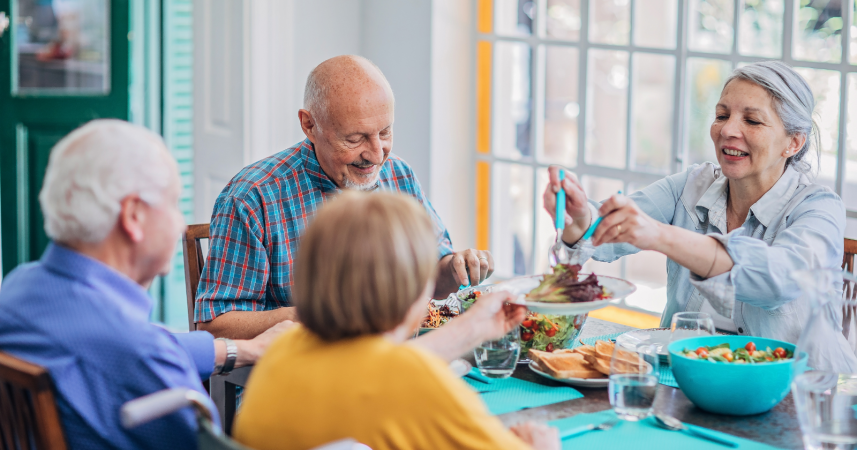
Company is less about impressing people and more about making them comfortable enough to be themselves.
Hosting has changed a lot in the past few decades.
We’ve gone from fine china and silver-plated tongs to mismatched bowls and Spotify playlist, but there are a few classic “company dishes” that refuse to retire.
When they show up, they whisper something about our history—who taught us to host, how we learned to care for guests, and what we believe makes an evening feel special.
I’m not here to roast your grandma’s menu, but I’m here to decode it—why these dishes still show up, what they signal about us, and how to update them (if you want) without losing the soul of the tradition.
Let’s set the table, shall we?
1) Deviled eggs
If there’s a platter with little scooped-out moons dusted in paprika, someone at the party learned hospitality from a woman who survived at least two recessions.
Deviled eggs are the original behavioral science hack for hosts: low-cost, high-reward, and familiar enough to calm a shy guest at the buffet.
They’re neat, portioned, and easy to compliment.
You pop one, say “These are dangerous,” and you’ve bought the host two hours of goodwill.
Why they persist: Predictability.
In social psychology, predictability reduces cognitive load.
Guests don’t have to calculate what it is, how to eat it, or whether it will be spicy.
We relax and the host looks competent before the mains even land.
I’ve mentioned this before but “effort signals care.”
Deviled eggs show effort—peeling, halving, piping—without requiring a culinary degree and that matters.
People don’t come to your house for innovation; they come to feel like they matter.
Vegan spin without making it weird: halved baby potatoes or tofu “egg” halves with a chickpea-mayo-mustard filling, a hit of black salt (kala namak), and that classic paprika dusting.
You still get the bite-size familiarity and the Instagrammable platter arcs, minus the cholesterol and the “who peeled forty eggs?” regret.
2) Shrimp cocktail
A chilled ring of pink crescents hugging a tiny volcano of red sauce says two things at once: “We’re fancy” and “We remember the ‘80s.”
It’s culinary time travel to hotel lounges and wedding receptions where the bar was cash and the centerpiece was ivy.
Shrimp cocktail carries a prestige halo (“seafood!”) with zero learning curve.
The ritual—dip, bite, dab the napkin—feels clean and ceremonial.
It’s also one of the few appetizers that makes a guest feel slightly indulged without wrecking their appetite.
There’s also the “scarcity memory.”
If you grew up when seafood was occasional, shrimp still reads as celebratory.
Our brains keep old scarcity maps even after circumstances change, which is why your uncle still freezes at the thermostat and your aunt still slices cake into museum-grade slivers.
To update it, lean into the ritual (not the species).
I’ll do chilled hearts of palm “scampi” or konjac-based vegan shrimp on crushed ice with a punchy horseradish-tomato sauce, lemon wedges, and those tiny forks no one knows where to store.
Guests get the drama of the ice bowl and the dip-to-bite choreography they crave.
3) The cheese ball
If you’ve seen a pecan-crusted sphere next to a fan of crackers, you’re in the presence of a host who believes in abundance psychology.
The cheese ball is edible generosity: a single object designed for communal excavation.
Why it sticks around: It creates a focal point for micro-connections.
People gather, they rotate the plate, they negotiate cracker real estate, and suddenly the couple who “just moved to town” is swapping dentist recommendations with the neighbor in the vintage windbreaker.
Food that requires sharing creates social glue.
The shape matters too; rounds read as complete and celebratory—think birthdays, wreaths, rings.
That’s not accidental because we use shape as a subtle cue for mood and meaning.
When I host, I’ll roll a cashew-based “chevre” with toasted walnuts, chopped herbs, and lemon zest.
Same communal experience, different base.
I like to plate it with apple slices, cucumbers, and good seeded crackers.
Add a tiny bowl of hot honey (or agave-and-chili) on the side and watch the introverts find their reason to hover.
4) Jell-O salad

Yes, the “salad” that jiggles.
Sometimes it’s neon; sometimes there are suspended grapes, marshmallows, or—if the recipe comes from a particularly experimental era—shredded carrots.
It’s the edible scrapbook of postwar optimism when gelatin molds promised modern efficiency and magazine-perfect shine.
Jell-O is childhood you can unmold.
It shows up for company because it behaves.
You can make it ahead, it stands at attention, and it slices cleanly.
When a host has a dozen variables to manage, a reliable dessert (or side… depending on what universe you’re in) is a blessing.
There’s also a playful permission baked in.
Adults like sanctioned silliness.
A quivering mold lets us laugh without breaking the spell of “nice dinner.”
The compassionate update is to keep the theater and ditch the animal-derived gelatin.
Agar-agar or carrageenan works beautifully.
I’ll do a layered citrus-ginger gel with fresh fruit trapped in the middle like a disco fossil, unmolded into a ring and crowned with coconut whip.
It feels childlike in the best way—with ingredients that align with how many of us actually want to eat now.
Serve nostalgic desserts in small, jewel-like portions; we want the memory more than the mass.
5) The casserole
Pick your region: Tuna noodle, green bean, enchilada bake, lasagna, broccoli-rice with the crinkled onion topping.
If someone slides a bubbling rectangle to the center of the table, you’re experiencing the Mid-Century Solution to Every Hosting Problem.
Why it persists: the “one-tray promise.”
Casseroles convert chaos into cohesion.
For the host, it’s time-boxing—prep earlier, bake during the pre-dinner chatter, and serve family-style—and, for guests, it’s comfort disguised as efficiency.
You can identify every layer, scoop a portion that fits your appetite, and take seconds without ceremony.
There’s also a deep reciprocity script here.
Casseroles were designed for gatherings with stakes—new baby, funeral, church social, neighborhood potluck.
We learned “this is how you care for people.”
That emotional imprint often outlasts the ingredient list.
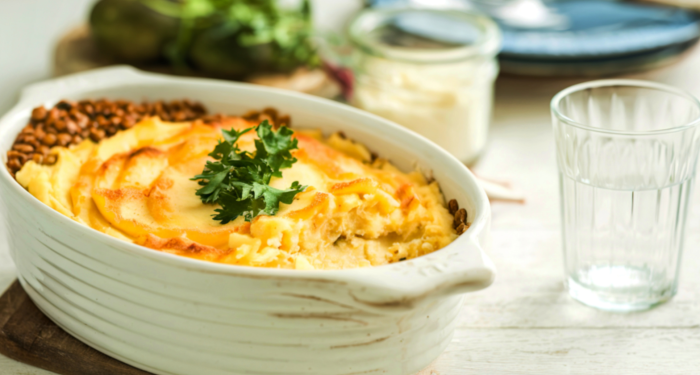
A modern plant-based take that still sings: Roasted mushroom and lentil bolognese lasagna with almond ricotta and a crisp top, or a poblano-corn-tomato tortilla casserole with black beans and a tangy cashew crema.
Same architecture and same generosity, but updated building materials.
Casseroles that hold heat become pacing tools as you can let conversation breathe because the food isn’t going cold in ten minutes.
6) Roast with gravy
The ceremonial roast—beef, ham, turkey—occupies the same mental shelf as record players and handwritten thank-you notes.
It’s slower, heavier, and radiates intention to the point that people need a story to gather around.
A roast arrives with an arc—seasoning, slow cook, carving, the hush as the first slices fall.
That performance turns dinner into an event.
Even if you rarely eat this way anymore, the ritual reminds everyone, “Tonight is different.”
From a design perspective, the roast is also an anchor for the sides.
It gives your meal gravity.
You can orbit salads, breads, and vegetables around it and everything makes sense.
As a vegan, I still love a centerpiece and I just build mine differently.
I’ve done whole roasted cauliflower brushed with miso-maple glaze and a rosemary-garlic crust you can crack with a spoon; I’ve also done a mushroom-walnut roulade wrapped in puff pastry with a silky peppercorn gravy.
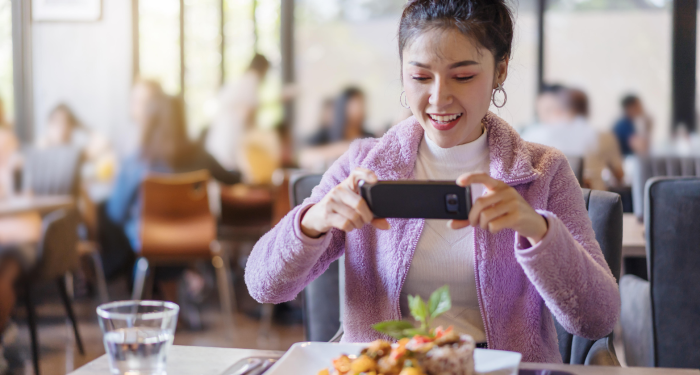
People lean in, phones come out, and the room gets quiet for a second.
That’s the moment you’re actually trying to create—not the meat, but the hush.
A quick aside: Gravy is the real nostalgia engine as it lubricates conversation and feelings.
Make more than you think you need, whatever version you choose.
Closing thoughts
Why do these old-school dishes keep making appearances when we have a universe of new ideas a Google search away?
Well, there's three big reasons for this.
First, hosting is emotional labor disguised as logistics. We reach for templates when we’re nervous.
Second, these dishes solve timeless problems elegantly. The classics answer with portioned bites (deviled eggs), iconic shapes (cheese ball, gelatin ring), shared vessels (casseroles), and theatrical centerpieces (roast, shrimp on ice).
Third, food is identity, but it’s also continuity. When you bring a dish your mother made, you’re telling your friends, “Here’s a piece of where I’m from.”
If you still bring out these six stalwarts, you’re not stuck—you’re signaling.
You value ceremony, clarity, and care so keep that.
Then tweak the ingredients to fit who you are now.
Company is less about impressing people and more about making them comfortable enough to be themselves.
Whether it jiggles, bubbles, or slices, serve the story you want your home to tell—and let the menu evolve with you.
Just launched: Laughing in the Face of Chaos by Rudá Iandê
Exhausted from trying to hold it all together?
You show up. You smile. You say the right things. But under the surface, something’s tightening. Maybe you don’t want to “stay positive” anymore. Maybe you’re done pretending everything’s fine.
This book is your permission slip to stop performing. To understand chaos at its root and all of your emotional layers.
In Laughing in the Face of Chaos, Brazilian shaman Rudá Iandê brings over 30 years of deep, one-on-one work helping people untangle from the roles they’ve been stuck in—so they can return to something real. He exposes the quiet pressure to be good, be successful, be spiritual—and shows how freedom often lives on the other side of that pressure.
This isn’t a book about becoming your best self. It’s about becoming your real self.