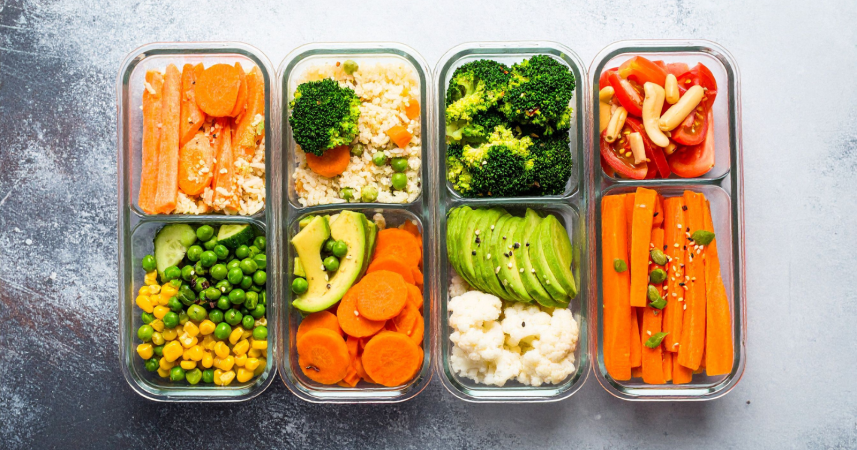
Meal preppers aren't just organized, they're displaying a cognitive profile that values future thinking, believes their effort today shapes tomorrow, and sees systems as solutions rather than restrictions.

Add VegOut to your Google News feed. 
My roommate spends every Sunday afternoon in the kitchen.
For three hours, she's chopping vegetables, cooking grains, portioning proteins, and stacking containers in the fridge with the precision of someone organizing a military operation.
I used to think it was excessive. "Why not just cook as you go?" I asked once.
She looked at me like I'd suggested she wing a presentation she'd been preparing for weeks. "Because then I'd never actually eat well," she said. "This is the only way it works for me."
Watching her, I realized meal prepping isn't just about food. It's a window into how someone's brain works.
People who meal prep every Sunday aren't just organized. They're displaying a specific set of psychological traits that shape how they approach life, not just meals.
Here are eight distinct traits psychology says you likely have if you meal prep every Sunday.
1) You have high future-oriented thinking
Meal prepping requires the ability to think beyond the present moment. To imagine yourself five days from now, hungry after work, and to prepare now for that future version of yourself.
This is called future-oriented thinking, and not everyone has it naturally.
Some people live in the moment. They eat when they're hungry, make decisions based on how they feel right now, and deal with future problems when they arrive.
Meal preppers think ahead. They anticipate needs. They plan for scenarios that haven't happened yet.
Psychology research shows that future-oriented thinking is linked to better self-control, financial planning, and long-term goal achievement. People who naturally think ahead tend to make decisions that serve their future selves, even when it requires effort in the present.
My roommate isn't just prepping meals. She's taking care of a version of herself that doesn't exist yet. That's a specific cognitive skill.
2) You value routine and predictability
Meal prepping is repetitive by nature. Same day, same process, similar outcomes week after week.
People who thrive with this kind of routine find comfort in predictability. They don't see repetition as boring. They see it as stabilizing.
For some personality types, knowing exactly what they'll eat for lunch all week feels restrictive. For meal preppers, it feels freeing. One less decision to make. One less thing to figure out when energy is low.
This trait often extends beyond food. Meal preppers tend to have morning routines, established habits, and systems for managing their lives.
They're not spontaneous by nature. And they don't want to be. Structure works for them.
3) You have strong executive function skills
Executive function is the brain's ability to plan, organize, prioritize, and execute tasks.
Meal prepping requires all of it.
You have to decide what to make, shop for ingredients, coordinate timing so multiple dishes finish at once, and portion everything efficiently. It's project management in your kitchen.
People with weak executive function struggle with meal prepping. It feels overwhelming. Too many moving parts. Too much to track.
But people with strong executive function find it satisfying. They like having multiple things happening at once. They enjoy the logistical puzzle of it.
Research on executive function shows it's one of the strongest predictors of life success. It's linked to academic achievement, career performance, and overall wellbeing.
Meal preppers are exercising these skills every Sunday. And it shows up in other areas of their lives too.
4) You're motivated by efficiency over spontaneity
Meal preppers optimize. They batch tasks. They minimize redundancy. They're not cooking seven separate meals. They're cooking once and eating seven times.
This is an efficiency mindset. And it's distinct from a spontaneity mindset.
Spontaneous people prefer variety, novelty, and going with the flow. They'll figure out dinner when they're hungry. They'll see what sounds good in the moment.
Meal preppers trade spontaneity for efficiency. They'd rather spend three hours on Sunday than scramble for thirty minutes every night. They value time saved over variety preserved.
Neither approach is better. They're just different. But meal preppers consistently choose efficiency, even when it means sacrificing flexibility.
5) You use systems to compensate for decision fatigue
Decision fatigue is real. The more decisions you make in a day, the worse your decision-making becomes.
Meal preppers understand this intuitively. They know that by the time Wednesday evening rolls around, they don't want to think about what to eat. They want it decided already.
So they front-load the decision-making. They choose meals when their brain is fresh, on Sunday morning with coffee, not on Wednesday night when they're exhausted.
This is strategic. It's using systems to protect yourself from your own mental limitations.
People who meal prep tend to systematize other areas of their lives too. Capsule wardrobes. Morning routines. Automated bill payments. Anything that removes unnecessary decisions from their daily life.
They're not lazy. They're conserving cognitive resources for things that actually matter.
6) You have a strong internal locus of control
Locus of control refers to how much you believe you can influence outcomes in your life.
People with a strong internal locus of control believe their actions matter. That they can shape their circumstances. That effort leads to results.
Meal prepping embodies this belief. It's saying, "If I put in the work now, I'll eat better all week. My actions directly impact my outcomes."
People with an external locus of control tend to feel like life happens to them. They're less likely to meal prep because they don't see the connection between Sunday's effort and Wednesday's success.
But meal preppers believe in cause and effect. They believe their choices compound. And they're willing to act on that belief.
7) You're comfortable delaying gratification
Meal prepping isn't immediately rewarding. You spend hours cooking, and then you put it all away. You don't even get to eat most of it right then.
The reward comes later. On Tuesday when you have a healthy lunch ready. On Thursday when you're too tired to cook but you're still eating well.
This requires the ability to delay gratification, to work now for a payoff that's days away.
Psychology has studied delayed gratification extensively, most famously through the marshmallow test. People who can resist immediate rewards for bigger future rewards tend to do better in life across multiple domains.
Meal preppers are practicing this skill every Sunday. They're choosing future benefit over present convenience.
And that pattern likely shows up elsewhere in their lives. In their finances, their careers, their relationships.
8) You see food as fuel, not just pleasure
This doesn't mean meal preppers don't enjoy food. Many do.
But they've shifted their primary relationship with food from entertainment to nourishment.
Food is fuel. It's what keeps their body and brain functioning. And they're willing to prioritize that function over constant novelty or indulgence.
This is a mindset shift that not everyone makes. For some people, every meal should be exciting, different, experiential. Food is a source of joy and variety.
Meal preppers still find joy in food. But they're okay with eating the same lunch five days in a row if it means they're nourishing themselves consistently.
They've separated food-as-fuel from food-as-pleasure. And they're comfortable prioritizing the former during the week, saving the latter for weekends or special occasions.
What this tells us
Meal prepping is a behavior. But behaviors reveal patterns of thinking.
People who meal prep every Sunday tend to be planners, optimizers, and systematizers. They value efficiency over spontaneity. They think ahead. They believe their actions matter.
This doesn't make them better or worse than people who don't meal prep. It just makes them different.
Some people need flexibility. They need to eat based on how they feel in the moment. Structure feels restrictive to them.
But for meal preppers, structure feels like freedom. It removes the burden of constant decision-making. It ensures they eat well even when life gets chaotic.
And that difference, that core preference for structure over spontaneity, shows up in how they approach everything.
The bigger picture
If you meal prep every Sunday, you're not just organized. You're displaying a specific cognitive profile.
You're someone who thinks ahead, values routine, and believes your effort today shapes your outcomes tomorrow.
You're someone who's willing to sacrifice immediate convenience for long-term consistency.
You're someone who sees systems as solutions, not restrictions.
That's not personality. That's psychology. And it's worth understanding.
Because once you recognize these patterns in yourself, you can lean into them. You can design your life around what actually works for your brain instead of fighting against it.
And if you don't meal prep, if the whole idea sounds exhausting or boring or restrictive, that tells you something too.
You might value spontaneity over efficiency. Variety over routine. Going with the flow over planning ahead.
And that's equally valid. You just need different strategies.
Because at the end of the day, the best approach to life is the one that aligns with how your brain actually works.
For meal preppers, that means Sunday afternoons in the kitchen, containers stacked in the fridge, and the quiet satisfaction of knowing that future-you is taken care of.
And honestly? That's pretty smart.
If You Were a Healing Herb, Which Would You Be?
Each herb holds a unique kind of magic — soothing, awakening, grounding, or clarifying.
This 9-question quiz reveals the healing plant that mirrors your energy right now and what it says about your natural rhythm.
✨ Instant results. Deeply insightful.

Jordan Cooper
Jordan Cooper is a pop-culture writer and vegan-snack reviewer with roots in music blogging. Known for approachable, insightful prose, Jordan connects modern trends—from K-pop choreography to kombucha fermentation—with thoughtful food commentary. In his downtime, he enjoys photography, experimenting with fermentation recipes, and discovering new indie music playlists.
More Articles by Jordan